






Newsletter Subscribe
Enter your email address below and subscribe to our newsletter

Enter your email address below and subscribe to our newsletter
All voices matter
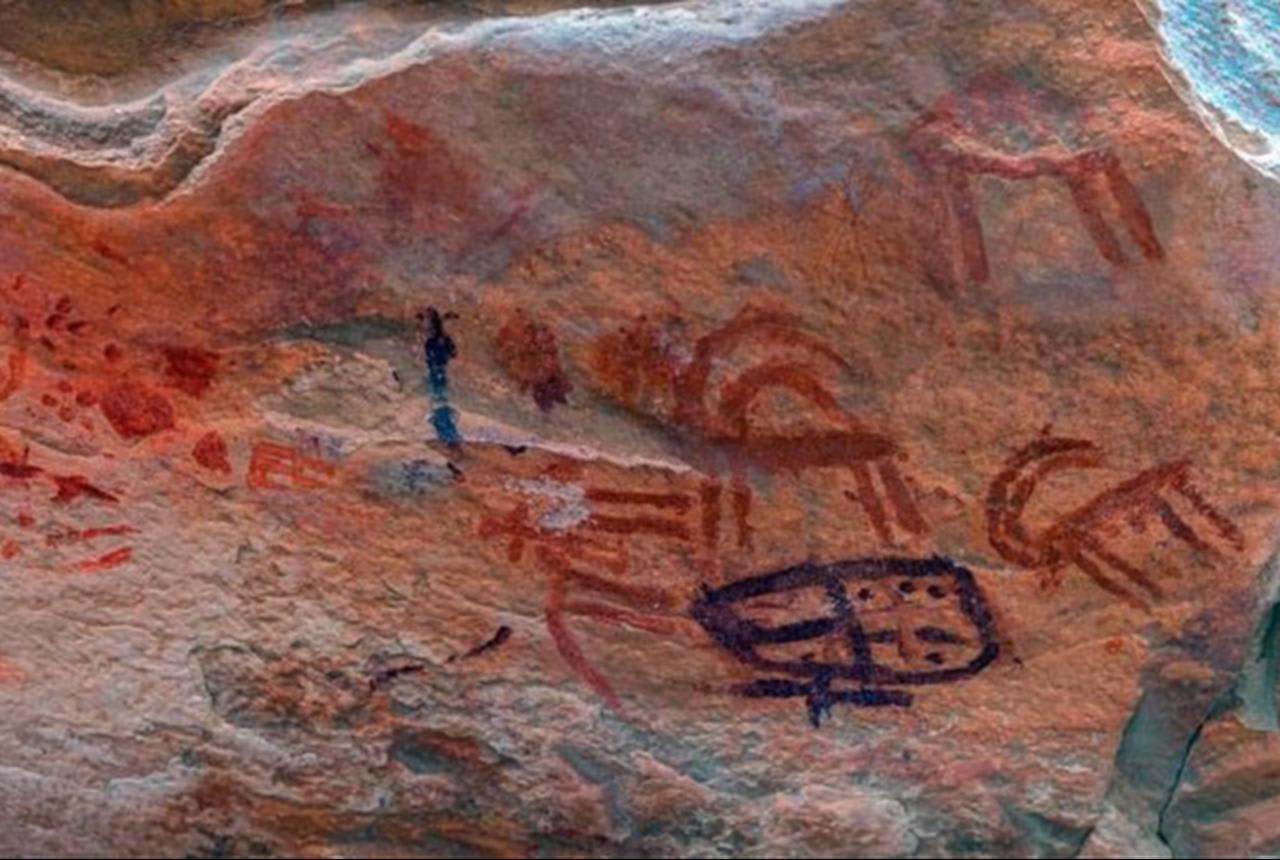
Egyptian archaeologists have discovered a previously unknown prehistoric rock art site in South Sinai that preserves approximately 10,000 years of human artistic expression, the country’s Ministry of Tourism and Antiquities announced Thursday. The site, located at the Umm Arak Plateau, features hundreds of paintings, carvings, and inscriptions spanning from the Neolithic period through the early Islamic era.
The sandstone rock shelter, extending more than 100 meters along the eastern side of the plateau, contains vivid red and gray pigment drawings on its ceiling depicting animals, hunting scenes, and symbolic figures. The oldest images, dating between roughly 10,000 and 5,500 BC, portray early hunter-gatherer lifestyles, including scenes of hunters pursuing ibex with bows and the use of hunting dogs, according to the ministry.sis
Tourism and Antiquities Minister Sherif Fathy described the discovery as “a major addition to Egypt’s archaeological map,” saying it provides “new evidence of successive civilizations in this vital part of Egypt’s land over thousands of years.”sis
Hisham El-Leithy, Secretary-General of the Supreme Council of Antiquities, called the plateau “an open-air natural museum documenting the development of human artistic and symbolic expression from prehistoric times through to the Islamic periods.” Later carvings at the site show horses, camels, and figures carrying weapons, along with Nabataean and early Arabic inscriptions indicating the shelter remained in use for millennia.anews
Archaeological survey work uncovered stone tools and pottery fragments at the site, some believed to date to Egypt’s Middle Kingdom, while others originate from the Roman period around the third century AD. Evidence of animal remains and living structures suggests the rock shelter served as both a gathering place and refuge for humans and livestock across countless generations.see
The plateau lies approximately five kilometers northeast of the Temple of Serabit El-Khadim, near ancient copper and turquoise mining sites. Its strategic position overlooking a vast expanse toward the Tih Plateau suggests it functioned as a lookout point and rest stop throughout various eras.sis
The discovery was made with guidance from Sheikh Rabie Barakat, a local Bedouin resident of the Serabit El-Khadim area. Mohamed Abdel-Badie, head of Egypt’s Antiquities Sector, said this reflects “the important role played by Sinai residents in supporting state efforts to preserve cultural heritage.”sis
Researchers said further scientific analysis is underway to refine dating, study artistic techniques, and develop a long-term plan for preserving and documenting the site.greekreporter