







Newsletter Subscribe
Enter your email address below and subscribe to our newsletter

Enter your email address below and subscribe to our newsletter
All voices matter
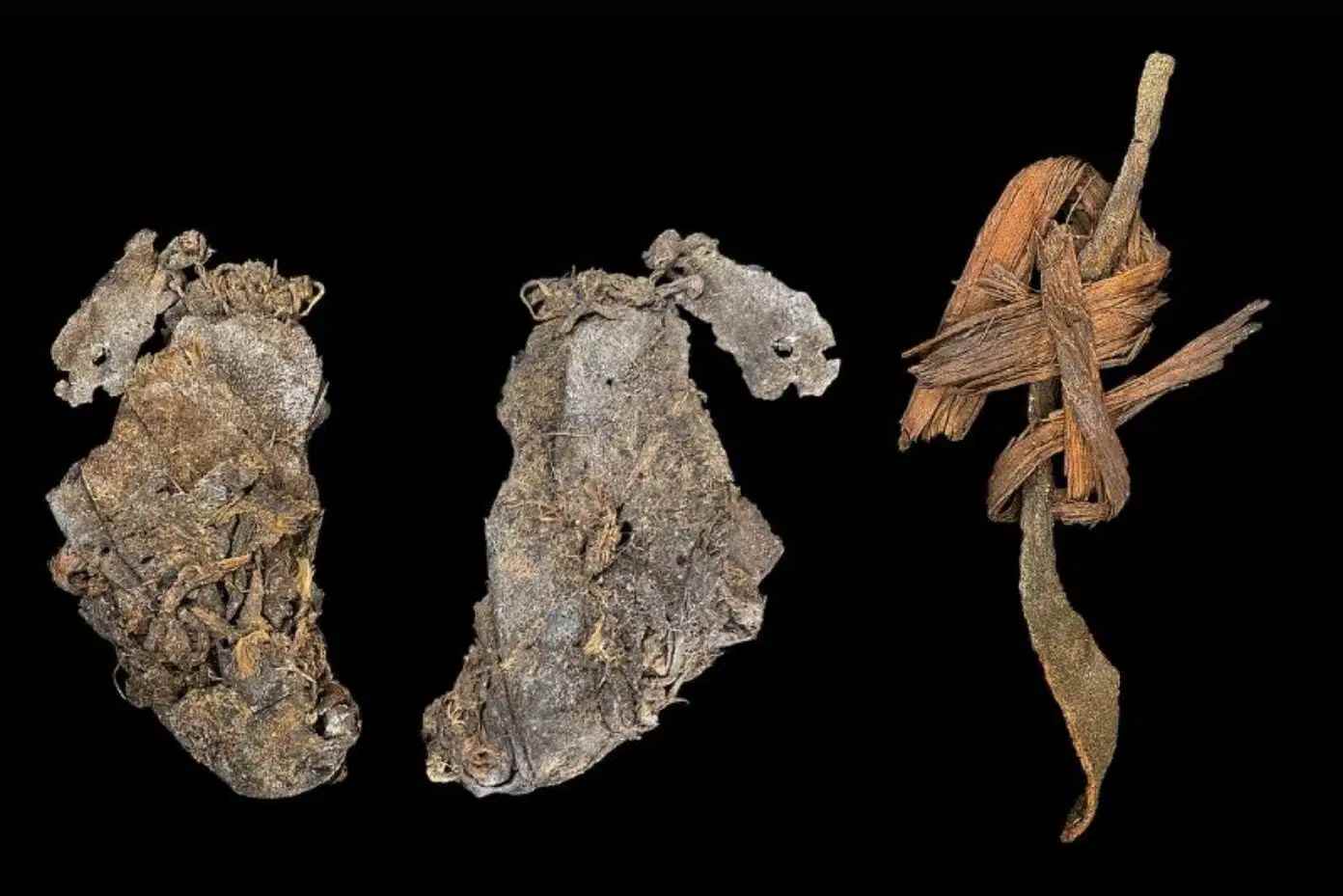
Archaeologists have identified what may be the world’s oldest known sewn animal hide among a collection of Ice Age artifacts recovered from caves in central Oregon, according to a study published February 4 in the journal Science Advances. The finds date back approximately 12,000 years, offering rare physical evidence that early communities in the region used sophisticated sewing techniques to survive the frigid temperatures at the end of the last Ice Age.
The discoveries, which include fragments of stitched elk hide, bone needles, and braided plant fiber, were originally unearthed from Cougar Mountain Cave and the nearby Paisley Caves in Oregon’s Fort Rock Basin. Richard Rosencrance, a doctoral researcher in anthropology at the University of Nevada, Reno and lead author of the study, told Live Science that while researchers had long assumed Ice Age peoples wore tailored clothing, this find provides the first direct evidence of how such garments were constructed.livescience
“They were accomplished and serious sewists during the Ice Age,” Rosencrance said.livescience
The artifacts were first excavated in 1958 by amateur archaeologist John Cowles, who retained his discoveries until his death in the 1980s. The collection was then donated to the Favell Museum in Klamath Falls, Oregon, where it remained largely unstudied until recently.jpost
Using radiocarbon dating and mass spectrometry, the research team analyzed 55 artifacts and determined they date to the Younger Dryas period, a sudden cooling event that occurred between roughly 12,900 and 11,700 years ago when Ice Age temperatures returned after a brief warming trend.greekreporter
The most remarkable artifact is a fragment of elk hide with a thread sewn through its edge, connecting it to a smaller piece tied with a knot. The thread was crafted by twisting plant fibers together with animal hair. The hide was dated three separate times, each confirming an age of roughly 12,000 years.jpost
The study also examined 14 bone needles recovered from four cave sites in the region. Analysis revealed the needles were carved from the bones of bison and mountain sheep. According to the study, only 17 archaeological sites in all of North America have yielded bone needles from the Ice Age period, with no comparable examples documented in South America.jpost
At Cougar Mountain Cave alone, researchers identified 23 fiber artifacts, 12 wooden tools, and three pieces of animal hide. The fiber artifacts include three-strand braided rope made from sagebrush bark, as well as fragments of tightly woven basketry representing the oldest known evidence of basket-making in the Western Hemisphere.greekreporter
Together, the Oregon caves contain approximately 80 percent of all radiocarbon-dated plant and animal remains from the Ice Age found anywhere in North or South America, preserved by the arid conditions of Oregon’s high desert.jpost
The abundance of bone needles and presence of decorative items suggest clothing served purposes beyond mere warmth. “The abundance of bone needles and the presence of adornment items and very fine-eyed needles suggest that clothing was more than a utilitarian survival strategy but also an avenue of expression and identity,” the researchers wrote.livescience
Notably, eyed bone needles disappeared from the archaeological record in Oregon after around 11,700 years ago, as the climate warmed and tight-fitting clothing became less essential for survival.nationaltoday