






Newsletter Subscribe
Enter your email address below and subscribe to our newsletter

Enter your email address below and subscribe to our newsletter
All voices matter
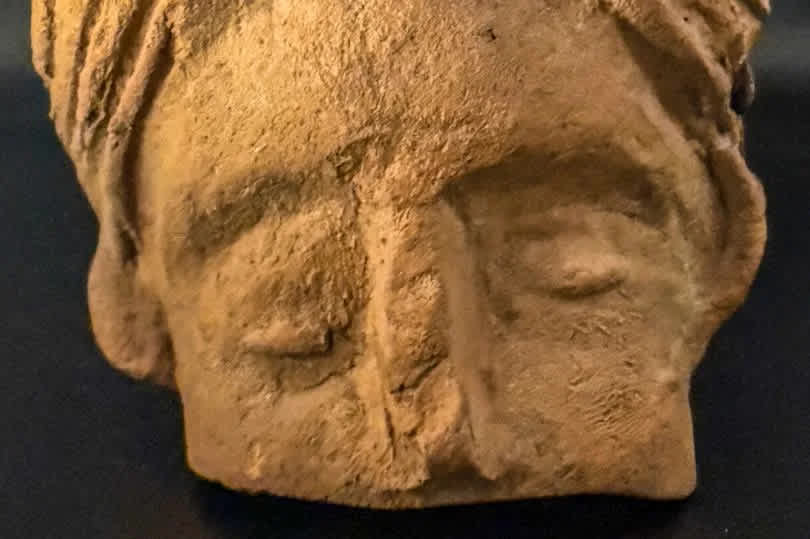
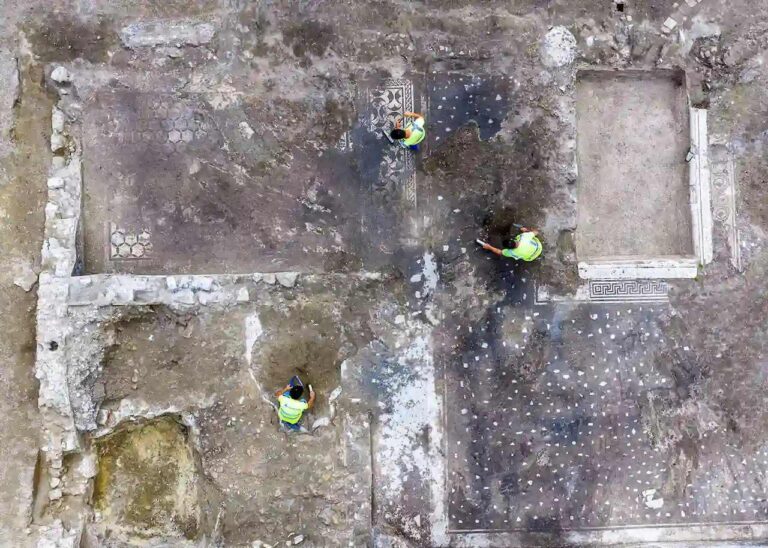
Volunteer archaeologists digging at a Roman fort in northern England have unearthed a rare 2,000-year-old terracotta head depicting a regal female figure, adding a new chapter to the site’s rich history along Hadrian’s Wall.
Rinske de Kok and Hilda Gribbin made the discovery while excavating the northern defenses of Magna Roman Fort in Northumberland, according to the BBC. The artifact, measuring 78 mm by 67 mm, features a distinctive centrally parted, four-strand plaited hairstyle. Though broken below the nose with notably asymmetrical eyes, experts believe it offers a rare glimpse into Roman artistic practices at the frontier outpost.bbc
Roman artifact specialist Lindsay Allason-Jones described the find as “a practice piece by an inexpert hand,” likely crafted at the fort near Haltwhistle. “The eyes do not match at all, and the ears are very weird. That leads me to presume it was made on site as no-one would have bothered to transport this very far or paid good money for it,” she said.culturednortheast
While terracotta face pots are common in Roman Britain, free-standing heads are unusual. The new find bears similarities to a more accomplished terracotta head discovered at the same site in the 19th century, which is now housed at the Great North Museum in Newcastle.bbc
Rachel Frame, senior archaeologist at Magna, noted the connection between the two artifacts. “They are clearly meant to depict the same figure,” she said. “My current hypothesis is that the latest find is a locally made copy of the earlier example, which may itself have been imported. The woman depicted was clearly important to the people living at Magna.”culturednortheast
The identity of the woman remains unknown, though researchers suggest possibilities include an imperial figure or a goddess. Terracotta busts of this type are widely interpreted as having religious significance and are rare finds in Britain.yahoo
Barbara Birley, curator of the Vindolanda Trust, announced that the head will go on display at the Roman Army Museum alongside other recent discoveries including leather shoes, a silver ring, bone hairpins, glass beads, and a Venus pipe clay figurine.culturednortheast
The discovery is part of a five-year research excavation at Magna that began in 2023, with one of its primary goals being to investigate the impact of climate change on buried remains at the site. Malavika Anderson, museum manager at the Great North Museum, called the find “wonderful,” noting that connecting it to artifacts in their collection “highlights the importance of preserving collections for future research and the new narratives they can unveil.”bbc