







Newsletter Subscribe
Enter your email address below and subscribe to our newsletter

Enter your email address below and subscribe to our newsletter
All voices matter
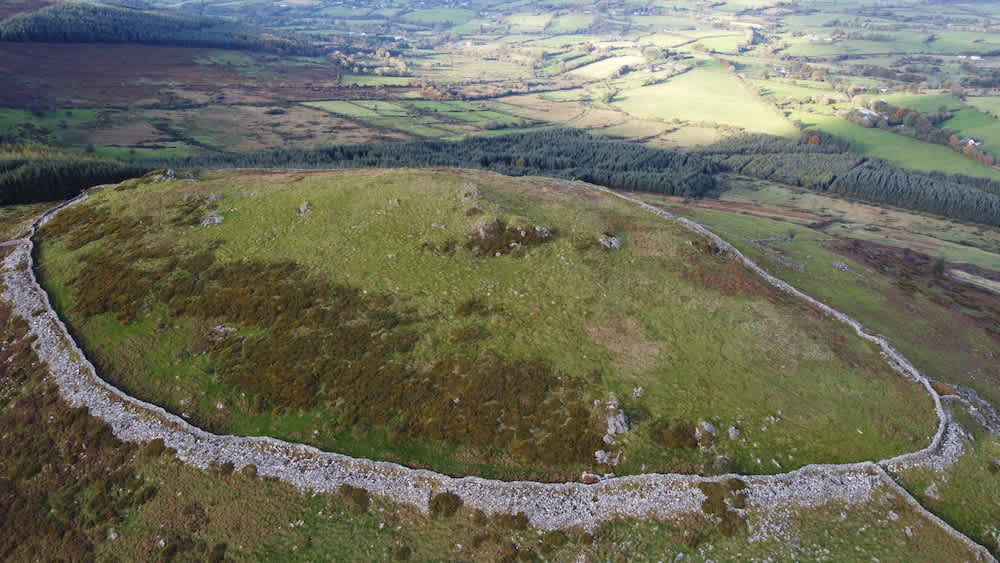
Researchers have identified Brusselstown Ring in County Wicklow as the largest prehistoric hillfort settlement ever discovered in Britain and Ireland, with evidence of more than 600 houses dating to the Late Bronze Age and Early Iron Age.
The discovery, published in the journal Antiquity in November 2025, positions the site as a significant revelation in understanding early settlement patterns and suggests that proto-urban development in Northern Europe may have occurred nearly 500 years earlier than traditionally recognized.phys
Aerial surveys using LiDAR technology revealed more than 600 suspected house platforms at Brusselstown Ring, with 98 within the inner enclosure and 509 between the inner and outer ramparts. This far surpasses the previous largest known prehistoric settlements in Ireland—Mullaghfarna in County Sligo and Turlough Hill in County Clare, which each contained approximately 140 to 150 houses.phys
Dr. Cherie Edwards, a doctoral researcher at Queen’s University Belfast and co-author of the study, emphasized the site’s importance. “This site—along with a small number of other nucleated settlements situated on hilltops—appears to have emerged around 1200 BC,” she said. “This pattern contrasts sharply with the more typical form of prehistoric Irish settlements, which generally consist of one to five dwellings.”independent
Four test excavations conducted in 2024 by Dr. Dirk Brandherm, Dr. Edwards, Dr. Linda Boutoille, and James O’Driscoll confirmed prehistoric occupation. Radiocarbon dating placed the settlement’s use between approximately 1193 and 410 BC, spanning both the Late Bronze Age and Early Iron Age. All four excavated house platforms, ranging from 6 to 12 meters in diameter, showed evidence of contemporaneous occupation with no material differences suggesting social hierarchy.cambridge
Archaeologists also identified what may be the first water cistern ever found in an Irish hillfort. The boat-shaped structure, defined by large stone blocks with evidence of a stream flowing into it, could represent sophisticated communal infrastructure for supporting a large population.phys
Brusselstown Ring sits within the Baltinglass hillfort cluster, comprising up to 13 large hilltop enclosures that show continuous use from the Early Neolithic through the Bronze Age, approximately 3700 to 800 BC. The site was abandoned around the third century BC, following a broader regional pattern of decline during the Iron Age.independent