






Newsletter Subscribe
Enter your email address below and subscribe to our newsletter

Enter your email address below and subscribe to our newsletter
All voices matter
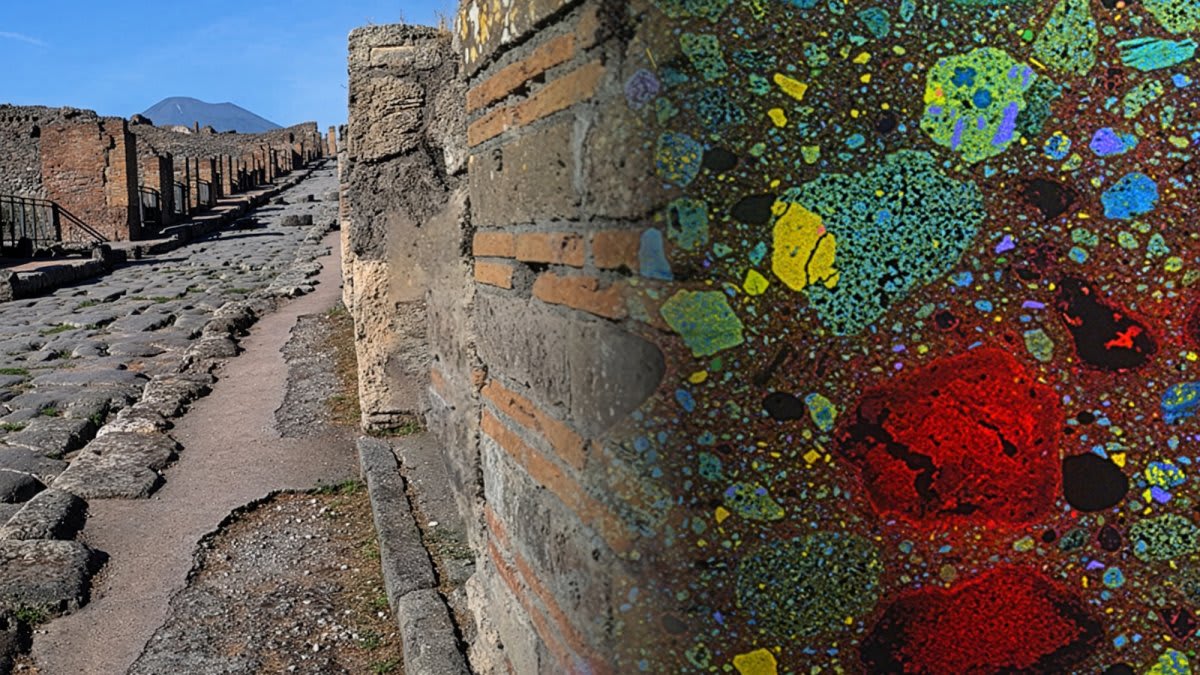
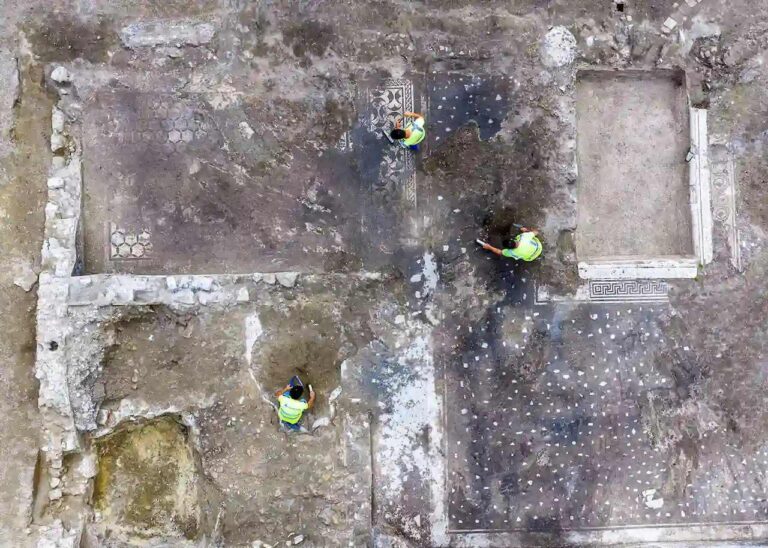
Researchers at Pompeii have uncovered a construction site frozen in time by Mount Vesuvius’s eruption in 79 CE, confirming how ancient Romans created concrete that has endured for nearly two millennia. The discovery, published Tuesday in Nature Communications, settles a long-standing debate about Roman building techniques and challenges historical accounts from the empire’s most famous architect.phys
The site preserves an active building project abandoned during the volcanic disaster, complete with piles of pre-mixed materials, measurement tools, and partially constructed walls. “It felt as though I had journeyed back in time, standing next to the laborers as they combined and poured their concrete,” said Admir Masic, an MIT professor of civil and environmental engineering who led the study.reuters
Analysis of the materials confirms that Romans used “hot-mixing”—combining quicklime, volcanic ash, and other dry ingredients before adding water, triggering a chemical reaction that generates heat. This process embeds reactive lime fragments called “lime clasts” throughout the concrete. When cracks form, water dissolves these clasts, which then recrystallize as calcium carbonate, effectively healing the damage.phys
The findings contradict descriptions by Vitruvius, the first-century BCE Roman architect whose treatise “De architectura” has long served as the primary source on Roman construction. Vitruvius described mixing water with lime first to create a paste before adding other ingredients—a method that would not produce the lime clasts found in actual Roman structures.mit
Masic, who first proposed the hot-mixing theory in a 2023 study, suggested Vitruvius may have been misinterpreted or described an alternative method that had become obsolete by 79 CE. The century-long gap between Vitruvius’s writings and the Pompeii construction could reflect technological evolution, similar to the difference between rotary phones and smartphones, Masic noted.reuters
The research team also identified diverse reactive minerals in the volcanic ash that contributed to the concrete’s long-term durability. These minerals react with pore solutions over time, creating new deposits that further strengthen the material.phys
The discoveries hold practical implications for modern construction. Masic has founded a company, DMAT, to incorporate Roman concrete principles into contemporary materials. “We don’t want to completely copy Roman concrete today,” Masic said. “We just want to translate a few sentences from this book of knowledge into our modern construction practices”.mit
Modern concrete production contributes approximately 8 percent of global greenhouse gas emissions, making more durable formulations increasingly important for sustainability.mit