






Newsletter Subscribe
Enter your email address below and subscribe to our newsletter

Enter your email address below and subscribe to our newsletter
All voices matter
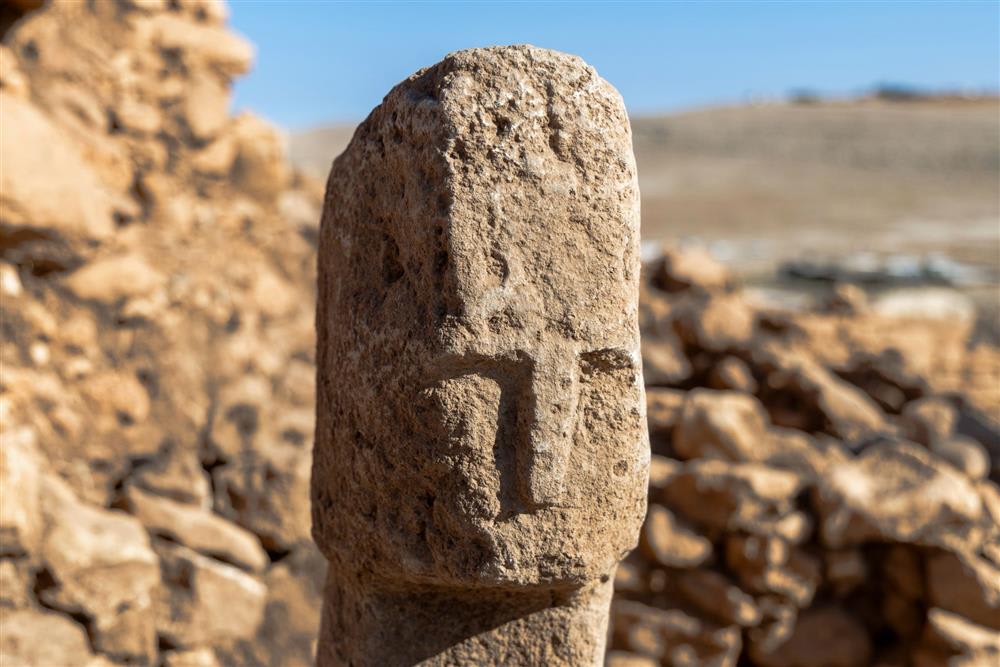
A T-shaped pillar carved with a human face has been discovered at the Karahantepe archaeological site in southeastern Türkiye, marking the first time a Neolithic-era human facial representation has been found on such a monument. Turkish Minister of Culture and Tourism Mehmet Nuri Ersoy announced the discovery on October 6, 2025, calling it a historic breakthrough that offers unprecedented insight into humanity’s earliest attempts at self-portraiture.news
The 12,000-year-old pillar was unearthed as part of the ongoing Stone Hills Project (Taş Tepeler), a comprehensive archaeological initiative exploring southeastern Türkiye’s Neolithic sites. The carved face, featuring sharp contours, deep-set eyes, and a broad nose, resembles other human sculptures previously found at Karahantepe, but represents the first direct facial depiction on a T-shaped pillar.news
“This artifact found in Karahantepe sheds light on the history of humanity as the first example of Neolithic man carving himself on a T-shaped column,” Ersoy stated. The discovery challenges previous interpretations of these monuments, which until now were understood to represent humans only through carved arms and hands found on similar pillars at nearby Göbekli Tepe.xinhuanet
Professor Necmi Karul, who leads the Karahantepe excavation team, explained that the pillar was found within a domestic structure containing three smaller T-shaped pillars. The house was built vertically into the ground with clay-covered walls and a flat stone floor, suggesting these carved monuments held symbolic meaning even within private spaces.turkiyetoday
The discovery reinforces the theory that T-shaped pillars served as anthropomorphic representations. “We have long suggested that the horizontal part of the ‘T’ symbolized the head, and the vertical section represented the body,” Karul noted. “This new pillar, bearing a sculpted human face, confirms that interpretation clearly.”turkiyetoday
The find highlights the technical skill and abstract thinking capabilities of Neolithic societies, revealing how early humans began expressing identity and spiritual beliefs through art. Located approximately 30 miles from the famous Göbekli Tepe site, Karahantepe is part of a cluster of Neolithic settlements that document humanity’s transition from nomadic hunting and gathering to settled communities around 12,000 years ago.news
Ersoy described the carved face as carrying “a gaze reaching us from 12,000 years ago,” emphasizing the discovery’s importance in making humanity’s shared past more visible. The ongoing excavations at Karahantepe have revealed only about 5 percent of the estimated total site area, suggesting many more discoveries await beneath the surface.wikipedia