




Newsletter Subscribe
Enter your email address below and subscribe to our newsletter

Enter your email address below and subscribe to our newsletter
All voices matter
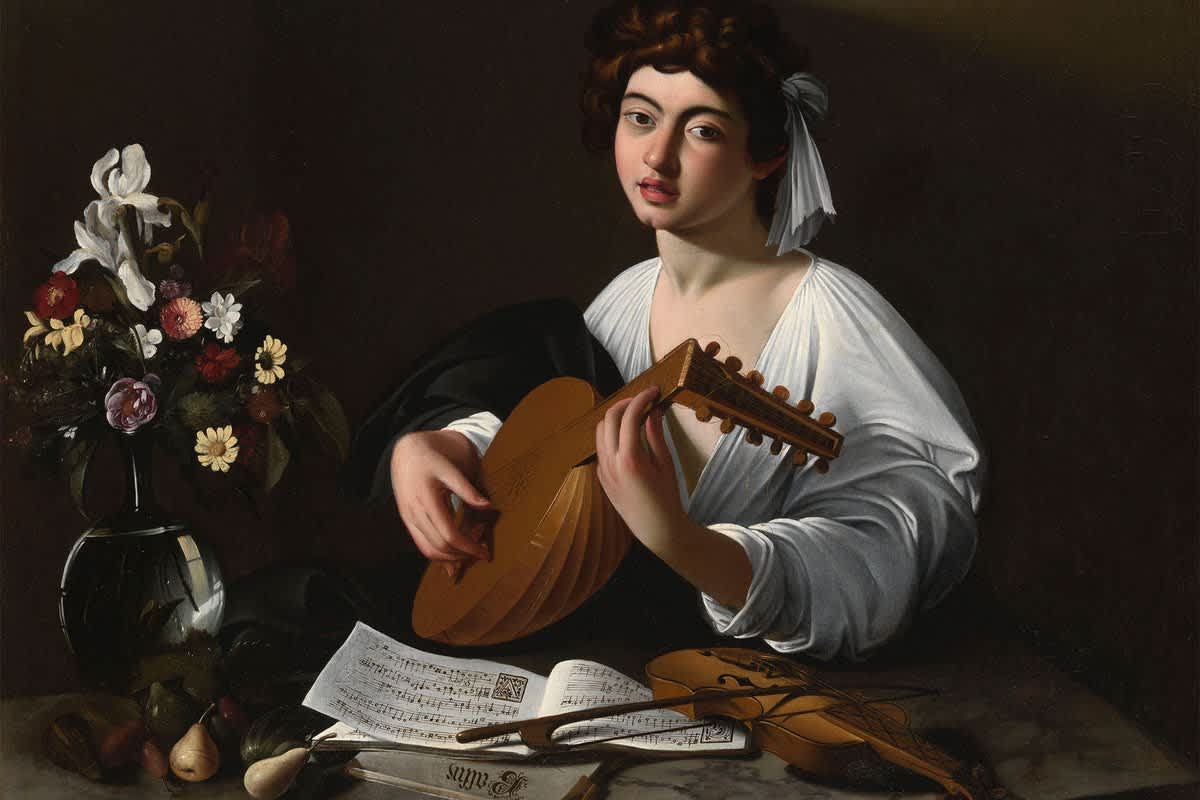
A painting dismissed by major auction houses and museums as a mere copy has been authenticated as a genuine work by Italian master Caravaggio through groundbreaking artificial intelligence analysis, upending decades of expert consensus and potentially adding tens of millions to the artwork’s value.
The AI analysis, conducted by Swiss firm Art Recognition in collaboration with the University of Liverpool, determined with 85.7% probability that “The Lute Player” housed at Badminton House in Gloucestershire is an authentic work by Michelangelo Merisi da Caravaggio, the revolutionary 17th-century artist.yahoo
Dr. Carina Popovici, head of Art Recognition, emphasized the significance of the finding: “Everything over 80% is very high and a strong match”. The Swiss company’s proprietary AI system uses advanced machine learning techniques, including Convolutional Neural Networks and Vision Transformers, to analyze brushwork, artistic style, and other characteristics by comparing them to verified Caravaggio works.yahoo
The authentication directly contradicts the longstanding position of prestigious institutions including Sotheby’s and New York’s Metropolitan Museum of Art. In 1969, Sotheby’s sold the painting as a copy “after Caravaggio” for just £750, and when it changed hands again in 2001 for £71,000, it was still catalogued as from the “circle of Caravaggio”.thenews
British art historian Clovis Whitfield, who purchased the painting in 2001 alongside collector Alfred Bader, has championed its authenticity for years. Whitfield noted that the painting’s intricate details, such as reflections on dewdrops of flowers, “corresponded exactly” with Giovanni Baglione’s 1642 description of a Caravaggio work he saw at Cardinal Francesco Maria del Monte’s palace.independent
Keith Christiansen, then head of European paintings at the Metropolitan Museum, had firmly rejected the attribution. In 2007, he wrote to collector Alfred Bader: “No one – certainly no modern scholar – has ever or ever would entertain the idea that your painting could be painted by Caravaggio”. Responding to the AI findings, Whitfield told The Guardian: “The AI result knocks Mr. Christiansen off his perch”.yahoo
The authentication carries enormous financial implications. Caravaggio works are extraordinarily rare, with only around 60 known authentic pieces surviving. When a newly discovered Caravaggio emerged in 2019, it was valued at approximately £96 million. The Art Recognition analysis not only authenticated the Badminton version but also concluded that the Wildenstein collection version, long considered the original, returned a “negative result” for authenticity.yahoo
Whitfield and Popovici discussed the findings today in the premiere of their new podcast “Is It?,” as the story continues to generate controversy in art authentication circles. The painting currently remains in London, with Whitfield expressing hopes it will eventually join a public collection.independent
The case represents a watershed moment for AI in art authentication, demonstrating how technology may reshape traditional connoisseurship in identifying genuine masterpieces worth tens of millions of dollars.aol