







Newsletter Subscribe
Enter your email address below and subscribe to our newsletter

Enter your email address below and subscribe to our newsletter
All voices matter
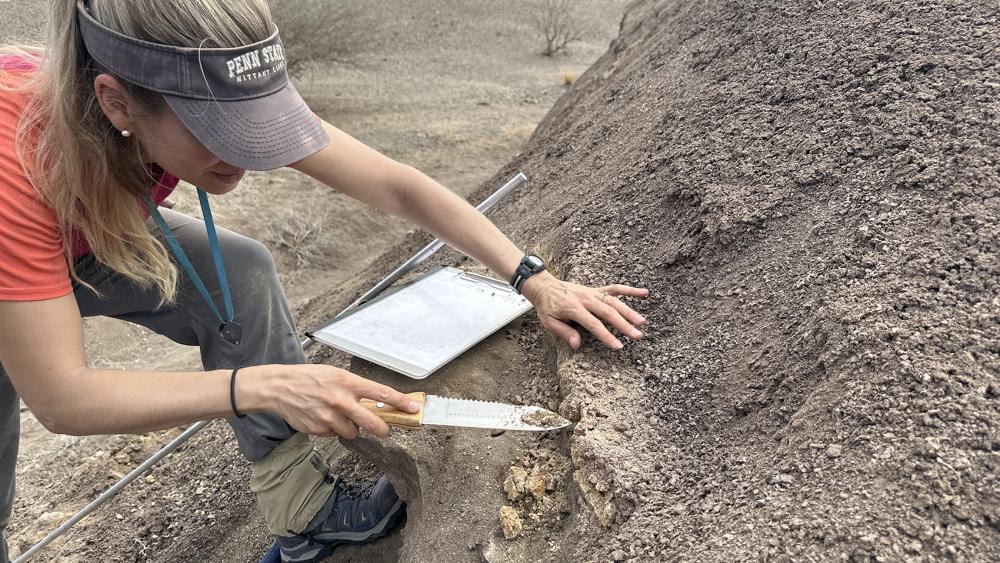
A fresh reading of Kenya’s volcanic past is rewriting some of humanity’s earliest chapters. Researchers have parsed three visually similar ash deposits in the Turkana Basin—known collectively as the Nariokotome Tuff Complex—and fixed their eruption dates to within about 2,000 years, according to a study published 15 September in the Proceedings of the National Academy of Sciences. The precision pushes a key West Turkana butchery site back roughly 30,000 years and offers a cleaner scaffold for tracking the rise of early Homo.pnas
Using single-crystal ^40Ar/^39Ar dating and laser-based trace-element “fingerprinting,” the team showed that the Upper, Middle and Lower Nariokotome tuffs represent three discrete eruptions, not the single pulse once assumed. “We can now confidently distinguish volcanic ash layers that erupted within just 1,000 to 2,000 years of each other,” lead author Saini Samim of the University of Melbourne told NDTV. The clarified sequence brackets fossil horizons and more than 7,000 stone tools at the Nadung’a site, tightening their age to about 1.52 million years.ndtv
The Turkana Basin is a cornerstone of paleoanthropology; deposits here have yielded Homo erectus skeletons, early Acheulean hand-axes and some of the first Homo sapiens fossils. Yet many layers sit only metres apart and were laid down amid frenetic volcanism, leaving archaeologists to juggle age estimates that could drift by tens of thousands of years. By resolving the Nariokotome tuffs, the new study lets researchers test whether technological leaps—such as the appearance of large cutting tools—were gradual or abrupt, and whether multiple hominin species overlapped in the same habitats.theconversation
The refined ash signatures also appear in Ethiopia’s Konso Formation, 400 kilometres north, allowing disparate fossil sites to be knitted into a single timeline. That correlation could illuminate how shifting rift-valley climates steered hominin migrations across East Africa’s patchwork of lakes and grasslands.ndtv
High-precision tephrochronology is spreading beyond Kenya. In August, Arizona State University geologists used ash bracketing to date a newly described hominin species in Ethiopia’s Afar region, and Penn State researchers earlier this month applied similar methods to Pliocene Australopithecus finds. The track-record has made volcanic glass “one of the most powerful tools for anchoring the human record in absolute time,” study co-author Hayden Dalton told The Conversation.asu
Field teams return to Turkana later this year aiming to extend the ash library deeper into the Pleistocene. If the layers cooperate, scientists could soon pin down when the first truly human footprints appeared on East Africa’s shifting volcanic canvas—a question as old as Homo itself.