







Newsletter Subscribe
Enter your email address below and subscribe to our newsletter

Enter your email address below and subscribe to our newsletter
All voices matter
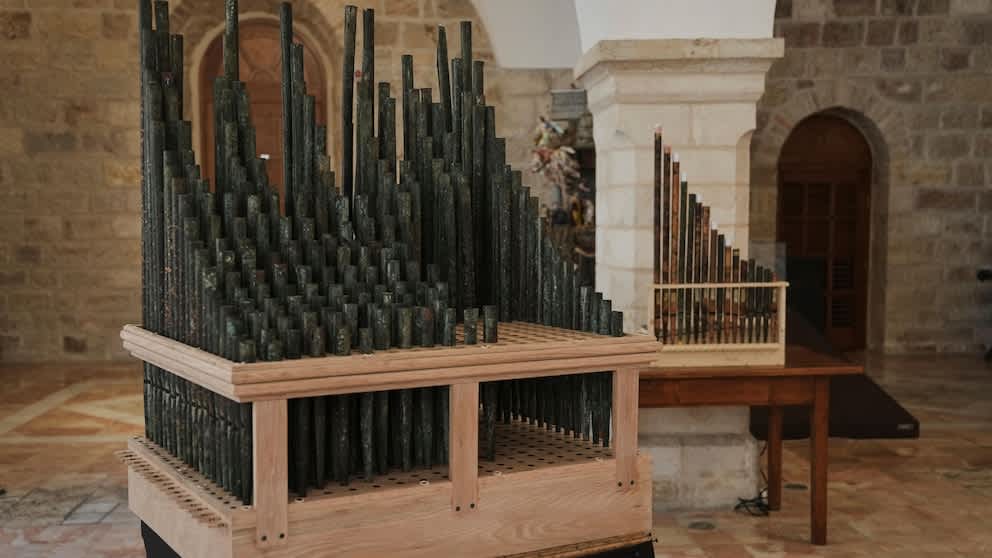
After centuries buried beneath Bethlehem’s ancient soil, the world’s oldest known Christian pipe organ resonated through Jerusalem’s Old City on Tuesday, marking a profound milestone in musical archaeology.
The instrument, featuring original 11th-century bronze pipes, produced its first sounds in 800 years as musician David Catalunya performed the liturgical chant “Benedicamus Domino Flos Filius” inside Saint Saviour’s Monastery. The haunting melodies echoed alongside distant church bells, creating what researchers described as a transformative moment in music history.seattletimes
The organ’s remarkable journey began in 1906, when construction workers building a Franciscan hospice in Bethlehem discovered it buried in an ancient cemetery. Archaeologists ultimately uncovered 222 bronze pipes, bells, and other artifacts that Crusaders had concealed to protect them from invading Muslim armies in the 12th century.apnews
“It was extremely moving to hear how some of these pipes came to life again after about 700 years under the earth and 800 years of silence,” said Koos van de Linde, an organ specialist involved in the restoration. “The hope of the Crusaders who buried them — that the moment would come when they would sound again — was not in vain.”washingtontimes
Researchers believe the Crusaders brought the organ to Bethlehem in the 11th century during their rule over Jerusalem. After approximately a century of use at what was likely a church near the Basilica of the Nativity, it was buried for safekeeping.aleteia
A team of four researchers led by Catalunya began working in 2019 to create a replica of the ancient instrument. However, they discovered that many original pipes remained functional after their centuries underground. Organ builder Winold van der Putten combined these authentic pipes with replicas crafted using ancient organ-making techniques informed by careful study of the originals.apnews
The restored instrument incorporates about half original components, which still bear guiding marks made by medieval craftsmen and engraved notations indicating musical pitches.washingtontimes
Alvaro Torrente, director of the Instituto Complutense De Ciencias Musicales in Madrid where Catalunya worked on the project, compared the discovery to “finding a living dinosaur, something that we never imagined we could encounter, suddenly made real before our eyes and ears”.apnews
The organ will now be permanently housed at the Terra Sancta Museum in Jerusalem’s Old City, just kilometers from its original Bethlehem location. The museum, which focuses on Christian presence in the Holy Land, is expected to fully open by 2028.apnews
Researchers plan to complete restoration of additional pipes and create copies for installation in churches across Europe and beyond. According to Catalunya, the wealth of preserved information allows modern craftsmen to reconstruct medieval manufacturing techniques to produce pipes exactly as they were created a millennium ago.washingtontimes
The project represents more than musical archaeology — it offers tangible proof that medieval hopes for preservation can transcend centuries, connecting contemporary audiences with Christianity’s earliest musical traditions in the Holy Land.