







Newsletter Subscribe
Enter your email address below and subscribe to our newsletter

Enter your email address below and subscribe to our newsletter
All voices matter
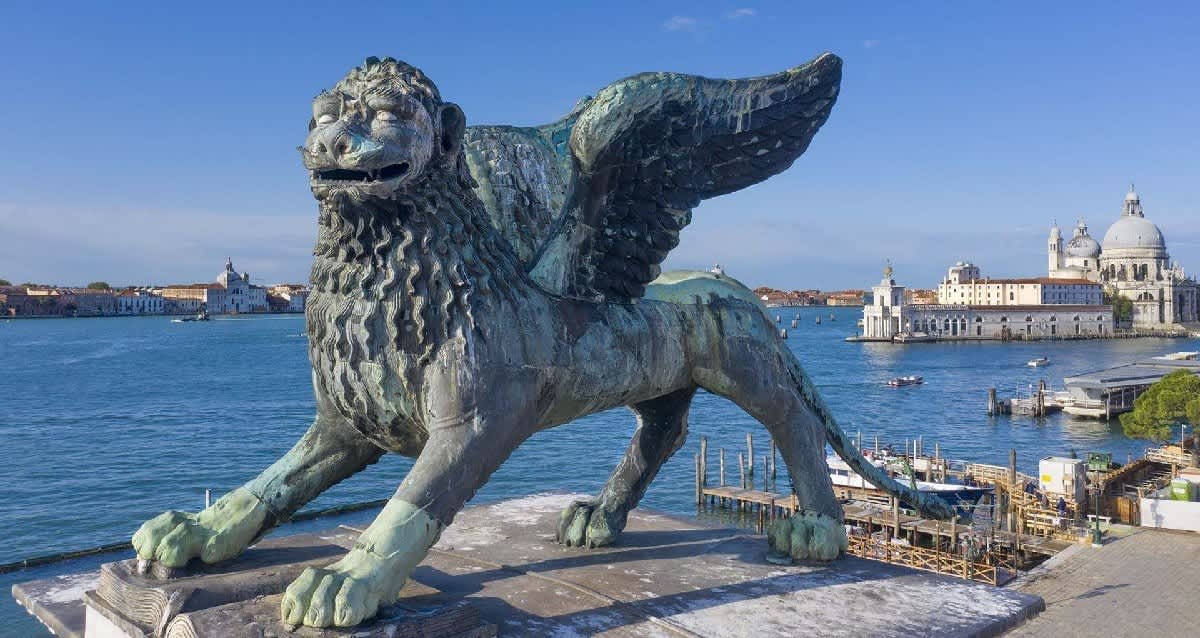
A new study has revealed that Venice’s iconic bronze winged lion statue, which has stood atop a column in St. Mark’s Square for over seven centuries, was actually crafted in ancient China during the Tang Dynasty and may have been brought to Italy via the Silk Road by Marco Polo’s father and uncle.
The research, published Thursday in the journal Antiquity, used advanced chemical analysis to trace the statue’s origins, overturning previous theories about its provenance and revealing an extraordinary tale of medieval trade and cultural exchange.livescience
The international team of researchers from the University of Padua, led by archaeologist Massimo Vidale, analyzed lead isotopes in bronze samples taken from the statue during a 1990 restoration. Using mass spectrometry, they compared the isotope ratios to worldwide reference databases and traced the copper ore to mines in China’s Lower Yangtze River basin.livescience
“Venice is a city full of mysteries, but one has been solved: the ‘Lion’ of St. Mark is Chinese, and he walked the Silk Road,” Vidale said in a statement. The copper deposits in this region of eastern China have been used for metalworking for over 3,000 years, dating back to the late Shang dynasty.artnet
This discovery contradicts earlier theories that suggested the statue originated in Anatolia during the Hellenistic period, between the 4th and 3rd centuries BC.finestresullarte
The research reveals that the statue was originally a “zhènmùshòu” or tomb guardian from China’s Tang Dynasty (618-907 AD). These hybrid creatures, placed outside burial chambers to deter grave robbers and provide prestige for the dead, typically featured lion-like muzzles, flaming manes, pointed ears, horns, and raised wings.livescience
The Venetian lion shows clear evidence of modification from its original form. Metal “scars” indicate where horns were removed, and the ears appear to have been shortened and rounded to make the creature look more lion-like. According to the study, these changes transformed a fearsome Chinese monster into a symbol suitable for representing St. Mark the Evangelist.arkeonews
Researchers theorize that Niccolò and Maffeo Polo, Marco Polo’s father and uncle, may have encountered the statue during their pioneering journey to Kublai Khan’s court in Beijing between 1264 and 1268. The Republic of Venice had recently adopted the winged lion as its official symbol in the early 1260s, and the Polo brothers “may have had the somewhat brazen idea of readapting the sculpture into a plausible (when viewed from afar) Winged Lion,” the study suggests.livescience
The merchants likely shipped the statue back to Venice in pieces along the Silk Road, where local artisans reassembled and modified it into the symbol now associated with Venice’s patron saint. The statue was already in place when Marco Polo returned from his famous travels in 1295, as the earliest historical document mentioning it dates to 1293.inquirer
This discovery adds new evidence to the extensive trade networks that connected medieval Europe with Asia, predating Marco Polo’s well-documented journeys and highlighting Venice’s role as a crucial link between East and West centuries before his famous expedition.artnet