






Newsletter Subscribe
Enter your email address below and subscribe to our newsletter

Enter your email address below and subscribe to our newsletter
All voices matter
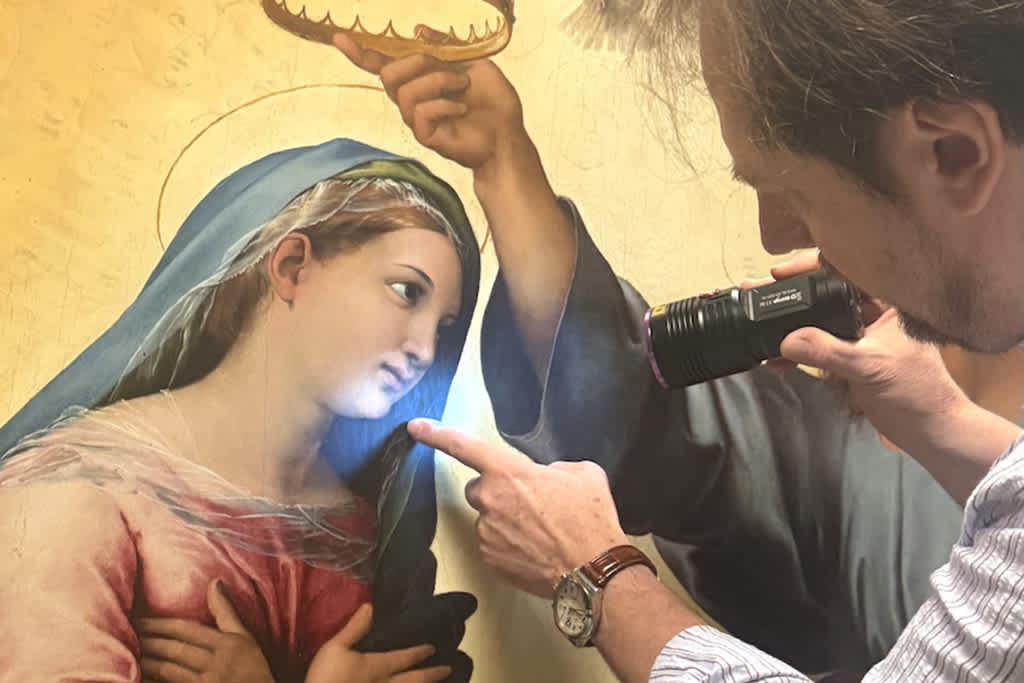
The Vatican Museums have announced an extraordinary restoration of Michelangelo’s Last Judgment fresco in the Sistine Chapel beginning in early 2026, representing the most extensive conservation effort on the Renaissance masterpiece in decades. The project is urgently needed to protect the monumental artwork from damage caused by the impact of high tourism levels, with the Vatican planning to complete the work by Holy Week in March 2026.artnet
Paolo Violini, who recently assumed leadership of the Vatican Museums’ Painting and Wooden Materials Restoration Laboratory in August, announced the restoration plans in an interview with Vatican News. The conservation work will involve erecting a temporary scaffold covering the entire 48-by-44-foot wall, equipped with an elevator system that will allow a team of 10 to 12 conservators to work simultaneously across approximately a dozen work platforms.finestresullarte
The extraordinary restoration differs significantly from the routine annual maintenance typically performed on the Last Judgment using simple mechanical lifts. The decision to undertake this comprehensive project stems from mounting concerns about the environmental pressures created by the Sistine Chapel’s massive visitor numbers. The Vatican Museums now welcome approximately six million visitors annually, a dramatic increase from the 1.5 million who visited in 1980. During peak summer months, the chapel can accommodate up to 20,000 visitors per day.artnet
According to Antonio Paolucci, former head of the Vatican Museums, the sheer volume of tourists creates “a mix of dust brought in from outside, body sweat and carbon dioxide, which all end up on the surface of the frescoes and can in time harm them”. This environmental challenge has led Vatican officials to describe the Sistine Chapel as “a victim of its own success”.voanews
Beyond the Last Judgment restoration, Violini is overseeing an ambitious five-year restoration project of Raphael’s Loggia, a stately corridor in the Papal Palace decorated by the artist’s assistants according to his designs. This ornate space contains fourteen bays of magnificent stucco and fresco work that Violini describes as “a world heritage site” that “gave rise to the decorative genre of the ‘grotesque,’ revived from Roman antiquity and widespread throughout the 16th century”.artnet
The Vatican recently completed a major ten-year restoration of the Hall of Constantine, another significant space in the Raphael Rooms, which was unveiled in June 2025. This project revealed new discoveries about Raphael’s innovative painting techniques, including his experimentation with oil paint directly on walls and the use of a grid of nails embedded in walls to hold resin surfaces.ap
The Sistine Chapel has undergone significant technological upgrades to address conservation challenges posed by mass tourism. In 2014, the Vatican installed an advanced climate control system designed by Carrier, replacing the original system from the early 1990s. The new system increased the chapel’s maximum capacity from 700 to 2,000 visitors at a time while providing sophisticated environmental controls.artnet
The current air conditioning system includes 92 sensors, 26 kilometers of wiring, and air filtration units capable of removing particles down to 0.1 micrometers. The system maintains air temperature at 20°C in summer, gradually moving to 25°C in winter, with relative humidity at the ceiling maintained at 55% plus or minus 5%. Additionally, 7,000 LED lights provide increased illumination while avoiding UV light that could damage the artwork.archaeology
Violini emphasized the Vatican’s unique responsibility in art conservation, noting that “more than in other institutions, here, there is a particular attention to the intangible value of the work of art.” The Vatican’s restoration laboratory, established in 1923 and recognized as Italy’s oldest, seeks to restore not only an artwork’s physical state but its sacred meaning.vaticanstate
The 2026 restoration of Michelangelo’s Last Judgment represents a continuation of the Vatican’s commitment to preserving its Renaissance treasures for future generations while balancing the competing demands of conservation and public access. As preparations begin for this ambitious project, the Vatican demonstrates its ongoing dedication to protecting one of humanity’s greatest artistic achievements from the unintended consequences of its global popularity.