Newsletter Subscribe
Enter your email address below and subscribe to our newsletter
Enter your email address below and subscribe to our newsletter

All voices matter
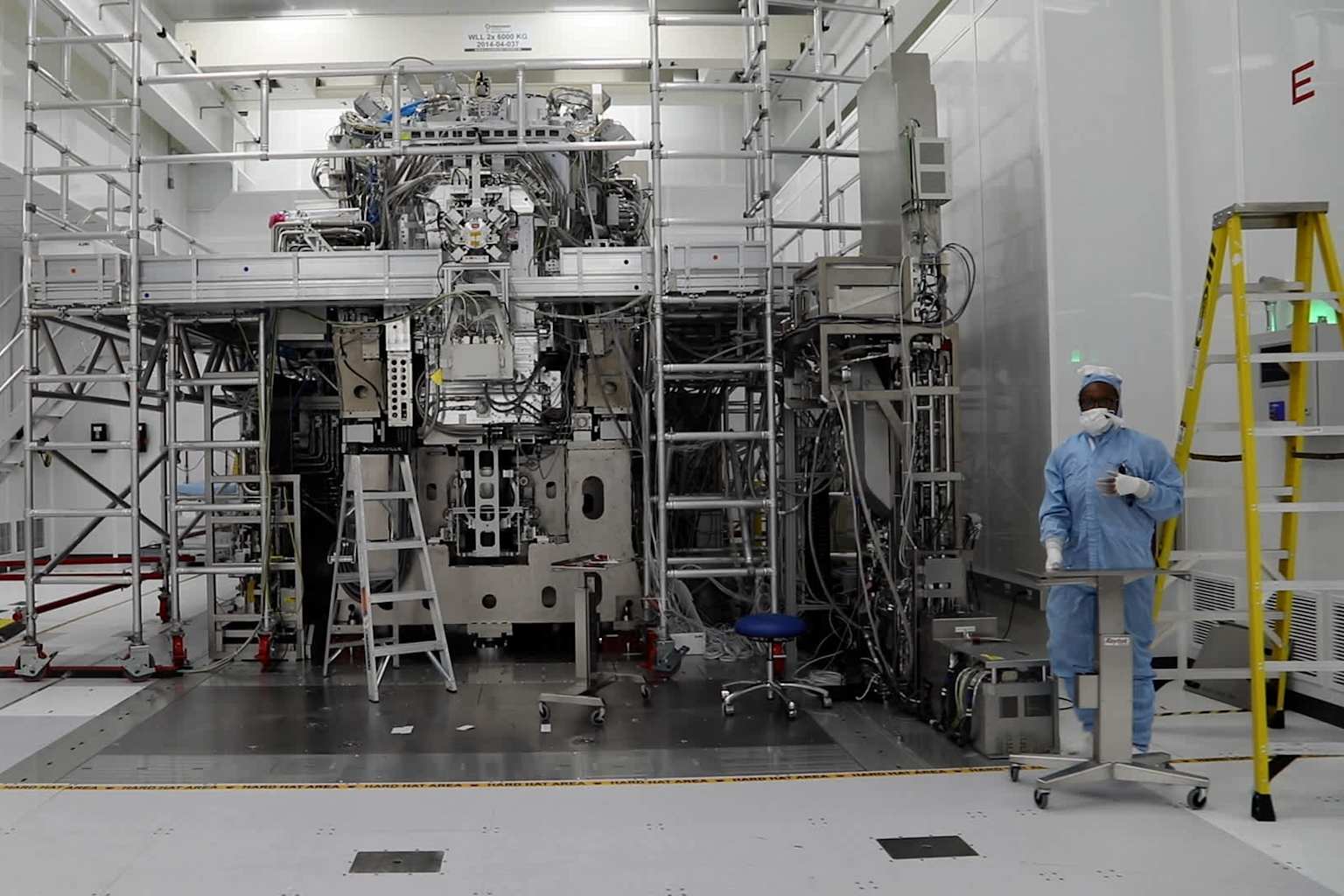
ASML Holding has categorically denied ever shipping an extreme ultraviolet lithography machine to China, pushing back against concerns raised by U.S. Commerce Secretary Howard Lutnick that restricted equipment may have reached China in violation of export controls. The confrontation added to a broader semiconductor selloff on Tuesday, sending ASML shares down more than 7% on June 23.
The dispute surfaced on June 19 when ASML issued an unusually explicit statement after Bloomberg reported that Lutnick had raised concerns directly with ASML executives during a series of meetings. “ASML has never shipped an EUV machine to China, nor have we shipped to China any component, module or equipment specially designed to be used in an EUV machine,” the company told Reuters. Senior U.S. officials claim to possess evidence of EUV-related component shipments but have declined to share the underlying records publicly.reuters
ASML pointed to the sheer impracticality of a secret export. Each EUV system weighs approximately 180 tons, comprises around 100,000 parts, and requires multiple cargo aircraft and dozens of trucks to transport. The company circulated an internal presentation titled “No indication of any ASML EUV System in China,” cataloguing all 314 operational EUV systems worldwide — none in China — and noting that every machine continuously communicates with ASML’s servers.aiweekly
The allegations compound a separate legislative threat. The bipartisan MATCH Act, introduced in April by Senators Risch, Ricketts, and Kim, would ban the sale and servicing of “chokepoint” semiconductor manufacturing equipment — including ASML’s deep ultraviolet systems — to countries of concern. China accounted for 33% of ASML’s revenue in 2025, a share the company expects to fall to roughly 20% in 2026 under existing restrictions. A full DUV ban would cut further into that figure.thenextweb
Dutch Trade Minister Sjoerd Sjoerdsma traveled to Washington this week to lobby against the MATCH Act, meeting with Lutnick and congressional leaders. The Netherlands opposes the law’s extraterritorial reach, arguing that countries should control their own exports.youtube
In a move underscoring the complexity of the moment, the Netherlands announced on Tuesday it would formally join Pax Silica, the U.S.-led initiative to secure AI and semiconductor supply chains launched in December 2025. Sjoerdsma and Jacob Helberg, the U.S. undersecretary of state for economic affairs who heads the initiative, are expected to frame the accession as promoting trade and economic security. The European Union is expected to join at a later date.globalbankingandfinance
The dual moves — joining America’s supply-chain coalition while resisting its export control legislation — illustrate the diplomatic tightrope the Netherlands faces as home to the world’s sole supplier of EUV technology.