Newsletter Subscribe
Enter your email address below and subscribe to our newsletter
Enter your email address below and subscribe to our newsletter

All voices matter
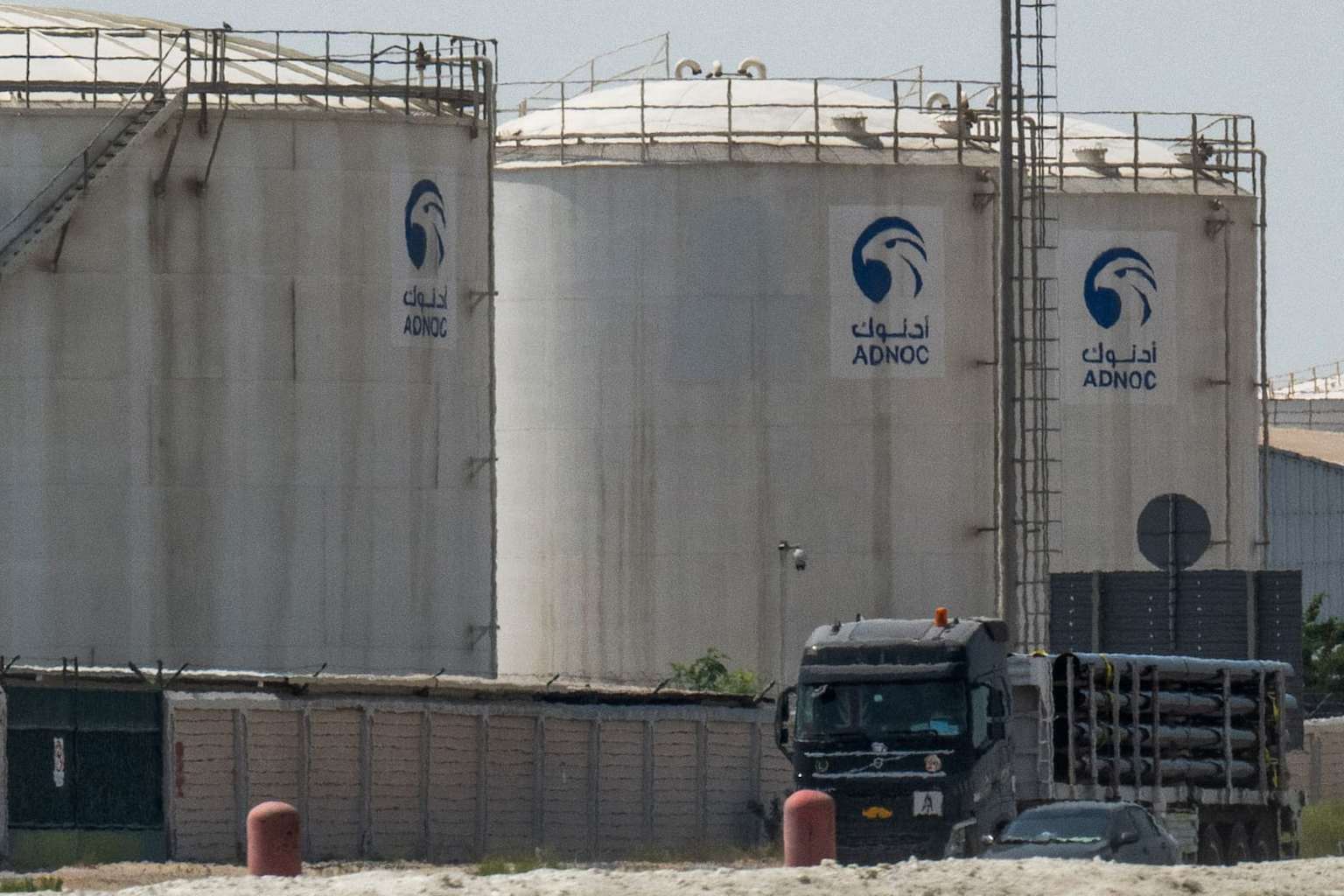
The United Arab Emirates’ oil exports rebounded to nearly 85% of pre-war levels in early June, according to the International Energy Agency, marking a rapid recovery enabled by pipeline infrastructure and alternative shipping routes that have allowed Gulf producers to work around the near-total closure of the Strait of Hormuz.
The IEA, in a commentary published June 22, outlined how the UAE achieved the recovery by leaning heavily on the 1.8-million-barrel-per-day Habshan-Fujairah pipeline, which bypasses the Strait of Hormuz entirely and connects Abu Dhabi’s oil fields to the Fujairah port on the Gulf of Oman. The country also drew on 42 million barrels of underground storage capacity at Fujairah and increased use of so-called “dark” shipping activity, with tankers traveling along the Omani coastline with transponders turned off.x
The recovery represents a dramatic turnaround from March, when UAE oil production slumped by nearly half to around 1.9 million barrels per day following Iran’s blockade of the strait. By May, total exports had climbed back to 3.1 million barrels per day, up 260,000 barrels per day month-on-month, according to Reuters, citing the IEA’s June Oil Market Report.boereport
Saudi Arabia has also rerouted the bulk of its exports through the East-West pipeline, which was restored to its full 7-million-barrel-per-day capacity in April after auxiliary natural gas liquids lines were converted to carry crude. Exports from the Red Sea port of Yanbu surged to approximately 5 million barrels per day, with an additional 700,000 to 900,000 barrels per day of refined products also flowing through the route.bloomberg
Goldman Sachs estimated in a June 17 note that a combined 7.5 million barrels per day were flowing through Yanbu, Fujairah, and the Turkish port of Ceyhan, and that full normalization of Gulf exports could be achieved even with Hormuz flows recovering to just 70% of pre-war levels.investing
The IEA’s findings come as the United States and Iran reached an agreement to end the three-month conflict, which includes Iran reopening the Strait of Hormuz and the U.S. lifting its naval blockade. The agency warned, however, that recovery would be gradual and that a resulting supply surge in 2027—with global output set to rise by 8 million barrels per day against demand growth of just 2 million barrels per day—could tip markets into a large surplus.ibtimes
The UAE’s export resilience has taken on added weight following its departure from OPEC in May, which removed production quota constraints and cleared the way for Abu Dhabi National Oil Company to pursue its target of 5 million barrels per day of output by 2027.reuters