Newsletter Subscribe
Enter your email address below and subscribe to our newsletter
Enter your email address below and subscribe to our newsletter

All voices matter

Japan’s Nikkei 225 slipped on Wednesday, extending losses for a second consecutive session as the fallout from a global technology selloff continued to weigh on markets. The index opened at 69,845, below its previous close of 69,788.38, and traded lower through the session, even as South Korea’s Kospi staged a sharp recovery.moneycontrol
The Wednesday decline followed a far steeper drop on Tuesday, when the Nikkei plunged 3.55%, or roughly 2,565 points, ending an eight-session winning streak and closing below the 70,000 level for the first time in a week. The selling was part of a worldwide rout in technology stocks that began on Wall Street and swept through Asian and European markets.cnbc
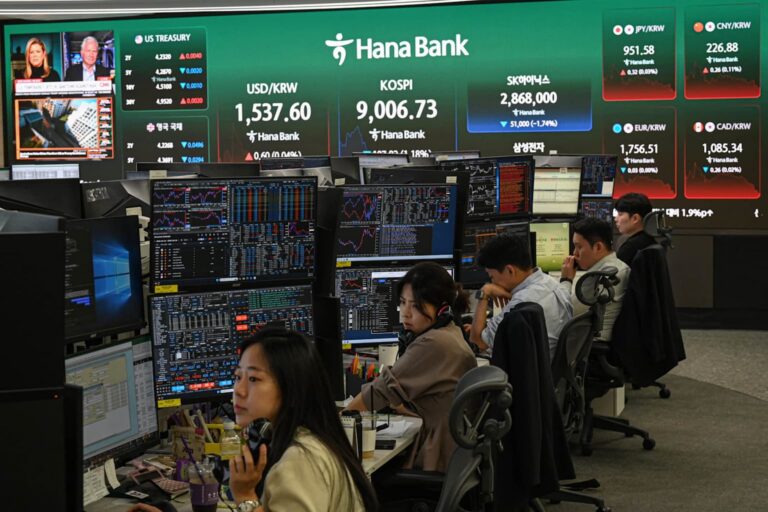
South Korea bore the brunt of the damage on Tuesday, with the Kospi crashing nearly 10% and triggering a 20-minute trading halt. Chip heavyweights SK Hynix and Samsung Electronics each fell more than 12%. By Wednesday, however, the Kospi had rebounded more than 3%, with Samsung surging over 6% and SK Hynix gaining roughly 3%.cnbc
The selloff was driven by mounting investor anxiety over the enormous capital expenditures technology companies are committing to artificial intelligence infrastructure, with questions growing about whether future returns can justify the spending. On Tuesday in New York, the S&P 500 fell 1.4% and the Nasdaq Composite dropped 2.2%, led by declines in semiconductor and megacap technology stocks.yahoo
Concerns about the prospect of interest rate increases later this year have compounded the pressure on growth-oriented tech shares, as investors rotated toward sectors perceived as offering more predictable earnings. The Philadelphia semiconductor index also fell sharply as investors offloaded positions in chipmakers and AI-related companies. Attention now turns to Micron Technology’s quarterly results on June 24, a closely watched report given the stock’s more than 300% rally since January.cnbc
The turbulence marks a pause in what has been a remarkable year for Japanese equities, with the Nikkei up roughly 33% in 2026 as of early June, propelled by AI-driven demand for semiconductors and a weak yen that has boosted export-oriented companies. Progress in U.S.-Iran peace talks also contributed to the sector rotation, as easing geopolitical tensions reduced the premium on growth stocks and encouraged flows into defensive sectors. The MSCI Asia Pacific Index rose 0.8% on Wednesday after tumbling 3.6% the prior day, its steepest single-session decline since early March.youtube