








Newsletter Subscribe
Enter your email address below and subscribe to our newsletter

Enter your email address below and subscribe to our newsletter
All voices matter
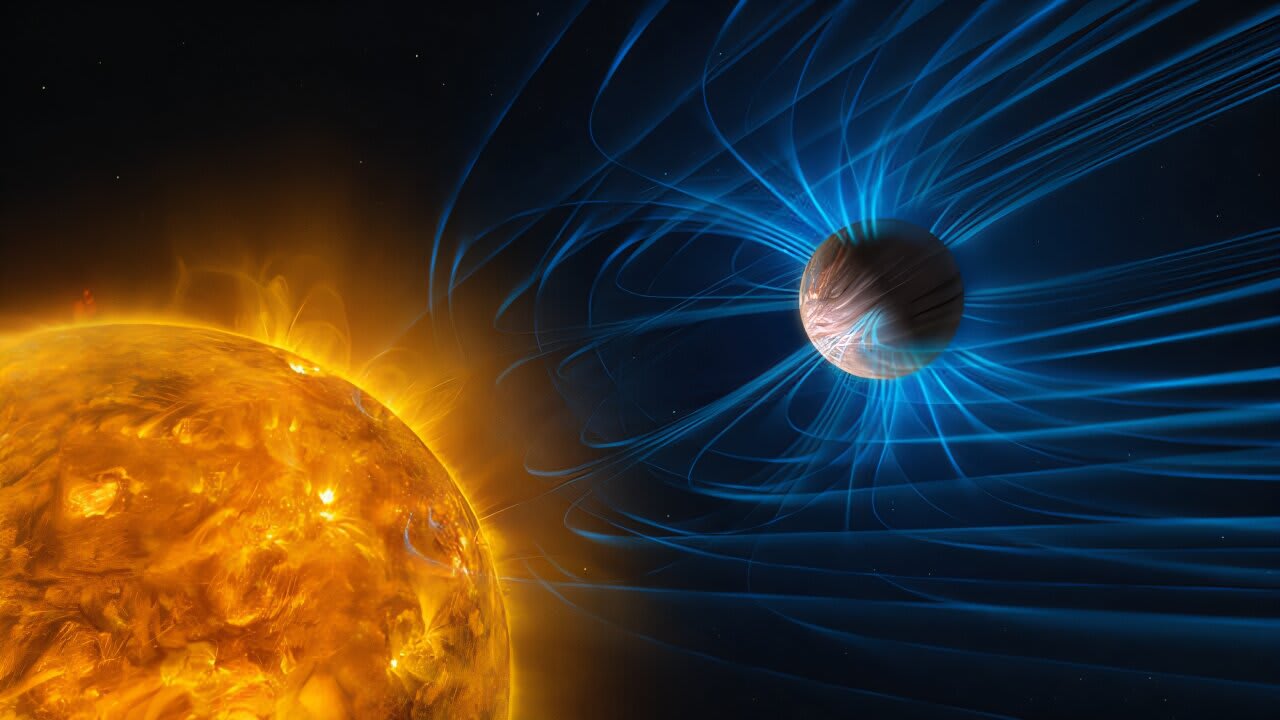
A team of astronomers has uncovered the strongest evidence to date that planets beyond our Solar System possess magnetic fields, a discovery that could reshape the search for habitable worlds. The study, published Monday in Nature Astronomy, describes the first robust measurements of magnetic field strengths on exoplanets, finding them comparable to those of planets orbiting our own Sun.eurekalert
Using the European Southern Observatory’s Very Large Telescope in Chile and the Gemini North telescope in Hawaii, the researchers measured wind speeds on seven ultra-hot Jupiter-like exoplanets — massive gas giants tidally locked to their host stars. The team, led by Julia Seidel of the Observatoire de la Côte d’Azur in France, initially set out to study atmospheric winds, not magnetism.phys
What they found defied expectations. Across the sample, wind speeds ranged from roughly 7,200 km/h to over 25,000 km/h. But as planet temperatures rose, the winds slowed — the opposite of what physics would predict.eso
“This is totally counter intuitive because, all things being equal, hot planets have more energy to accelerate the winds,” said study co-author Vivien Parmentier, a professor at the Laboratoire Lagrange. “Something must happen that slows down the wind speeds for hotter objects.”eso
The most consistent explanation, the team concluded, is that planet-wide magnetic fields act as a brake on the motion of charged particles in these atmospheres. The inferred magnetic field strengths are roughly four times that of Saturn or about half the strength of Jupiter’s.eurekalert
On Earth, the magnetic field shields the atmosphere from solar wind, helping the planet retain water and sustain life. The ability to gauge magnetic properties of distant worlds could prove valuable in identifying which exoplanets might be capable of supporting similar conditions.eurekalert
“This breakthrough opens a completely new window on exoplanet research,” Seidel said. “It’s the first time we can compare the magnetic environments of other worlds — a key step toward ultimately understanding which planets can stay alive, keep their water, and perhaps even, one day, host life as we know it.”eso
The team has already turned its attention to the future. Study co-author Bibiana Prinoth, an astronomer at ESO, noted that the forthcoming Extremely Large Telescope could extend such measurements to smaller, Earth-like planets and potentially detect signs of magnetically driven aurorae on distant worlds.eso