





Newsletter Subscribe
Enter your email address below and subscribe to our newsletter

Enter your email address below and subscribe to our newsletter
All voices matter
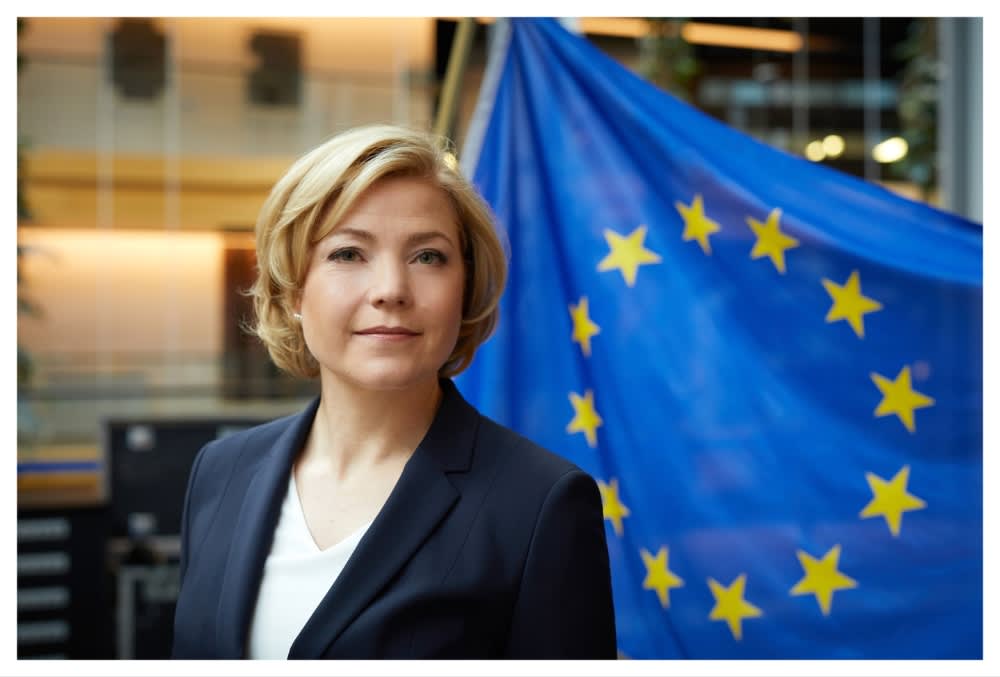
The US government’s abrupt order forcing Anthropic to suspend its most advanced AI models for all non-American users has become a rallying point for European officials seeking to accelerate the continent’s technological independence, with EU Executive Vice President Henna Virkkunen using VivaTech 2026 in Paris to press the case for homegrown alternatives.
Speaking to CNBC on Wednesday at VivaTech, Virkkunen said the US decision to restrict access to Anthropic’s Fable 5 model underscored the urgency for Europe to build its own AI capabilities. German Digital Minister Karsten Wildberger joined her in discussing whether G7 allies could negotiate access to US technology models.facebook
The controversy traces back to June 11, when the US Commerce Department issued an export control directive ordering Anthropic to halt all access to its Fable 5 and Mythos 5 models by any foreign national, whether inside or outside the United States. Anthropic said it received the order at 5:21 p.m. ET and was forced to disable the models for all customers to ensure compliance. Amazon.com, Inc.’s cloud division AWS confirmed it had revoked access at Anthropic’s request.reuters
The move sent shockwaves across Europe, according to Al Jazeera, given the continent’s heavy dependence on US-developed AI systems. Anthropic executives met with White House and Commerce Department officials on Monday to discuss the directive, the BBC reported.aljazeera
Virkkunen’s remarks at VivaTech built on a broader legislative push. On June 3, the European Commission unveiled a tech sovereignty package including a Cloud and AI Development Act and Chips Act 2.0, designed to reduce reliance on US tech firms for critical infrastructure. Virkkunen said at the time that the Commission’s goal was to ensure no cloud providers handling critical operations possess a “kill switch”.reuters
The proposals would require EU governments to conduct sovereignty risk assessments of their technology infrastructure and shift sensitive operations to European providers where necessary. The package also includes an open-source strategy to prevent lock-in to proprietary systems from a handful of global companies.techpolicy
VivaTech 2026, running June 17-20 in Paris, featured sessions on “Building Competitiveness, Security & Sovereignty” with Virkkunen as a headline speaker. The conference has become a venue for European leaders to articulate a vision of digital autonomy distinct from both the US and China.vivatech
The EU’s proposed regulations still require approval from all 27 member states and the European Parliament, a process expected to take months. But the Anthropic episode — in which allied nations found themselves cut off from frontier AI tools overnight — has lent fresh momentum to what had been an abstract policy debate.reuters