







Newsletter Subscribe
Enter your email address below and subscribe to our newsletter

Enter your email address below and subscribe to our newsletter
All voices matter
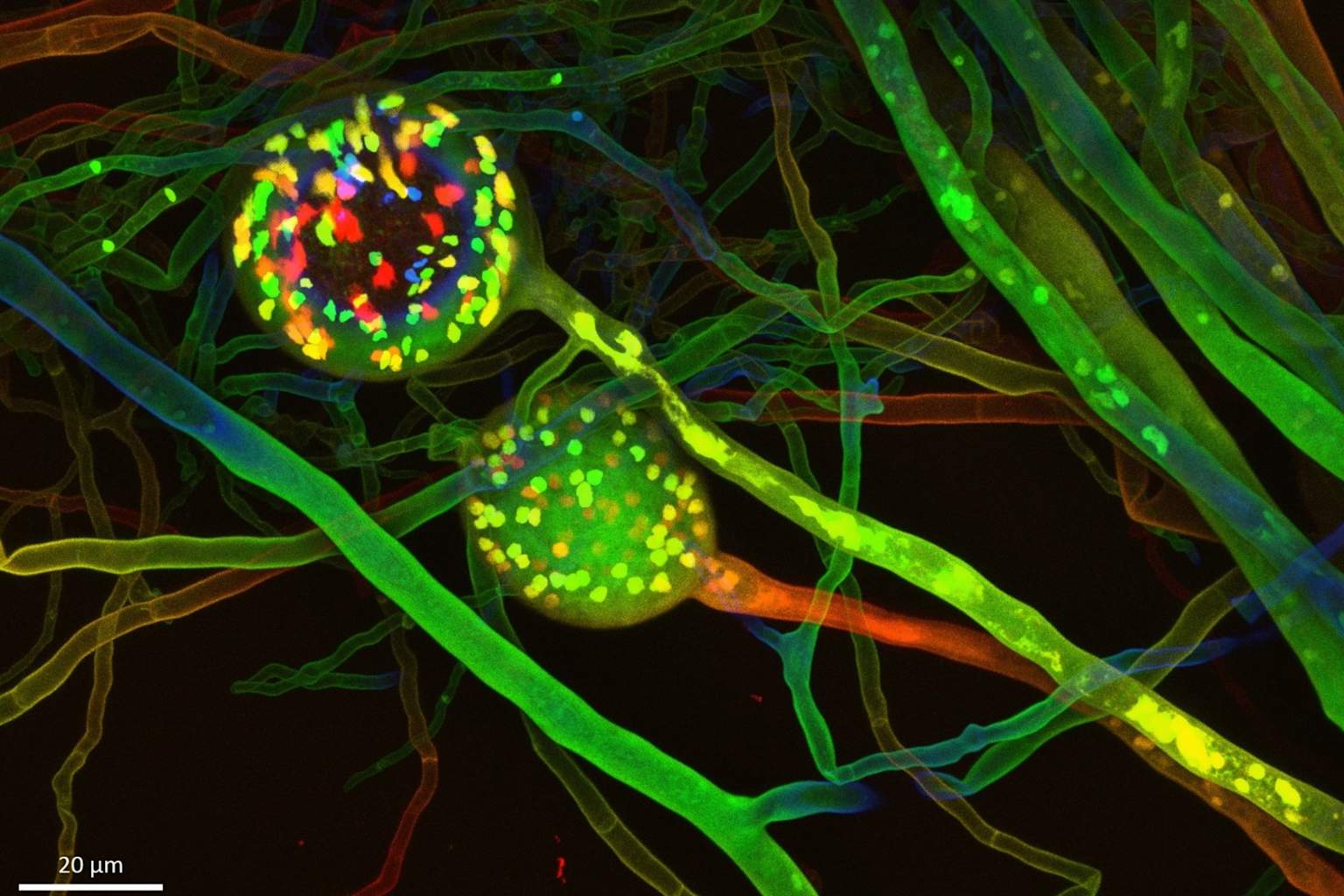
An international team of scientists has published the first global map estimating the scale and distribution of underground fungal networks, revealing that Earth’s topsoils contain roughly 110 quadrillion kilometers of fungal filaments — nearly a billion times the distance from the Earth to the sun.
The study, published in the journal Science on June 11, shows that arbuscular mycorrhizal (AM) fungi, which form symbiotic relationships with approximately 70% of plant species, constitute a vast subterranean infrastructure far larger than previously understood.eurekalert
Researchers from the Society for the Protection of Underground Networks (SPUN) assembled data from more than 16,000 soil cores collected worldwide and developed machine-learning models to predict network density in unsampled ecosystems. In collaboration with the AMOLF Biophysics Institute, the team calibrated their models using robotic imaging of over 300,000 living fungal hyphae grown in the laboratory.eurekalert
The networks weigh an estimated 300 megatons of carbon — four to six times the mass of all living humans — and shuttle roughly four billion metric tons of CO₂ equivalent into soils each year, corresponding to about 11% of global human-caused carbon dioxide emissions.vu
“It is hard to overstate the importance and enormity of these fungi,” said lead author Justin Stewart, a systems ecologist at Vrije Universiteit Amsterdam. “There could be up to 10 meters of mycorrhizal network in just a teaspoon of soil.”eurekalert
The mapping effort found that grassland ecosystems harbor an estimated 40% of the planet’s AM fungal infrastructure. The flooded grasslands of South Sudan, the Florida Everglades, and the Tibetan Plateau showed exceptionally high predicted network densities.vu
Yet these ecosystems face growing pressure. Large-scale agricultural croplands were associated with roughly 50% lower fungal network densities compared to wild ecosystems, and grasslands are being converted to farmland four times faster than forests. A related SPUN study published last month in Conservation Letters found that 95% of biodiversity hotspots for AM fungi lie outside protected areas.eurekalert
Co-author Merlin Sheldrake said the research represents “an exciting step towards understanding how this planetary circulatory system operates,” adding that the findings suggest ways to “better work with fungi to help address many of the unfolding challenges of our times, from food security to climate change.”eurekalert
SPUN Executive Director Toby Kiers, a recent MacArthur Fellow and Tyler Prize winner, said the research should reshape climate policy. “Fungi have been ignored in climate and conservation for too long,” Kiers said. “Now is the time to change that trajectory.”eurekalert