Newsletter Subscribe
Enter your email address below and subscribe to our newsletter
Enter your email address below and subscribe to our newsletter

All voices matter
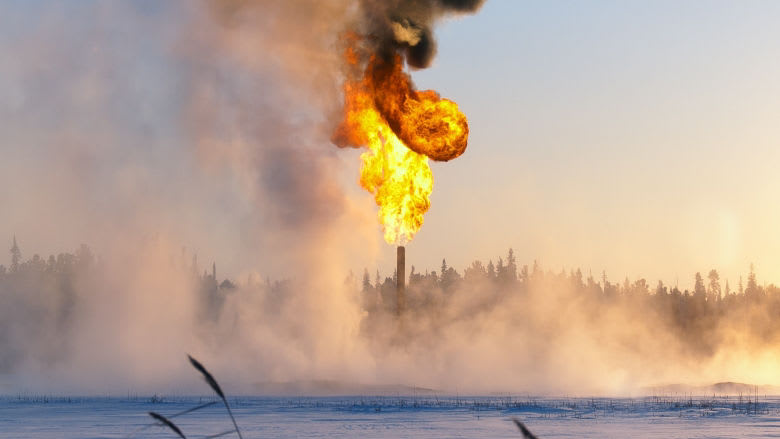
Global gas flaring surged to 167 billion cubic meters in 2025, marking a third consecutive annual increase and wasting an estimated $54 billion worth of natural gas, the World Bank announced on Monday in its annual Global Gas Flaring Tracker report.worldbank
The volume, nearly equal to Africa’s entire annual gas consumption, represents the highest level of flaring in six years and underscores the widening gap between pledges to eliminate routine flaring by 2030 and the reality on the ground.straitstimes
Russia, Iran, and Iraq together flared approximately 84 billion cubic meters in 2025 — nearly half the global total — with Russia and Iran accounting for much of the year-on-year increase, according to the World Bank data. Russian newspaper Vedomosti Daily earlier this month cited official statistics office Rosstat data showing 25.1 billion cubic meters of associated gas were flared in Russia in 2025, up 6.8% from 2024.straitstimes
Nine countries — Russia, Iran, Iraq, Venezuela, Mexico, Libya, Algeria, Nigeria, and the United States — accounted for more than four-fifths of global flaring while producing roughly half of the world’s oil.worldbank
The World Bank estimates that eliminating routine flaring globally would require $70–100 billion in investment — less than twice the annual value of the gas currently being wasted. Despite the tools to end routine flaring being well established, the practice persists due to what the bank describes as structural barriers: inadequate regulation, insufficient capital, limited market infrastructure, and a failure to prioritize reductions.worldbank
“At a time when many countries are struggling to increase affordable and reliable energy, the economic development costs of continued flaring are simply too high,” said Demetrios Papathanasiou, World Bank Group Global Director for Energy.worldbank
Not all the news was discouraging. Kazakhstan has reduced flaring by 87% since 2012, including a further 16% reduction in 2025 alone, demonstrating that effective policies and investment can deliver results.worldbank
“The cost of inaction will be measured in wasted billions in revenue and energy insecurity for millions of people,” said Zubin Bamji, World Bank Manager for the Global Flaring and Methane Reduction Partnership.worldbank