Newsletter Subscribe
Enter your email address below and subscribe to our newsletter
Enter your email address below and subscribe to our newsletter

All voices matter
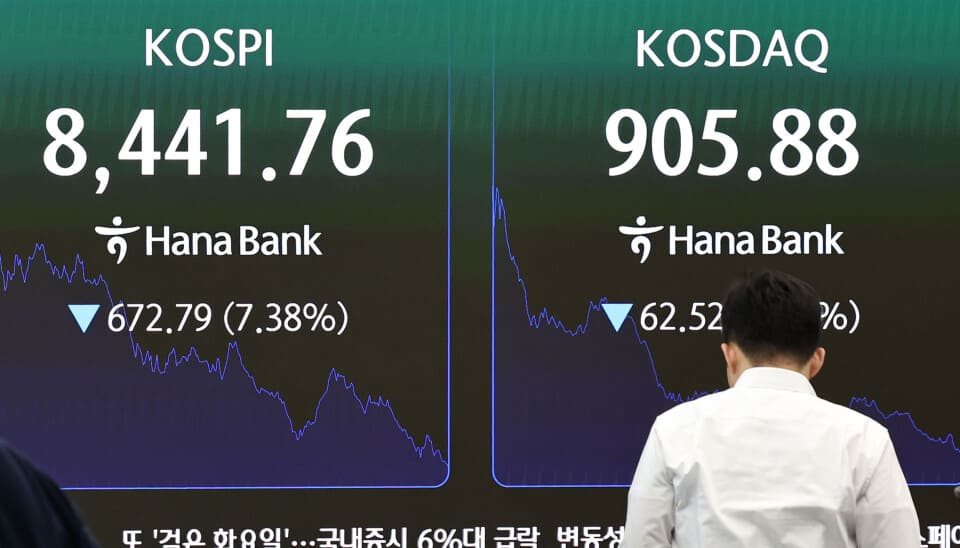
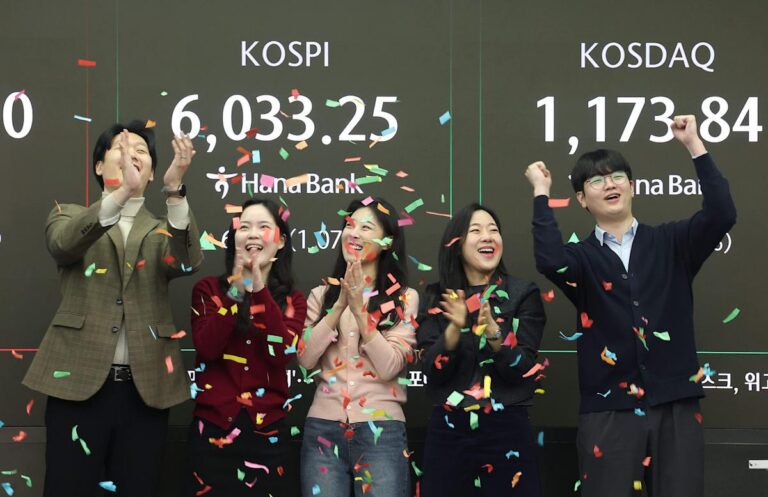
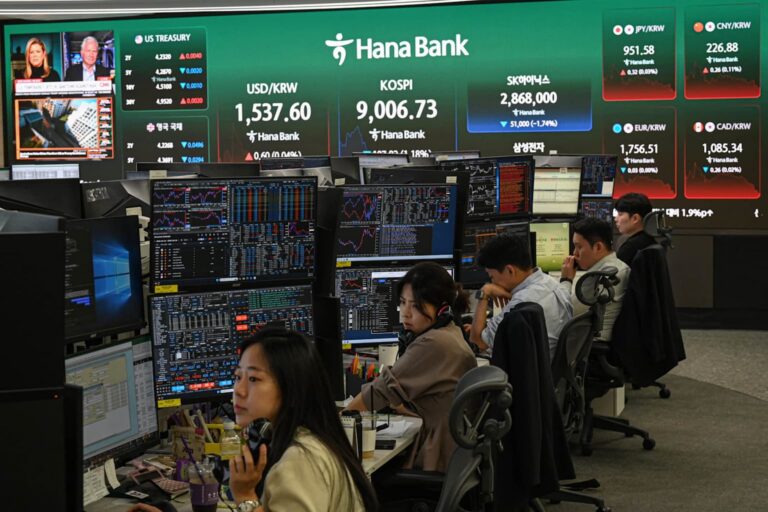
South Korea’s Kospi index plunged nearly 10% on Tuesday, triggering a circuit breaker halt and dragging U.S. semiconductor stocks sharply lower in a cascading global selloff that exposed fragilities in the AI-fueled rally that had powered markets to record highs.
The Kospi sank 910.71 points, or 9.99%, to close at 8,203.84 after the Korea Exchange suspended trading for 20 minutes when the index breached an 8% decline threshold, according to Yonhap News Agency. Losses deepened after trading resumed. Samsung Electronics and SK Hynix — which together account for roughly half the index’s market capitalization — each fell more than 12%.business-standard
The rout was sparked in part by South Korea’s Financial Supervisory Service, whose governor Lee Chan-jin told Bloomberg he regretted not preventing the introduction of leveraged ETFs focused exclusively on Samsung and SK Hynix, according to Forbes. Foreign investors had already been offloading South Korean equities for weeks, selling more than $62 billion worth of shares as of late May, according to Goldman Sachs data cited by CNBC.cnbc
The selloff rippled into U.S. markets, where the Nasdaq Composite fell roughly 2.1% and the S&P 500 dropped about 1.3%. Micron Technology plummeted more than 13% a day before its scheduled earnings report. Nvidia declined more than 4%, while Intel, Broadcom, and AMD also posted losses. The Wall Street Journal reported that the Dow Jones Industrial Average finished the session barely changed.thestreet
The CBOE Volatility Index reached its highest level in more than a week as traders reassessed the sustainability of AI-related spending and its capacity to justify elevated valuations.usnews
Compounding investor anxiety was a Monday note from Bank of America forecasting three Federal Reserve rate hikes totaling 75 basis points before year-end — in September, October, and December — which would lift the federal funds rate to a range of 4.25% to 4.5%. The call, the most hawkish among major brokerages, reflected expectations that new Fed Chair Kevin Warsh would take a harder line on inflation, which BofA expects to register 3.5% on the core PCE measure. Deutsche Bank separately forecast 50 basis points of hikes this year.cnbc
Despite the carnage, Barron’s noted that the Kospi remains up more than 94% over the past year, underscoring just how far AI optimism had carried markets before Tuesday’s reversal.barrons