






Newsletter Subscribe
Enter your email address below and subscribe to our newsletter

Enter your email address below and subscribe to our newsletter
All voices matter
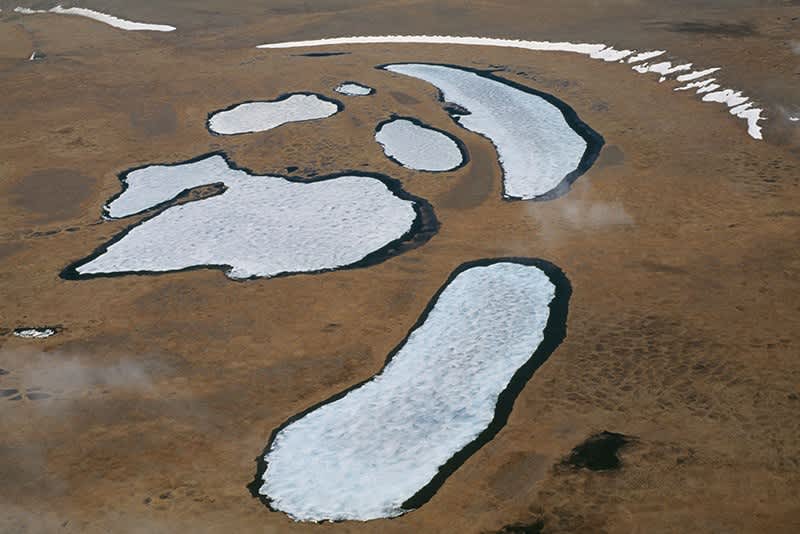
A study published on June 5 in Nature Climate Change has found that methane-consuming microbes in natural ecosystems cannot keep up with the increased methane production driven by global warming, describing what researchers call a “seemingly inevitable” positive feedback loop that will accelerate climate change.eurekalert
The research, led by Professor Mark Trimmer of Queen Mary University of London, used a novel approach: sampling naturally heated streams in remote parts of Alaska, Greenland, Iceland, Svalbard, and Kamchatka, Russia. These geothermally warmed sites allowed scientists to observe how methane-cycling microbes behave after centuries of adaptation to higher temperatures — effectively previewing what the rest of the planet may face as it warms.eurekalert
Nearly half of all methane released into the atmosphere comes from microbes in lakes, ponds, and wet soils. The amount that reaches the atmosphere depends on a balance between methane-producing microbes and methane-consuming ones. While both types are stimulated by warming, the study found that consumers cannot fully offset the extra methane being generated.eurekalert
“What is remarkable is that despite the complexity of microbial processes involved in the emission of methane from natural ecosystems, we find the same strong temperature sensitivity among the diversity of geothermally heated freshwaters across the Arctic region,” said Professor Gabriel Yvon-Durocher of the University of Exeter.eurekalert
In a separate line of research, scientists have documented an unexpected methane-removal process triggered by the 2022 eruption of Hunga Tonga–Hunga Ha’apai. A study published May 7 in Nature Communications found that the volcano blasted salty seawater and ash into the stratosphere, where sunlight created highly reactive chlorine particles that destroyed roughly 900 tons of methane per day.sciencenews
The discovery, confirmed by satellite detection of formaldehyde — a byproduct of methane breakdown — could help researchers evaluate proposals to artificially accelerate methane removal from the atmosphere.sciencedaily
Together, the two studies highlight both the growing threat of natural methane emissions and a potential avenue for intervention. The Trimmer team’s work underscores that natural methane sinks have a ceiling, making human-driven emissions reductions all the more urgent. Meanwhile, the Tonga findings offer what Science News described as “clues to fighting climate change,” though scientists caution that translating a stratospheric phenomenon into a tropospheric intervention remains a substantial challenge.cnn