








Newsletter Subscribe
Enter your email address below and subscribe to our newsletter

Enter your email address below and subscribe to our newsletter
All voices matter
Seven months after Austrian developer Peter Steinberger released a weekend project called Clawdbot, the open-source personal AI assistant now known as OpenClaw has reshaped how the world’s largest technology companies think about autonomous software. Microsoft, Google, and Meta are each building on or replicating the framework, turning a single-developer experiment into the reference architecture for always-on AI agents.
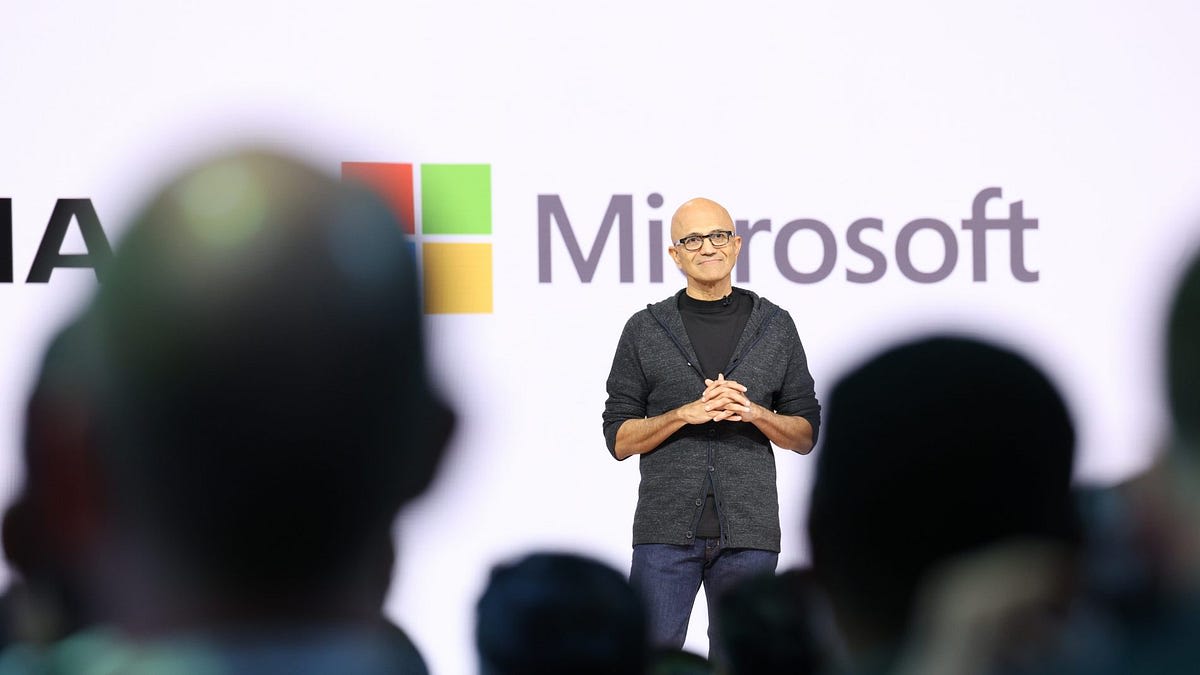
At its Build conference in early June, Microsoft announced it is fully embracing OpenClaw. CEO Satya Nadella revealed that Scout, the company’s first proactive AI agent for Microsoft 365, will be powered by OpenClaw’s gateway when it rolls out more broadly later this summer. Microsoft plans to contribute its security guardrails back to the open-source project. Steinberger confirmed the relationship on X, writing that Scout is “not OpenClaw-like, it is the OpenClaw gateway”.sources
Microsoft is positioning Windows as an agent execution platform by running OpenClaw inside Microsoft Execution Containers, a sandboxed environment designed to satisfy enterprise demands for auditability and access control. The approach reflects Microsoft’s longstanding playbook: embrace the software developers already use, make it safer on Windows, and monetize the management layer.windowsforum
Google has taken a more guarded path. Rather than adopting OpenClaw directly, it has built Gemini Spark, an always-on assistant that mirrors OpenClaw’s behavioral template — composing emails, monitoring subscriptions, maintaining context — while keeping users inside Google’s own model and infrastructure stack. The company has opened limited integration paths for OpenClaw agents to reach Google Workspace but appears intent on controlling the interface layer itself.thelettertwo
Meta, meanwhile, is reportedly developing a consumer-focused agent called Hatch, tested against simulated versions of services such as DoorDash, Reddit, and Etsy. Where Microsoft targets enterprise workers and Google defends its productivity suite, Meta is aiming at everyday digital errands — shopping, booking, browsing — at a rumored price point of up to $200 per month.windowsforum
OpenClaw launched in late November 2025 and has since accumulated roughly 377,000 GitHub stars, making it the platform’s most-starred repository. The framework runs on a user’s own hardware, connects to messaging apps including WhatsApp, Telegram, and Slack, and acts proactively — scanning inboxes, managing calendars, and executing tasks without being prompted. It is model-agnostic, supporting Claude, GPT-4, Gemini, and local models.linkedin
Steinberger joined OpenAI in February 2026, and the project transitioned toward a foundation-backed governance model. Security has remained a persistent concern; researchers found over 30,000 exposed instances running without authentication, and nine CVEs were disclosed in a single four-day stretch earlier this year.openclawvps
The convergence of three trillion-dollar companies around a single open-source project underscores a shift in how the industry views AI agents. As the WindowsForum analysis put it: “OpenClaw is dangerous to incumbents because it suggests that this layer could be open, portable, and user-controlled”.windowsforum