





Newsletter Subscribe
Enter your email address below and subscribe to our newsletter

Enter your email address below and subscribe to our newsletter
All voices matter
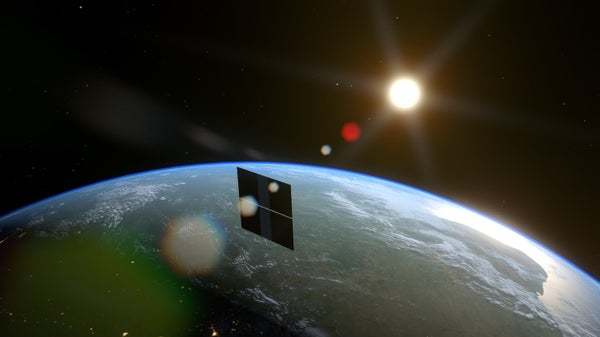
SpaceX released a roughly 31-minute video on Monday in which CEO Elon Musk and engineer Ian Dahl laid out plans for AI satellites designed to function as computing nodes in orbit, positioning the concept as central to the company’s future just days before its historic initial public offering.
Musk argued that building data centers in space is “not a super hard problem” and does not require “magic,” claiming much of the necessary technology already exists within the company’s next-generation Starlink V3 satellite platform. “We want to emphasize that there is no extraordinary technology required that isn’t already available,” Musk said in the video. The satellites would be powered by solar panels and cooled by radiating heat into the vacuum of space, sidestepping the power and thermal constraints that have become bottlenecks for terrestrial AI infrastructure.marketwatch
According to the presentation, each proposed AI satellite would deliver approximately 150 kilowatts of peak power, with sustained computing capacity of around 120 kilowatts. SpaceX said the systems would rely heavily on solar arrays and thermal management systems already being developed for Starlink V3.reuters
The timing of the video appears deliberate. SpaceX is set to begin trading on the Nasdaq under the ticker SPCX on June 12, in what is expected to be the largest IPO in history. The company priced its offering at $135 per share, targeting a valuation of approximately $1.75 trillion and aiming to raise as much as $75 billion.fortune
SpaceX filed earlier this year with U.S. regulators for permission to launch up to one million satellites into low-Earth orbit that would collectively serve as an orbital data center for AI workloads. A proposed merger between SpaceX and Musk’s AI company xAI, which remains under review, could further consolidate launch capability, satellite networks, and AI model development under a single corporate entity.scientificamerican
Critics have noted that operating computing hardware in orbit presents challenges that ground-based facilities do not face, including radiation exposure, limited servicing options, and the sheer cost of launching equipment. But Musk framed the effort as a natural extension of SpaceX’s existing operations, telling viewers that the engineering challenge is manageable “compared to our current projects”.marketwatch