





Newsletter Subscribe
Enter your email address below and subscribe to our newsletter

Enter your email address below and subscribe to our newsletter
All voices matter
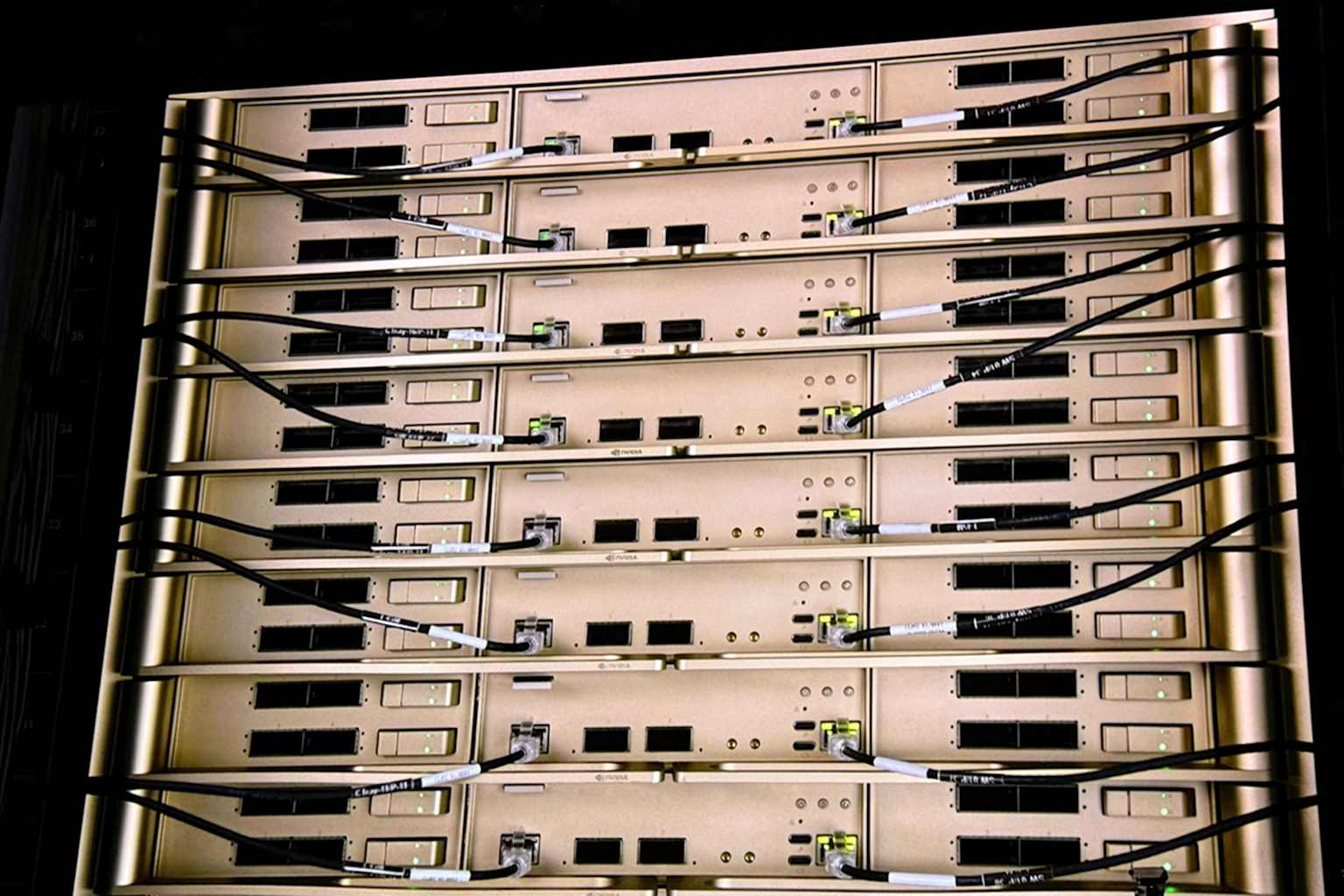
A report from SemiAnalysis circulated on Wednesday morning warning that Nvidia’s next-generation Vera Rubin NVL72 AI supercomputer rack will likely ship with far less CPU-side memory than previously assumed, sparking a sharp selloff in memory stocks that wiped out more than $100 billion in market value from Micron Technology ↗8.70% alone.
According to the SemiAnalysis brief, mainstream Rubin NVL72 systems are expected to ship with 96GB SOCAMM modules per slot rather than the 192GB modules that would fully populate each Vera CPU’s eight SOCAMM slots. The result: approximately 28TB of CPU-side LPDDR5X DRAM per rack instead of the roughly 54TB theoretical maximum Nvidia outlined at CES 2026, when it specified that each Vera CPU supports up to 1.5TB of memory.kucoin
The report stressed that the reduction does not affect HBM4 demand. Each Rubin GPU carries 288GB of HBM4, totaling approximately 20.7TB per rack across 72 GPUs — a figure that remains unchanged.kucoin
Micron shares fell more than 10% intraday on June 4, retreating from an all-time high set the prior session. SK Hynix and Samsung also came under pressure. The selloff was compounded by Broadcom’s quarterly earnings release the same morning; while Broadcom reported strong revenue growth of 48% year-over-year, CEO Hock Tan declined to raise full-year AI chip revenue guidance, dragging the broader semiconductor sector lower.binance
Analysts noted that unlike prior Nvidia platforms where memory was soldered onto boards, the Vera Rubin architecture uses JEDEC-standardized SOCAMM2 modules that are hot-swappable and upgradable — meaning customers can later install higher-capacity modules as supply allows. SemiAnalysis founder Dylan Patel suggested on social media that secondary coverage of the report omitted key context, and a majority of reader responses characterized the selloff narrative as overblown.x
The supply-side backdrop also complicates the bearish reading. Micron stated at a late-May conference that memory demand exceeds supply capacity, a dynamic expected to persist beyond 2026, with average DRAM prices up more than 110% year-over-year. Under tighter supply, shipping racks at a lower default configuration allows Nvidia to deploy more total racks without waiting for scarce LPDDR5X inventory — potentially leaving aggregate memory consumption unchanged even as per-rack density falls.kucoin