





Newsletter Subscribe
Enter your email address below and subscribe to our newsletter

Enter your email address below and subscribe to our newsletter
All voices matter
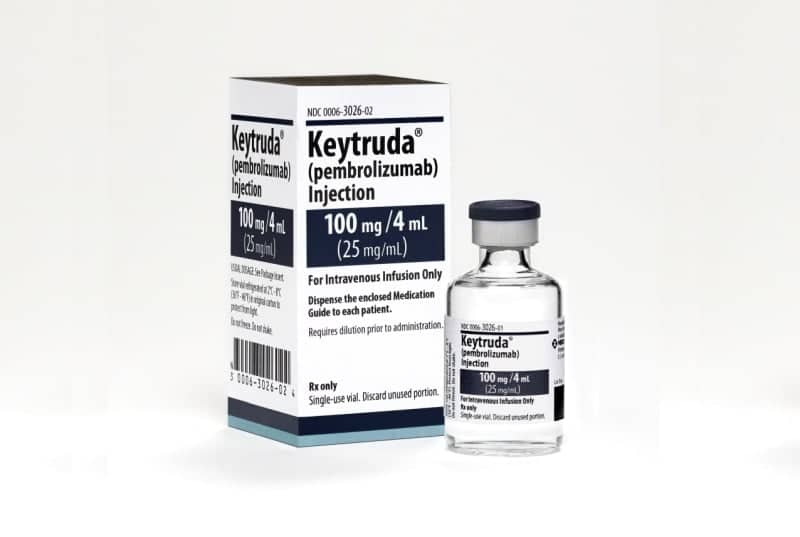
A wave of clinical trial data has reinforced the expanding role of pembrolizumab — Merck’s blockbuster immunotherapy drug — in treating multiple cancer types, with results from two major trials showing durable survival benefits in bowel and endometrial cancers.
Updated results from the NEOPRISM-CRC trial, led by University College London and University College London Hospitals, showed that no patients experienced a cancer recurrence nearly three years after receiving a short course of pembrolizumab before surgery for stage two or three mismatch repair-deficient bowel cancer.ecancer
Patients were given up to nine weeks of pembrolizumab prior to bowel surgery, replacing the standard approach of surgery followed by three to six months of chemotherapy. Initial results had shown that 59% of patients had no signs of disease after treatment and their planned operation. Now at 33 months of follow-up, none of the treated patients — including those who still had small amounts of residual disease — have relapsed.emjreviews
By comparison, roughly 25% of patients receiving standard surgery and post-operative chemotherapy would be expected to relapse within three years. Dr. Kai-Keen Shiu, the trial’s chief investigator at the UCL Cancer Institute, said the results “strengthen the case for pembrolizumab as a safe and highly effective treatment to improve high-risk bowel cancer outcomes”.ucl
Separately, prolonged follow-up data from the NRG-GY018 trial presented at the ASCO Annual Meeting on May 29 demonstrated that pembrolizumab combined with chemotherapy continues to deliver an overall survival benefit in advanced or recurrent endometrial cancer.nrgoncology
Among patients with mismatch repair-deficient tumors, 79% of those treated with pembrolizumab were alive at 48 months compared with 60% in the placebo group, with a hazard ratio of 0.56. In the mismatch repair-proficient population, median overall survival was 44.4 months versus 35.1 months for placebo — a 9.3-month advantage.nrgoncology
The benefit persisted despite the vast majority of control-arm patients — at least 93% in the dMMR cohort and 81% in the pMMR cohort — going on to receive immunotherapy after the study.nrgoncology
The findings arrive as checkpoint inhibitors continue to reshape treatment paradigms across oncology. The NEOPRISM-CRC data, first presented at the AACR Annual Meeting in April 2026, and the NRG-GY018 update at ASCO 2026 together underscore pembrolizumab’s versatility — from pre-surgical use in early-stage bowel cancer to first-line treatment in advanced endometrial disease. Both trials point toward a future in which immunotherapy displaces conventional chemotherapy for patients whose tumors harbor mismatch repair deficiency.ascopost