





Newsletter Subscribe
Enter your email address below and subscribe to our newsletter

Enter your email address below and subscribe to our newsletter
All voices matter
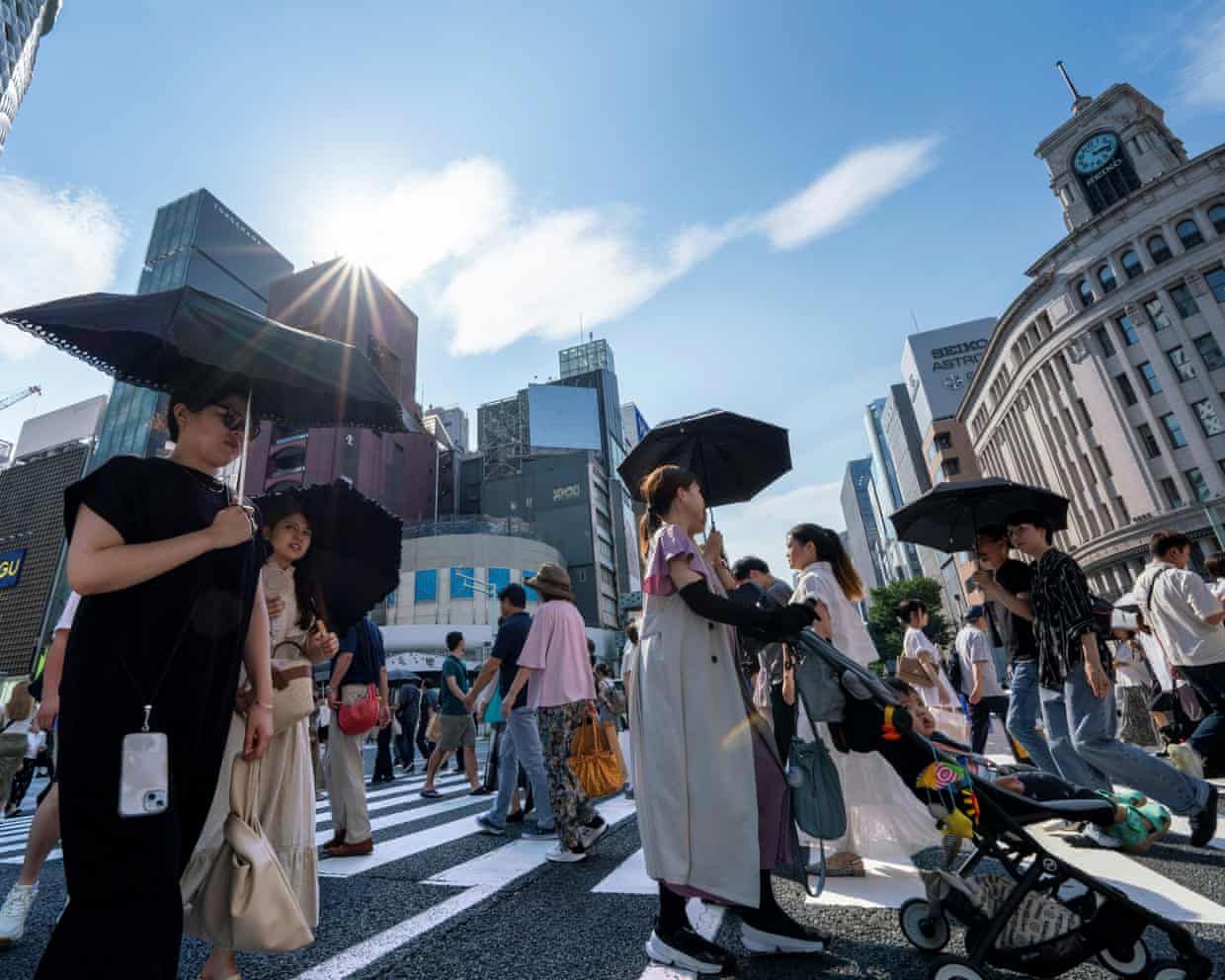
A chance observation during a COVID-19 pandemic experiment has led to a discovery about human movement: people have an inherent tendency to turn counterclockwise when walking, regardless of culture, gender, or handedness.
The finding, published in Nature Communications, emerged from research originally aimed at understanding how pedestrians maintain social distancing. Scientists at the University of Navarra in Spain were reviewing video footage of test subjects walking in enclosed spaces when they noticed something unexpected — in 32 out of 33 experimental trials, people predominantly moved in a counterclockwise direction.theguardian
“When analyzing the experiments, my colleagues realized by chance, that in 32 out of 33 experimental trials, as people moved and turned, they noticeably preferred to turn counterclockwise,” said Project Associate Professor Claudio Feliciani, who was at the University of Tokyo’s Department of Aeronautics and Astronautics at the time. “This was completely unexpected as, at least instinctively, when people walk around randomly, you imagine people turn as their needs suit them with little sign of an overall preference.”u-tokyo
Intrigued by the pattern, the team at the University of Navarra contacted researchers in Japan to rule out cultural factors. Together, they designed experiments across different environments, group sizes, and demographics in both Spain and Japan. The counterclockwise bias persisted whether people walked alone or in groups, and held across gender and handedness.theguardian
The only variable that produced a noticeable difference was age. “Kids tend to have a stronger bias for the counterclockwise direction, so probably age plays a role in making the effect weaker or stronger,” Feliciani said.u-tokyo
The researchers also patched participants’ left or right eyes to test whether vision played a role — it did not. Suggestions that the Coriolis force or Earth’s magnetic field might explain the phenomenon were deemed unlikely given the evidence gathered so far.theguardian
The cause remains elusive, but the team believes it points to something fundamental in human biology. “None of us are perfectly symmetrical, and the manner in which each person’s brain processes sensory information and coordinates it with muscle movement seems to subtly favor one side,” said Dr. Iñaki Echeverría Huarte of the University of Navarra.theguardian
The researchers plan to conduct more detailed experiments with individuals rather than groups, hoping to isolate a biomechanical mechanism. For now, the finding offers potential applications in architecture, urban design, and crowd management — and an explanation for why athletic tracks have long been run counterclockwise.u-tokyo