





Newsletter Subscribe
Enter your email address below and subscribe to our newsletter

Enter your email address below and subscribe to our newsletter
All voices matter
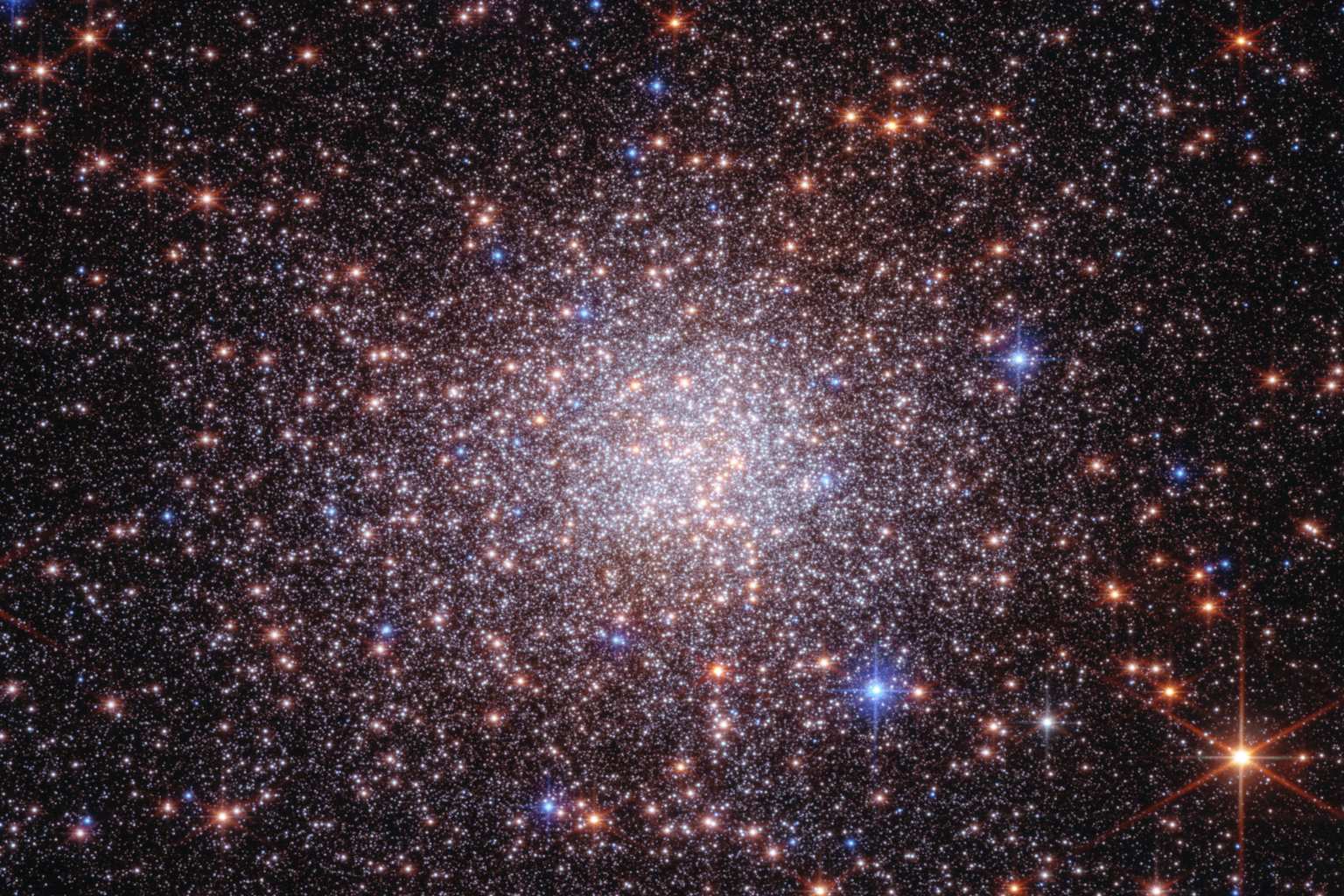
Researchers using NASA’s James Webb Space Telescope and Hubble Space Telescope have confirmed the existence of a new class of objects within the Milky Way called “bulge fossil fragments,” with the stellar system Terzan 5 serving as the prototype. The findings were presented Tuesday at the 248th meeting of the American Astronomical Society in Pasadena, California.nasa
Long classified as a globular star cluster, Terzan 5 has now been definitively reclassified. A study combining recent Webb observations with 12 years of Hubble data shows that the system experienced up to four distinct episodes of star formation — a trait incompatible with true globular clusters, which typically contain only one ancient star population.stsci
The research team determined the ages of the four stellar populations with unprecedented precision: 12.5 billion, 4.7 billion, 3.8 billion, and 2.5 billion years ago. This 10-billion-year span of star formation activity demonstrates that Terzan 5 is a self-contained, self-enriching stellar system capable of retaining and recycling material across cosmic timescales.nasa
Located 22,000 light-years away in the constellation Sagittarius, Terzan 5 contains roughly 2 million solar masses packed into a region only a few tens of light-years across, making it one of the most massive and densely populated globular-cluster-like systems in the Milky Way. The results indicate it is the remnant of a much more massive stellar system that formed 12.5 billion years ago and survived the assembly of the galaxy’s central bulge without merging into the surrounding structure.esawebb
Rather than a simple cluster, Terzan 5 now belongs to a new category — a bulge fossil fragment, defined as a self-enriching stellar system with multiple star populations of different ages and iron abundances. The discovery offers a window into how galaxies like the Milky Way formed and evolved, preserving a record of conditions from the universe’s earliest epochs within a single surviving object.esa
“Terzan 5 is not a globular star cluster, as originally classified,” NASA stated in its release announcing the findings. The lead researchers, Giorgia Zullo and Francesco Ferraro of the University of Bologna, produced the combined Webb-Hubble imagery that underpins the new classification.miragenews