







Newsletter Subscribe
Enter your email address below and subscribe to our newsletter

Enter your email address below and subscribe to our newsletter
All voices matter
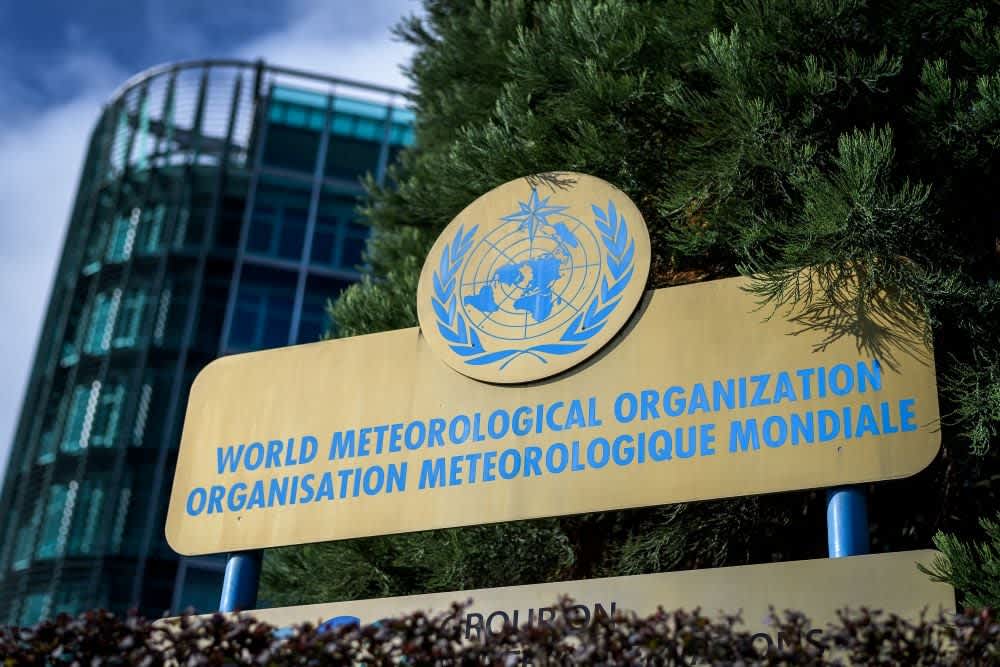
The World Meteorological Organization released a report on Wednesday warning that the planet is headed toward continued record-breaking heat, with an 86% chance that at least one year between 2026 and 2030 will surpass 2024 as the warmest ever recorded.healthpolicy-watch
The WMO’s Global Annual-to-Decadal Climate Update, produced by the UK’s Met Office, projects that annual global mean near-surface temperatures during 2026–2030 will range between 1.3°C and 1.9°C above the 1850–1900 average. The report finds a 91% chance that global temperatures will temporarily exceed the 1.5°C threshold — the aspirational limit set in the Paris Agreement — for at least one year in the period, and a 75% probability that the five-year average itself will breach that mark.wmo
The 1.5°C level was already temporarily exceeded in 2024, when global average surface temperature reached about 1.55°C above the pre-industrial baseline. The report considers it “exceptionally unlikely” — less than 1% — that any single year will exceed 2°C above pre-industrial averages in the next five years.healthpolicy-watch
The report identifies a tendency toward El Niño conditions in the central tropical Pacific, particularly in 2027 and 2028. Lead author Dr. Leon Hermanson of the Met Office said: “There is an El Niño predicted for the end of 2026, which increases the chances of the following year, 2027, being the next record-breaking year.”wmo
The Arctic continues to warm at a rate far exceeding the global average. Arctic temperatures over the next five extended northern hemisphere winters are predicted to be 2.8°C above average temperatures for 1991–2020 — an anomaly more than three and a half times the global mean. The report also projects further reductions in Arctic sea-ice concentration in the Barents Sea, Bering Sea, and Sea of Okhotsk.wmo
The update draws on predictions from 13 research institutes, including the Barcelona Supercomputer Centre, the Canadian Centre for Climate Modelling and Analysis, Deutscher Wetterdienst, and the Met Office. The WMO emphasized that individual years exceeding 1.5°C do not mean the long-term Paris Agreement targets are permanently breached, as those goals refer to warming sustained over approximately 20 years.wmo
The report arrives as 2025 has already been confirmed as one of the three warmest years on record, at about 1.43°C above the 1850–1900 average, extending a streak in which the past eleven years rank as the eleven hottest in the modern era.climatecentre