







Newsletter Subscribe
Enter your email address below and subscribe to our newsletter

Enter your email address below and subscribe to our newsletter
All voices matter
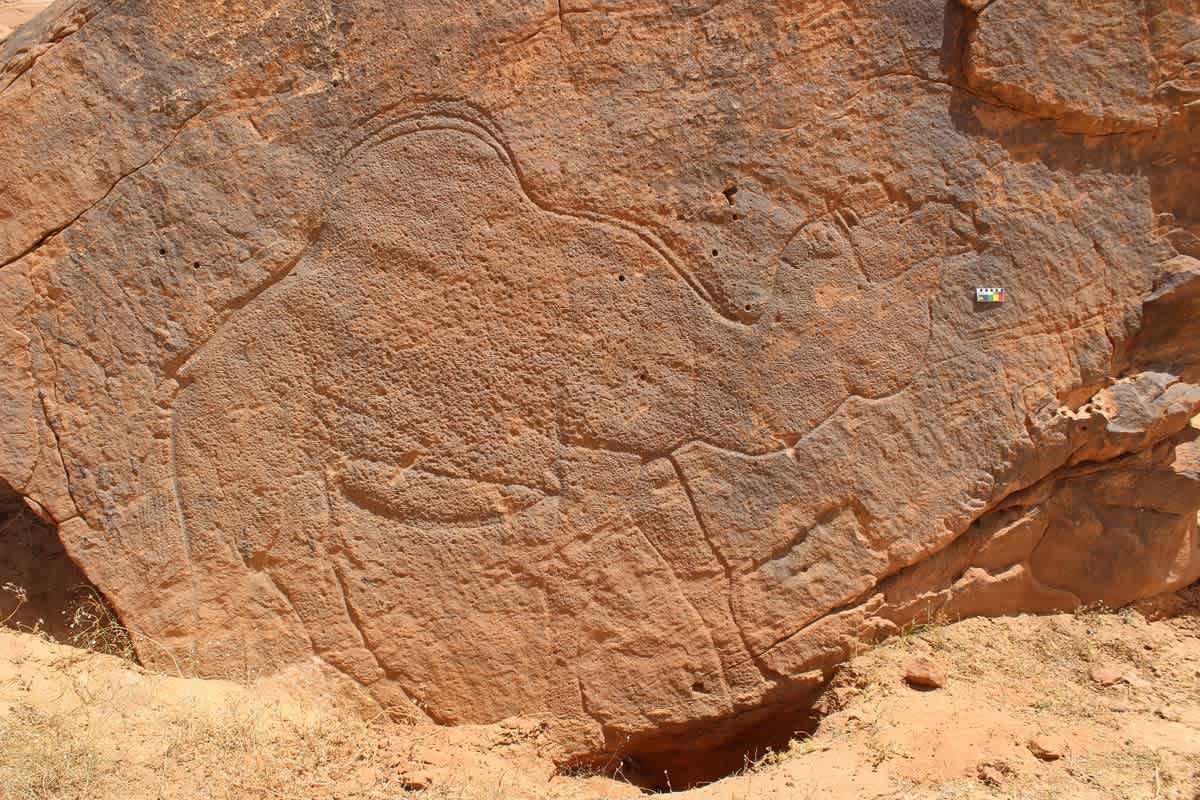
Archaeologists have discovered extraordinary life-sized animal carvings etched into cliff faces in Saudi Arabia’s Nefud Desert, pushing back evidence of human habitation in northern Arabia by more than 2,000 years. The monumental rock art, published Tuesday in Nature Communications, dates between 12,800 and 11,400 years ago and reveals sophisticated hunter-gatherer communities thriving in what experts previously thought was uninhabitable desert.scientificamerican
The international team, led by the Max Planck Institute of Geoanthropology and Saudi Arabia’s Heritage Commission as part of the Green Arabia Project, uncovered 176 engravings across 62 panels at three remote sites: Jebel Arnaan, Jebel Mleiha, and Jebel Misma. The discovery includes 90 life-sized camel depictions alongside images of ibex, gazelles, equids, and aurochs—an extinct bovine species requiring abundant water.newscientist
Some of the most spectacular carvings were etched onto cliff faces up to 39 meters high, requiring ancient artists to work on precarious ledges just 30 to 50 centimeters wide. One panel measures 23 meters long and depicts multiple camels, created by artists who couldn’t step back to view their complete work.phys
“They would not have been able to see the whole animal—and yet they produced a perfectly proportioned, naturalistic camel engraving,” said Dr. Maria Guagnin, the study’s lead author. The team had to use drones to document these dangerous-to-reach artworks, with researchers noting the “friable nature of the substrate” made it too dangerous to access safely today.cosmosmagazine
Excavations directly beneath the carvings yielded over 530 stone tools, including three bearing telltale battering marks from creating the petroglyphs. The wedge-shaped hammering tools were found in sediment layers dating the artwork to the transition between the Pleistocene and Holocene periods.popsci
Rather than mere artistic expression, researchers believe these monumental carvings served as crucial navigational aids marking water sources and territory during brief humid periods following the Last Glacial Maximum. The detailed camel depictions show male animals in winter coats with swollen necks from mating season, suggesting the art marked seasonal gathering points around temporary lakes.scientificamerican
“These large engravings are not just rock art—they were probably statements of presence, access, and cultural identity,” Guagnin explained. Dr. Ceri Shipton, co-lead author from University College London, added that “the rock art marks water sources and movement routes, possibly signifying territorial rights and intergenerational memory”.phys
The discovery challenges assumptions about human survival in northern Arabia’s harsh interior during this period. Stone tools and artifacts indicate connections to Neolithic populations in the Levant region hundreds of kilometers away, while the unique scale and placement of the Arabian engravings suggest a distinct cultural identity adapted to desert life. As the region became arid again around 6,000 years ago, these pioneering communities disappeared, leaving behind their monumental legacy carved in stone.livescience