







Newsletter Subscribe
Enter your email address below and subscribe to our newsletter

Enter your email address below and subscribe to our newsletter
All voices matter
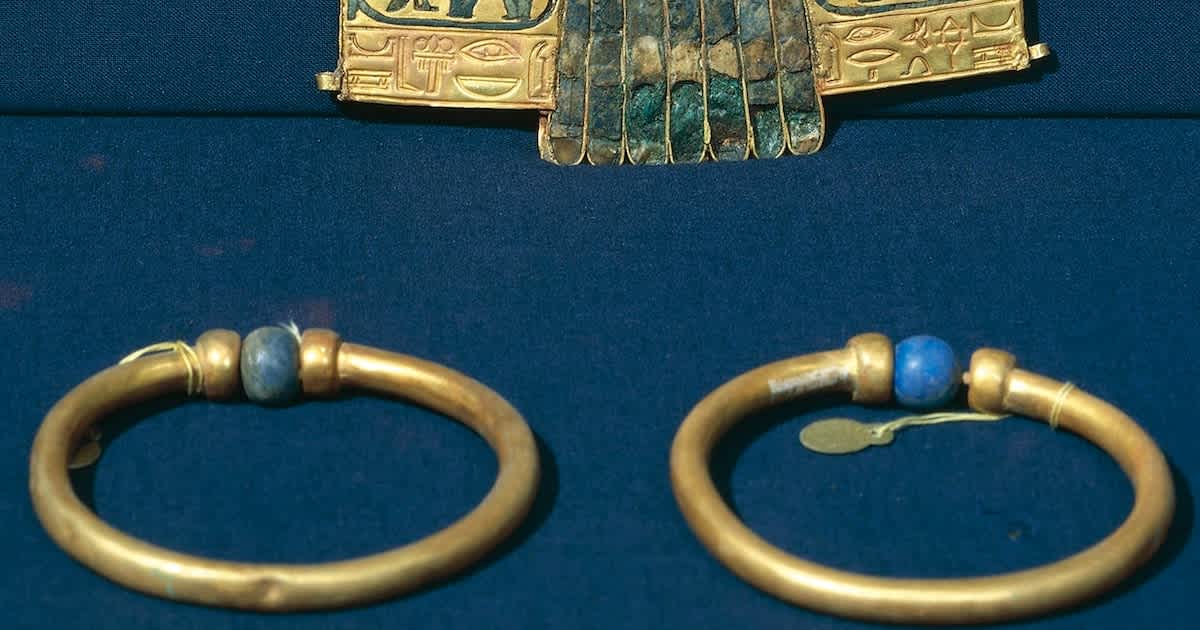
A 3,000-year-old gold bracelet belonging to King Amenemope has been stolen from Cairo’s Egyptian Museum and melted down for scrap metal after being sold for approximately $4,000. Four suspects, including a museum restoration specialist who executed the theft, have been arrested and confessed to the crime, though the priceless artifact that survived three millennia is now lost forever.
Egyptian authorities revealed Thursday that the bracelet was stolen on September 9 by a restoration specialist working at the museum. According to Egypt’s Interior Ministry, the woman removed the artifact from a secure metal safe in the museum’s conservation laboratory during her shift. The theft went undetected for days until museum staff reported it missing on September 13 while preparing artifacts for shipment to Rome for an upcoming exhibition.newarab
The Interior Ministry released security camera footage showing the bracelet being exchanged for cash in a Cairo shop, though the blurry images suggest the bracelet shown lacks the distinctive lapis lazuli beads seen in official photos. The video shows a shop owner weighing the bracelet before paying one of the suspects and then cutting it in half.arabnews
Investigations revealed a simple but devastating chain of transactions. The restoration specialist contacted a silver merchant in Cairo’s Sayeda Zeinab district, who facilitated the initial sale. The merchant sold the bracelet to a gold dealer for 180,000 Egyptian pounds ($3,735), who then resold it to a worker at a gold foundry for 194,000 Egyptian pounds ($4,025).newarab
The foundry worker subsequently melted the bracelet down along with other scrap gold to reshape into new jewelry. All four suspects have been arrested and confessed to their roles in the crime, with authorities recovering the money from the sale.thenationalnews
The bracelet, adorned with spherical lapis lazuli beads, belonged to King Amenemope of Egypt’s 21st Dynasty, who ruled from 993 to 984 BC during the Third Intermediate Period. Jean Guillaume Olette-Pelletier, an Egyptologist who spoke to AFP, described the piece as “not the most beautiful, but scientifically it’s one of the most interesting” objects.newarab
The bracelet was discovered in Tanis, in the eastern Nile delta, during archaeological excavations in the tomb of King Psusennes I, where Amenemope had been reburied after his original tomb was plundered. The artifact was made of a gold alloy designed to resist deformation, while the lapis lazuli—imported from what is now Afghanistan—held deep symbolic meaning for ancient Egyptians, representing the hair of the gods.arabnews
The theft occurred just weeks before the anticipated opening of the Grand Egyptian Museum in nearby Giza on November 4, 2025, where many of Egypt’s most famous artifacts, including King Tutankhamun’s treasures, will be displayed. The bracelet had been scheduled for inclusion in the “Treasures of the Pharaohs” exhibition opening in Rome next month.thenationalnews
Under Egyptian law, stealing antiquities with intent to smuggle carries penalties of life imprisonment and fines up to 5 million Egyptian pounds ($100,000). The theft highlights ongoing challenges in protecting Egypt’s cultural heritage, with similar incidents including the 2010 theft of Vincent van Gogh’s “Poppy Flowers,” which remains missing.ndtv