







Newsletter Subscribe
Enter your email address below and subscribe to our newsletter

Enter your email address below and subscribe to our newsletter
All voices matter
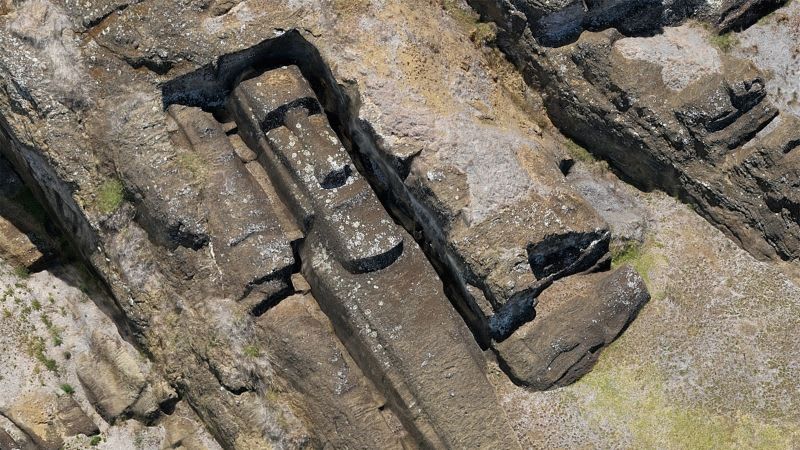
Researchers have unveiled the first high-resolution 3D model of Easter Island’s primary moai quarry, offering fresh evidence that the iconic stone statues were carved by independent family groups rather than a centralized workforce—upending longstanding assumptions about how ancient societies organized monumental construction projects.cnn
The model of Rano Raraku, the volcanic crater where approximately 95% of the island’s nearly 1,000 statues were carved, was created using more than 11,000 overlapping drone photographs and published Wednesday in the journal PLOS One. The publicly accessible model allows viewers to explore areas of the steep, rugged quarry that are impossible to visit in person.newscientist
“As an archaeologist, the quarry is like the archaeological Disneyland,” said Carl Lipo, lead author and professor of anthropology at Binghamton University. “It has everything you can possibly imagine about moai construction, because that’s where they did most of the construction. It’s always been this treasure of information and cultural heritage, but it’s remarkably underdocumented”.phys
The research team, which included Thomas Pingel and Kevin Heard from Binghamton’s Geography Department along with Terry Hunt from the University of Arizona, identified 30 distinct work zones within the quarry, each exhibiting different carving techniques and stylistic variations. The model also revealed 426 moai at various stages of completion, 341 trenches carved to outline blocks, and 133 voids where statues were successfully extracted.cnn
“We see separate workshops that really align to different clan groups that are working intensively in their specific areas,” Lipo said. The findings suggest that the entire production process—from cutting bedrock to finishing details—remained within individual zones rather than statues being moved between areas for different production phases.ctvnews
This pattern aligns with archaeological evidence that Rapa Nui society consisted of small, independent family units rather than a politically unified chiefdom. Experimental archaeology has shown that only 18-20 people would be needed to transport a moai, a crew size consistent with extended kin groups.newscientist
The research adds to growing evidence challenging the popular “collapse” theory, which held that Easter Island’s civilization catastrophically failed due to unsustainable monument construction and resource depletion. The numerous unfinished statues at Rano Raraku represent normal quarry operations rather than sudden abandonment, with production continuing until European contact introduced diseases and other disruptions, according to Lipo.cnn
The researchers conducted their fieldwork in January 2024 after a wildfire swept through the quarry in October 2023, prompting local community groups to request comprehensive documentation of the site.phys