





Newsletter Subscribe
Enter your email address below and subscribe to our newsletter

Enter your email address below and subscribe to our newsletter
All voices matter
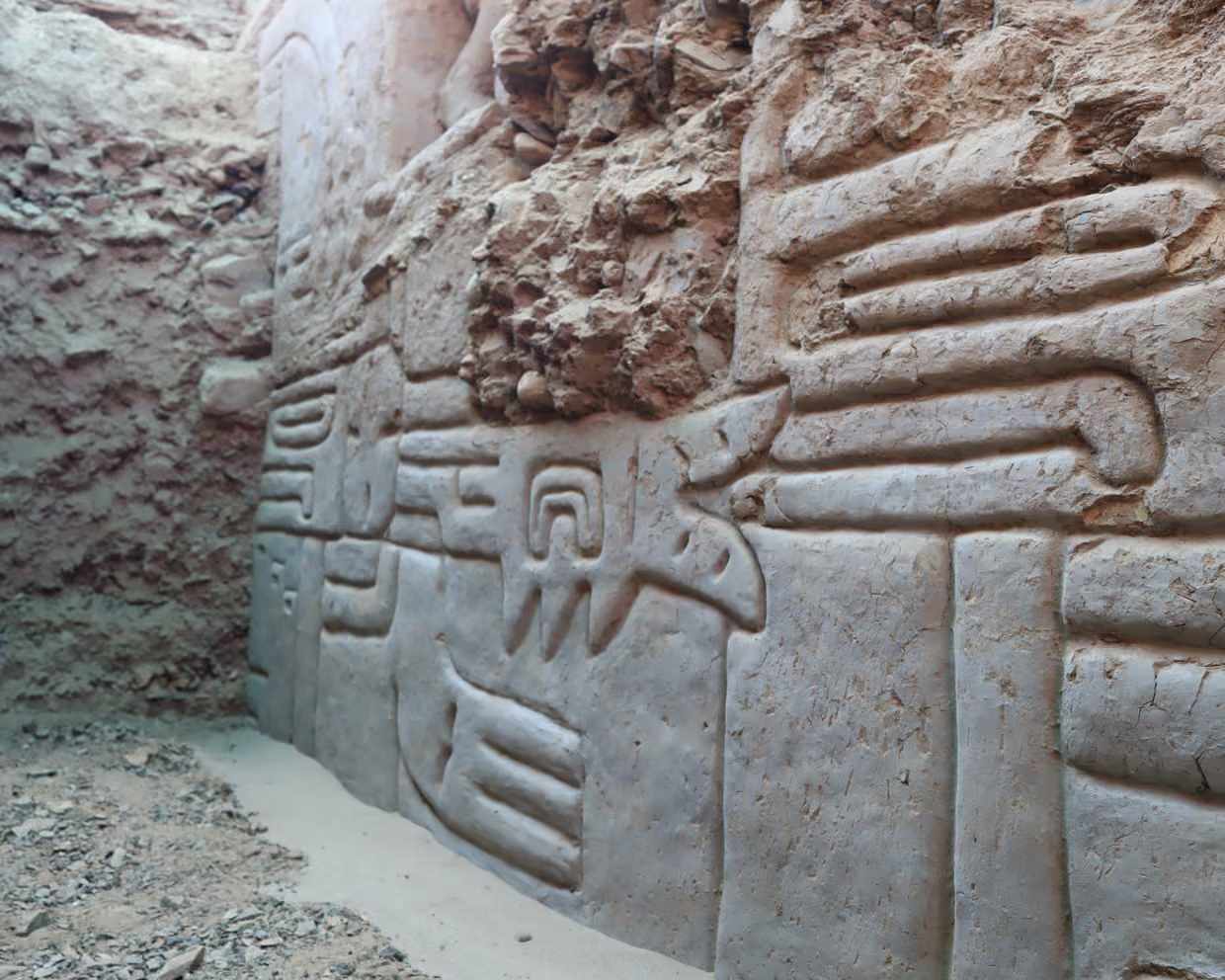
Peruvian archaeologists have uncovered a remarkable 4,000-year-old three-dimensional mural at the Huaca Yolanda site in La Libertad, northern Peru, representing what researchers describe as an “unprecedented discovery” that provides rare insight into the earliest complex societies on South America’s Pacific coast. The multicolored artwork, discovered in July 2025, features a massive bird of prey with diamond motifs alongside fish, fishing nets, stars, and mythological beings painted in vivid blues, reds, yellows, and blacks.themorningnews
The discovery was made by a team from the Pontifical Catholic University of Peru led by archaeologist Ana Cecilia Mauricio during the first week of excavations in early July. According to Live Science, Mauricio described the finding as having “imagery, decorative techniques and exceptional state of preservation” that make it “a truly unprecedented discovery in the region”.themorningnews
The 20-foot-long by 9.5-foot-tall mural dates to the Formative Period (2000 to 1000 B.C.), when the first complex societies emerged in what is now Peru. The south face depicts a large bird with outstretched wings and diamond motifs on its head, possibly representing an eagle or falcon, while the north face features plants, stars, and human-like figures that “seem to represent shamans,” who held significant power during that era.themorningnews
What distinguishes this mural from other pre-Inca discoveries is its distinctive coastal artistic tradition, featuring imagery of fish and fishing nets that differs markedly from highland sites like Chavín de Huántar. According to Mauricio, the mural likely decorated “interior spaces within the main atrium of a Formative Period temple,” serving as a center of spiritual and social power where shamans occupied the highest ranks in society.radar
The artwork was created using clay mixed with organic materials and demonstrates sophisticated three-dimensional relief techniques unprecedented for pre-Inca cultures in the region. Artnet News reported that the mural’s “remarkable state of preservation was down to having been buried to allow for another structure to be built on top, a fairly common practice among pre-Incan civilizations”.radar
Despite its archaeological significance, the Huaca Yolanda site faces immediate threats from looting, agricultural expansion, and lack of official protection. Unlike the UNESCO World Heritage Site of Chavín de Huántar, Huaca Yolanda is not officially protected, leaving it vulnerable to damage from heavy farming machinery and unauthorized excavation.themorningnews
Mauricio has called for urgent intervention from Peru’s Ministry of Culture, regional authorities, and heritage organizations to establish protective fencing, conservation measures, and surveillance at the site. According to All That’s Interesting, she warned that “heavy machinery, such as tractors, used for farming is seriously damaging the huaca,” while noting that her team lacks the additional budget needed for specialized mural conservation.jpost
The archaeological team is conducting radiocarbon dating and pigment analysis to refine the mural’s chronology and better understand its composition. The discovery adds to Peru’s rich archaeological heritage, which includes sites ranging from the 5,000-year-old Caral civilization to the more famous Inca ruins at Machu Picchu, offering new perspectives on the sophisticated artistic and spiritual traditions that flourished along Peru’s coast millennia before the rise of the Inca Empire.radar