







Newsletter Subscribe
Enter your email address below and subscribe to our newsletter

Enter your email address below and subscribe to our newsletter
All voices matter

Crude oil prices closed the week higher, marking their first weekly advance in three weeks, as collapsed U.S.-Iran peace talks and persistent disruptions in the Strait of Hormuz kept supply fears firmly in focus. The rally gained momentum early in the week after negotiations between Washington and Tehran fell apart, with WTI crude surging more than 5.5% on Monday alone to around $92.16 a barrel.nytimes
The gains followed the definitive end of U.S.-Iran peace talks, which Slate reported had been headed toward failure for weeks before Iran formally withdrew from negotiations. According to Semafor, an agreement failed to materialize after President Donald Trump said he was in “no hurry” to strike a deal, and the two sides remained far apart on Iran’s nuclear program and conditions for reopening the Strait of Hormuz.semafor
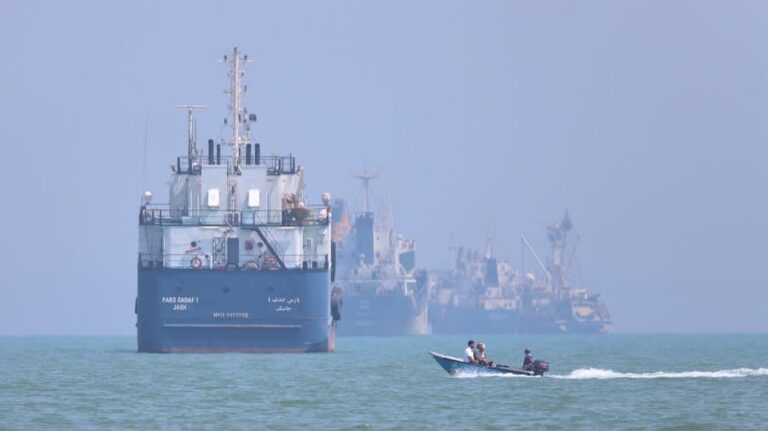
By midweek, Brent crude had climbed toward $98 a barrel, with WTI settling at $93.76 on Tuesday. On Wednesday, Brent reached $97.95. The Strait of Hormuz — through which roughly 20% of global oil supply typically transits — has remained effectively closed since late February. According to CNN, only seven ships passed through the strait on a recent Friday, with weekend traffic even lower.linkedin
Markets had briefly found optimism in a U.S.-brokered ceasefire between Israel and Lebanon announced on Wednesday. But Hezbollah leader Naim Qassem on Thursday rejected the agreement outright, calling it “futile” and “degrading” and characterizing compliance as “surrender, defeat and achieving the enemy’s goals,” according to the Associated Press. The BBC reported that Hezbollah demanded a complete Israeli withdrawal from southern Lebanon as a precondition.bbc
The rejection dimmed near-term prospects for a broader regional de-escalation that markets had hoped could eventually lead to the reopening of the strait, given that the U.S.-Iran deal framework explicitly linked a Lebanon ceasefire to the broader peace package.pbs
Analysts have warned that depleting global inventories could trigger sharper price spikes in the months ahead. The International Energy Agency said in May that the market would remain “significantly undersupplied” through the end of the third quarter of 2026, even if hostilities end soon, with cumulative supply losses from Gulf producers already surpassing one billion barrels. JPMorgan warned that commercial oil inventories in the developed world could “approach operational stress levels” by early June, while Fortune reported that analysts see prices potentially topping $130–$140 a barrel if the strait remains closed and inventory depletion continues at current rates.reuters