Newsletter Subscribe
Enter your email address below and subscribe to our newsletter

Enter your email address below and subscribe to our newsletter
All voices matter
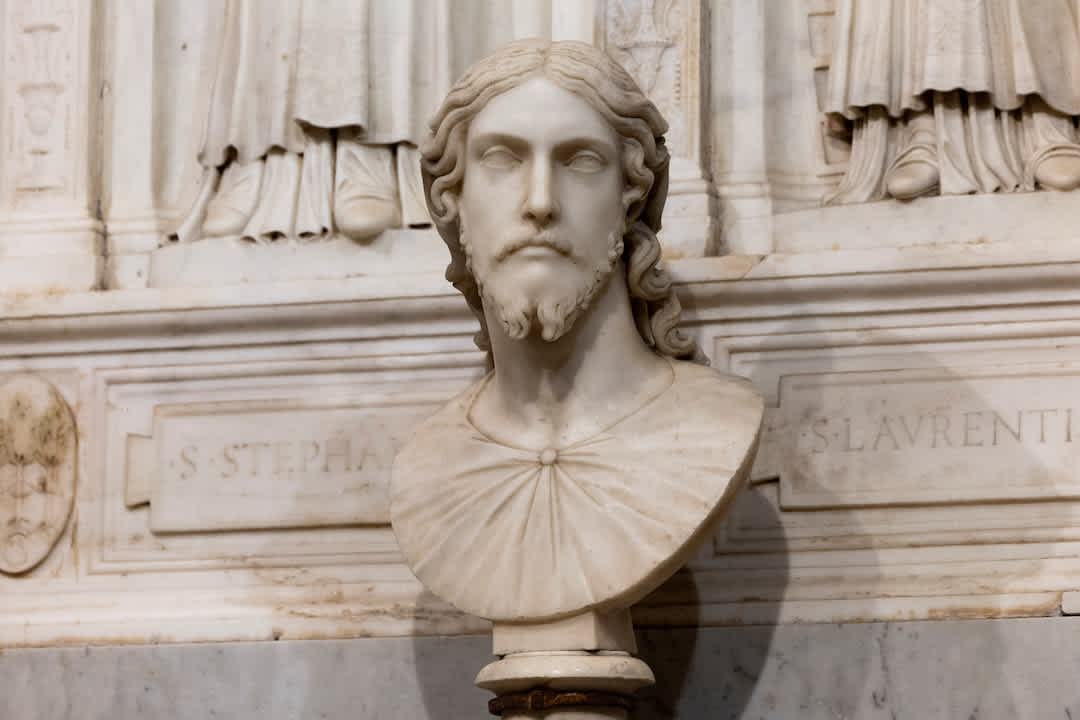
A marble bust of Christ that has stood for centuries in one of Rome’s oldest basilicas was claimed on Wednesday to be the work of Michelangelo, igniting a fierce debate among Renaissance scholars over the latest purported attribution to one of the most imitated artists in history.
Independent researcher Valentina Salerno presented her findings at a press conference in the Basilica of Sant’Agnese fuori le mura, on Rome’s ancient Via Nomentana, arguing that the sculpture depicting Christ the Saviour was created by Michelangelo Buonarroti and had lost its attribution to the master in the early 19th century. Italy’s culture ministry, which currently lists the bust as an anonymous work from the Roman school of the 16th century, was invited to participate but declined.reuters
Salerno, an actress and fiction author with no university degree or formal expertise in art history, said she stumbled into the research a decade ago while setting out to write a novel about Michelangelo. Her approach relies not on stylistic analysis but on what she describes as detective work through notarial records, posthumous inventories, wills, and the archives of Roman confraternities linked to Michelangelo and his students.apnews
“I am not an art historian — in fact, I don’t even have a university degree — but the strength of my research lies in its reliance on public archival documents,” she told reporters. She argued that documents from the centuries following Michelangelo’s 1564 death correctly attributed the bust to him, until a scholar debunked the connection in 1984.reuters
Salerno also claimed Michelangelo did not destroy his works late in life, as long believed, but instead devised a secret system to safeguard them — including a locked chamber requiring three keys held by three different students. She suggested the bust was modeled on Michelangelo’s close companion Tommaso de’ Cavalieri.aawsat
The unverified claim has unsettled Renaissance experts, particularly following the recent Christie’s sale of a foot sketch attributed to Michelangelo — but disputed by some as a copy — for $27.2 million. Salerno published her research on academia.edu, a commercial platform without peer review.apnews
William Wallace, a Michelangelo scholar at Washington University in St. Louis, told the Associated Press that Salerno’s methodology was sound and praised the European tradition of noncredentialed researchers producing solid work. But he disputed her broader conclusion that a large trove of hidden Michelangelos awaits discovery, noting the artist was overseeing six architectural projects in his final years and simply was not producing much new work.apnews
Wallace called for Salerno to transcribe the documents and submit them to peer review. Members of a Vatican scientific committee to which Salerno was appointed — formed in 2025 to mark the 550th anniversary of Michelangelo’s birth — have either downplayed her findings or refused to comment. The Carabinieri’s art squad declined to weigh in on authenticity but confirmed the bust is now protected by an alarm system.apnews