






Newsletter Subscribe
Enter your email address below and subscribe to our newsletter

Enter your email address below and subscribe to our newsletter
All voices matter
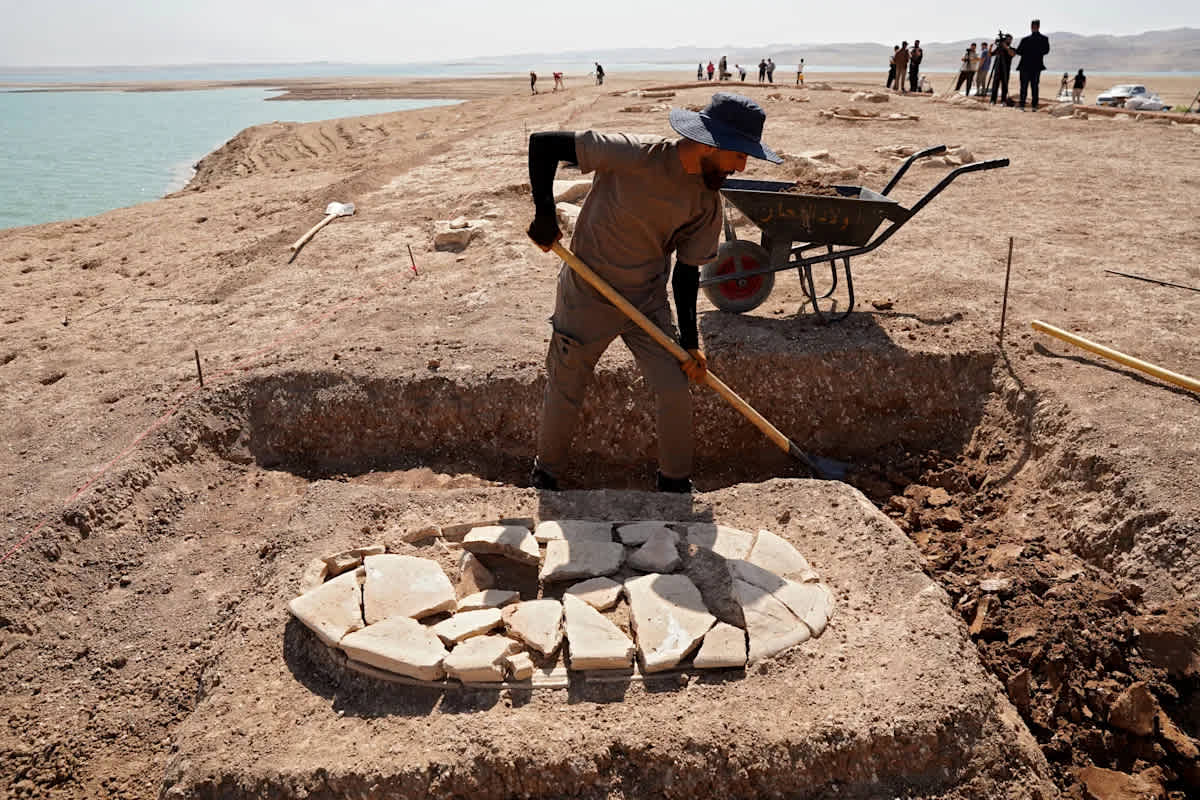
A severe drought in Iraq has dramatically revealed 40 ancient tombs buried beneath the waters of the Mosul Dam reservoir for over two millennia, offering archaeologists a rare window into the Hellenistic period before rising water levels submerge the site once again.
The discovery comes as Iraq faces its worst drought since 1933, with water reserves at a critical 8% of capacity. Water levels at the country’s largest reservoir dropped to their lowest point this year, exposing the ancient burial ground along the edges of the Mosul Dam reservoir in the Khanke region of Duhok province.cbsnews
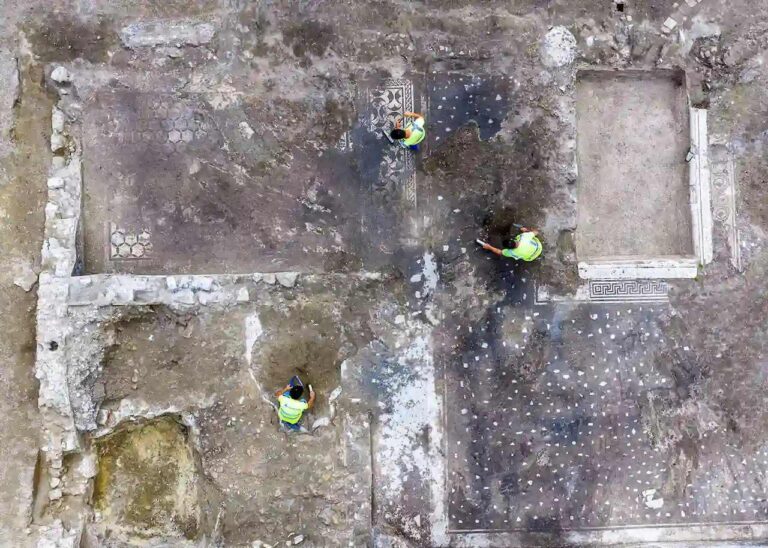
Bekas Brefkany, director of antiquities in Duhok who is leading the excavation, told CBS News that his team has been working urgently to unearth and preserve the tombs before the area becomes submerged again. “The droughts have a significant impact on many aspects, like agriculture and electricity. But, for us archaeologists, it allows us to do excavation work,” Brefkany said.cbsnews
The tombs, believed to date back over 2,300 years to the Hellenistic or Hellenistic-Seleucid period, contain clay coffins arranged in rows facing the same direction. According to The Art Newspaper, the cemetery is organized with upper sections for adults and lower sections for children. Brefkany’s team first surveyed the area in 2023 but only spotted fragments of a few graves at that time.theartnewspaper
The archaeological windfall stems from Iraq’s devastating water crisis. According to the Iraqi Ministry of Water Resources, 2025 has been the country’s driest year since 1933, with water reserves falling from an expected 18 billion cubic meters to just 10 billion. The Tigris and Euphrates rivers have seen their levels drop by up to 27% due to insufficient rainfall and upstream water restrictions from neighboring Turkey and Iran.964media
The same drought conditions that have forced over 17,000 families to migrate from southern provinces have created opportunities for archaeologists. In 2022, similar drought conditions exposed a 3,400-year-old Bronze Age city in the same reservoir, believed to be part of the ancient Mittani Empire.rudaw
The newly discovered necropolis provides insights into life during the Hellenistic period, when Greek culture heavily influenced local traditions following Alexander the Great’s conquest of the region. Archaeological surveys of the adjacent site have revealed continuous habitation spanning 5,000 years, with pottery finds confirming occupation through multiple cultural phases including the Early Bronze Age, Mittani period, and Neo-Assyrian period.archaeology
The excavated artifacts will be transferred to the Duhok Museum for further study and preservation. Brefkany hopes future research will “shed more light on causes of death, family ties, and the broader social context of these burials”.theartnewspaper
The discovery underscores the complex relationship between climate change and archaeological research in Iraq, where environmental crisis simultaneously threatens and reveals the country’s ancient heritage.