







Newsletter Subscribe
Enter your email address below and subscribe to our newsletter

Enter your email address below and subscribe to our newsletter
All voices matter
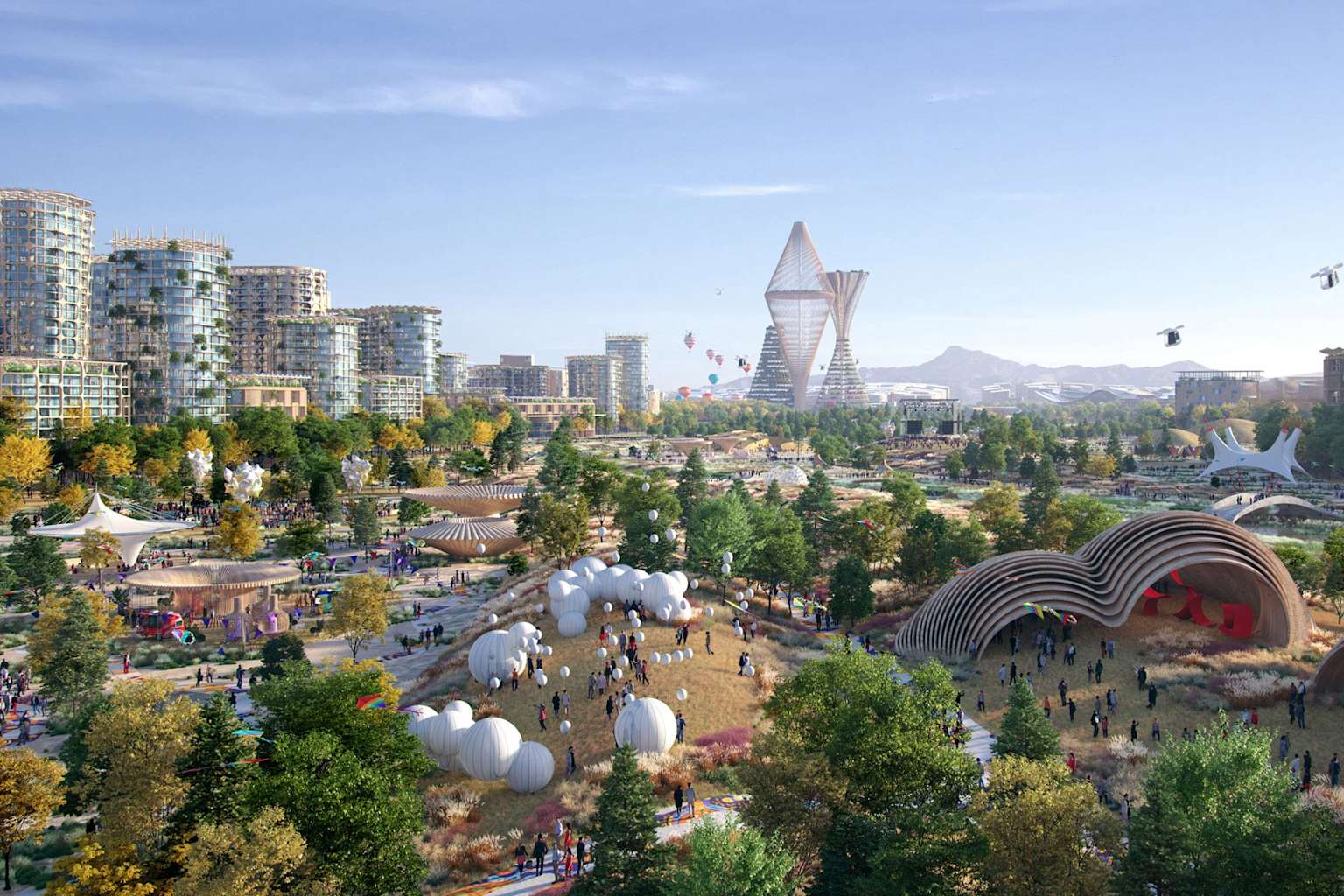
Danish architecture firm BIG has released detailed new renderings of Telosa, the ambitious desert city project conceived by billionaire entrepreneur Marc Lore, revealing specific architectural features including a striking circular mobility hub and provisions for transformative flying vehicles. The updated designs, published this week, provide the most comprehensive visual representation yet of the proposed $400 billion metropolis planned for the American Southwest.
The most prominent feature in the fresh renderings is a circular, open-air “mobility hub” constructed with four levels of flat wooden tiers and surrounded by chrome transportation rails. This innovative structure is designed to accommodate the city’s Ground-to-Air (G2A) vehicles, which can transform from train cars into helicopters, representing a leap in urban transportation concepts.dezeen
According to details from BIG’s latest presentation, these futuristic vehicles are depicted both hovering above the hub and operating on wheels within the building’s center. The mobility hub serves as a central transit point for what organizers describe as a revolutionary transportation system that eliminates traditional fossil fuel vehicles entirely, with cars instead stationed in automated pods stored underground.urbanturf
The updated renderings showcase several key architectural landmarks beyond the mobility hub, including the Lore Institute with its elevated, interconnected towers and shared streets marked by stone pathways bordered by buildings covered in lush greenery. At the heart of the planned metropolis stands the Equitism Tower, a geometric timber structure featuring a distinctive lattice-like facade that BIG describes as “a beacon for the city.”dezeen
This central skyscraper is designed to serve multiple functions, incorporating water storage facilities, aeroponic farms for local food production, and a photovoltaic roof for renewable energy generation. The tower’s name reflects the city’s unique governance philosophy called “equitism,” which centers on community-owned land that generates public funds through strategic sales, with the organization explaining that “citizens should have a stake in the land and as the city does better, the residents do better.”urbanturf
Telosa Community Foundation CEO Jon Mallon highlighted the project’s current emphasis on community engagement over pure technological innovation. “We recognize the importance, with any large-scale development, of focusing on people and putting an emphasis on community engagement,” Mallon stated. The organization has partnered with data analytics firm Polco and governance organization ICMA, with additional project updates expected later this year.dezeen
The city, first announced in 2021, aims to house 50,000 residents by 2030, eventually growing to 5 million by 2050. While the exact desert location remains undetermined, potential sites in Nevada, Utah, and Arizona continue under consideration.urbanturf