








Newsletter Subscribe
Enter your email address below and subscribe to our newsletter

Enter your email address below and subscribe to our newsletter
All voices matter
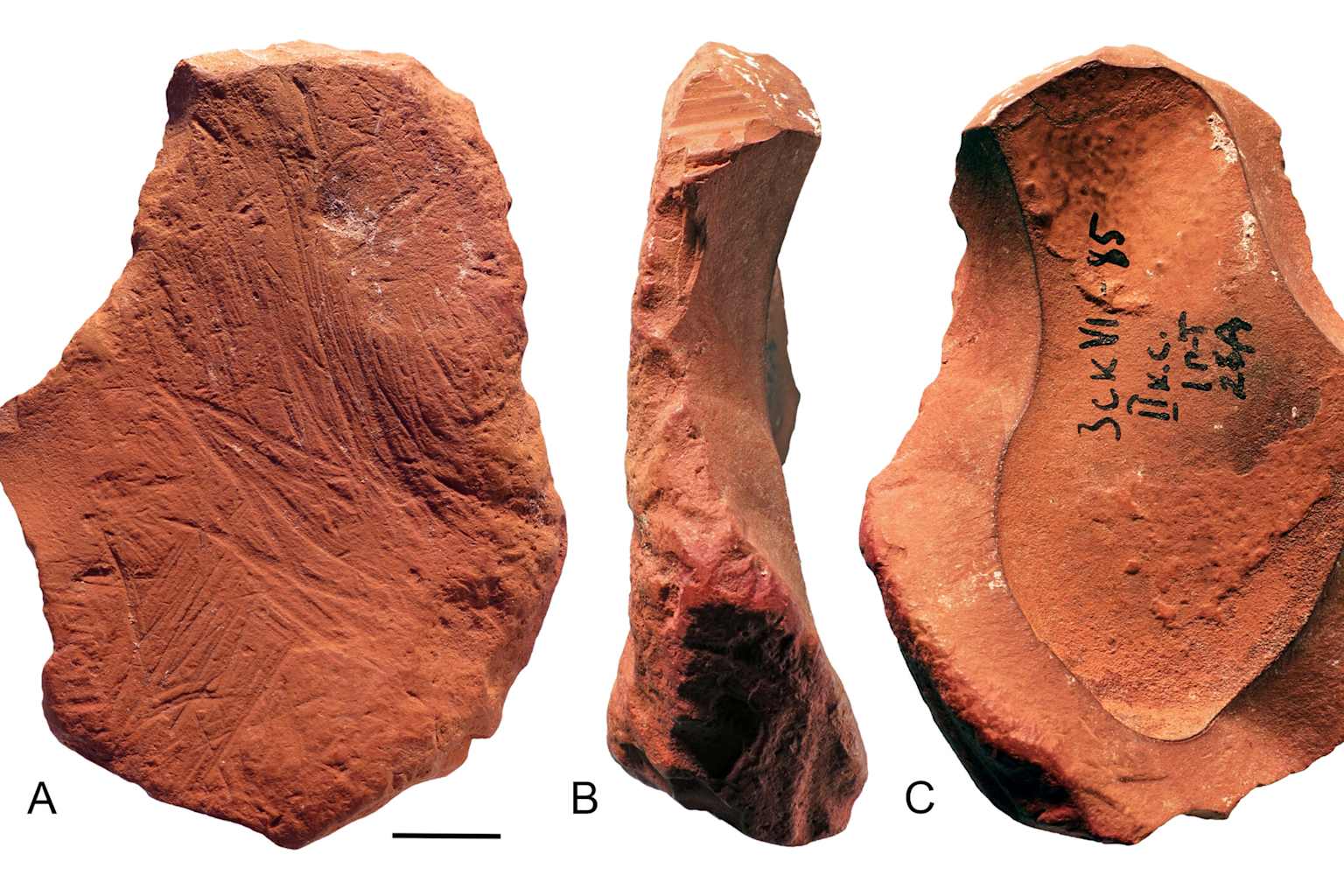
A remarkably preserved 42,000-year-old yellow ochre crayon discovered in Crimea provides the strongest evidence yet that Neanderthals engaged in symbolic art creation, according to research published this week in Science Advances. The ancient coloring tool, which remains sharp after millennia, suggests our extinct cousins deliberately crafted pigments for drawing lines and potentially creating artistic expressions.newscientist
The crayon, measuring 5 to 6 centimeters in length, shows clear signs of deliberate shaping and repeated resharpening, indicating it was preserved and maintained as a specialized marking tool. Francesco d’Errico from the University of Bordeaux, who led the international research team, emphasized the significance of the find: “This was an instrument that had been preserved and reshaped multiple times, which makes it quite unique. It’s not merely a crayon by form; it’s a crayon because it was actively used as one”.newscientist
The Crimean discovery includes a second, older broken crayon made from red ochre, possibly dating to around 70,000 years ago. Researchers conducted detailed microscopic analysis of 16 ochre pieces from Neanderthal sites in Crimea and Ukraine, examining their composition and surface markings to understand how they were utilized. The deliberate modifications and evidence of repeated use distinguish these artifacts from simple utilitarian ochre pieces found at other archaeological sites.newscientist
April Nowell from the University of Victoria, who was not involved in the research, noted the intentional precision behind the tools: “You would only maintain a pointed end on a crayon if you intended to create precise lines or designs”. The findings contribute to mounting evidence that symbolic behavior has deep evolutionary roots, challenging long-held assumptions that artistic expression was unique to modern humans.newscientist
This discovery adds to a growing body of evidence from 2025 documenting Neanderthal symbolic capabilities. Earlier this year, researchers reported finding a 43,000-year-old Neanderthal fingerprint preserved in red ochre on a granite pebble in Spain, representing direct evidence of symbolic marking behavior. The Spanish find showed statistical analysis indicating only a 0.31% chance the ochre dot’s placement was random, confirming deliberate artistic intent.modernsciences
The Crimean crayons join other recent discoveries showcasing Neanderthal artistic abilities, including 57,000-year-old carvings found in French caves and mysterious circles made from stalagmites dating back 175,000 years. As Emma Pomeroy from the University of Cambridge observed: “These small fragments of ochre impart so much information. It’s that small piece of humanity we can connect with. It truly brings those individuals closer to us”.newscientist