







Newsletter Subscribe
Enter your email address below and subscribe to our newsletter

Enter your email address below and subscribe to our newsletter
All voices matter
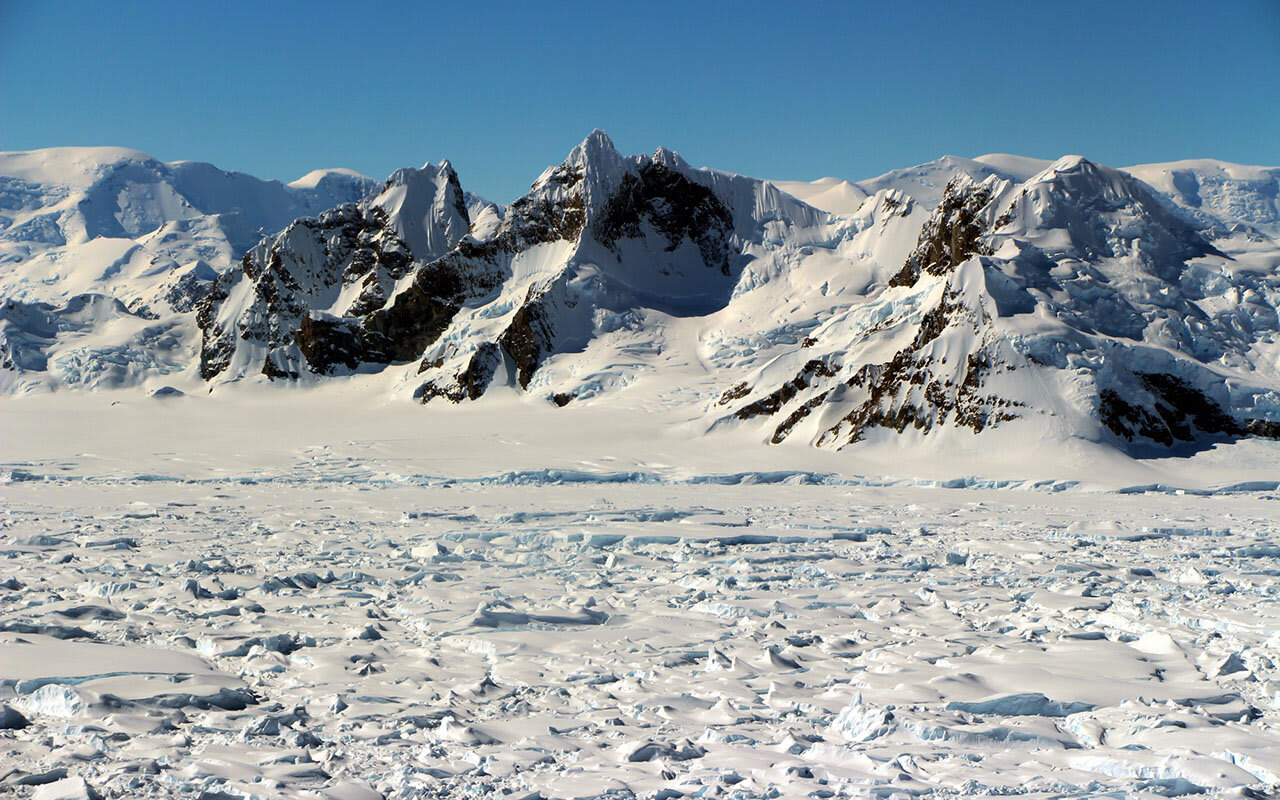
Antarctica’s ice sheet became far more reactive to climate shifts following a major transition in Earth’s ice age cycles roughly one million years ago, according to research published May 28 in Nature Geoscience. The findings point to a CO2 threshold that, once crossed, dramatically amplified how the ice sheet responded to warming — a discovery scientists say carries implications for understanding future sea-level rise.eurekalert
Researchers at the IBS Center for Climate Physics at Pusan National University in South Korea used a paleoclimate simulation spanning 3 million years and fed its temperature and rainfall data into the Penn State University ice-sheet–ice-shelf model, running calculations on one of South Korea’s fastest supercomputers dedicated to basic science.eurekalert
The simulation revealed that after the Mid-Pleistocene Transition — the period when Earth’s ice ages became longer and more intense — the Antarctic ice sheet entered what the team describes as a new dynamical regime. Specifically, the results identify a critical atmospheric CO2 level of around 240 parts per million, below which the amplitude of Antarctic ice volume fluctuations increased sharply in response to temperature and ocean changes.nature
“After this transition, the Antarctic ice sheet reacts much more strongly to changes in climate forcing. This indicates that the system does not evolve gradually but instead becomes more responsive after crossing a particular threshold in the climate system,” said Dr. Yun Kyung-Sook, lead author of the study.eurekalert
The team attributed the accelerated ice growth after 1 million years ago to a combination of factors: colder glacial ocean temperatures that reduced melting beneath the ice sheet, and lower global sea levels — roughly 50 to 100 meters below present — which relieved pressure on the bedrock beneath ice shelves, allowing slow uplift that promoted coastal ice thickening. Working together, these processes established the larger, more persistent Antarctic ice sheets that characterized later ice age cycles.eurekalert
The study underscores that ice sheets do not respond to climate forcing in a smooth, linear fashion but can undergo abrupt shifts that alter their sensitivity to external conditions.nature
“Our findings suggest that the Antarctic ice sheet was more sensitive to external forcings than previously assumed. This also raises important questions about its future response to global warming,” said Prof. Axel Timmermann, director of the IBS Center for Climate Physics and co-author of the study.eurekalert
With current atmospheric CO2 levels well above 400 parts per million, the research adds urgency to understanding whether similar nonlinear behavior could accelerate ice loss and sea-level rise in a warming world.nasa