






Newsletter Subscribe
Enter your email address below and subscribe to our newsletter

Enter your email address below and subscribe to our newsletter
All voices matter
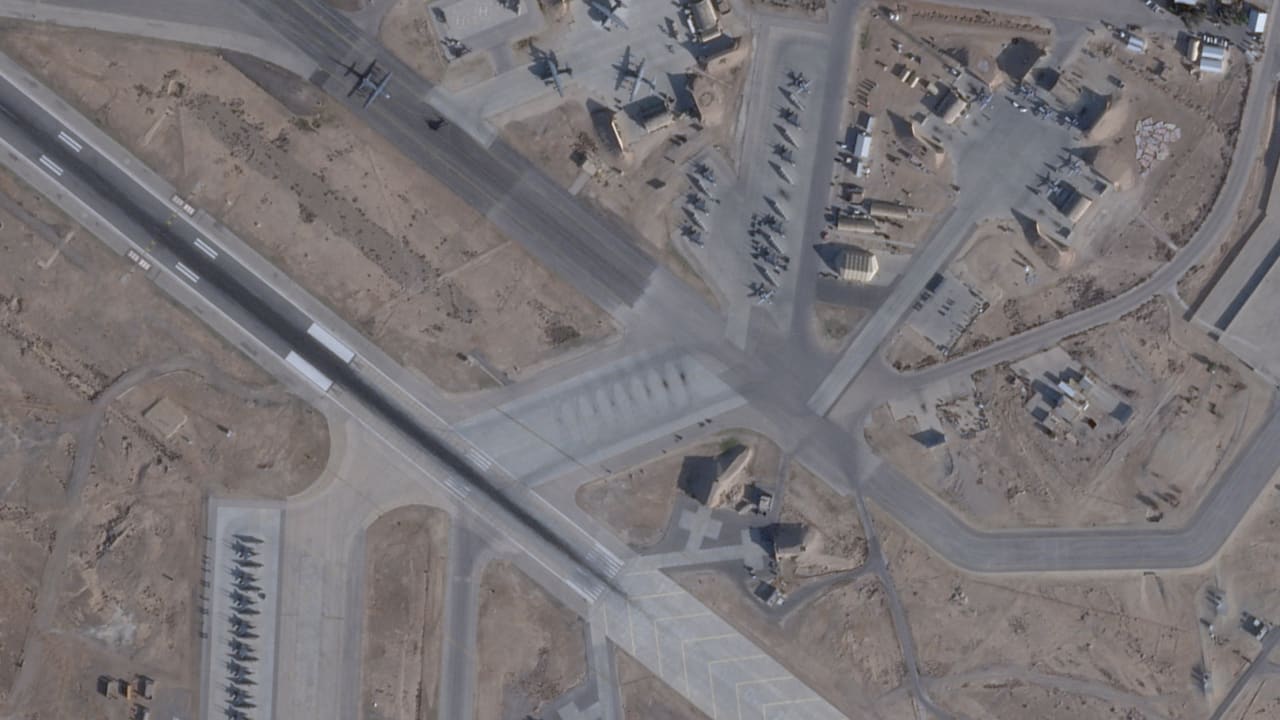
Chinese researchers have developed an artificial intelligence system that uses large language models to autonomously analyze satellite imagery and identify air targets without human intervention, according to a report published Thursday by the South China Morning Post.scmp
The system, described as employing a “brain plus tool army” framework, uses an LLM as a central coordinator that breaks down complex surveillance tasks, selects specialized AI algorithms, and recovers from processing failures automatically. The multi-agent architecture enables autonomous analysis, decision-making, and action on aerial targets without requiring human handoff at any stage.aiweekly
The Air Target Agent System pairs an LLM “brain” with a suite of specialized AI tools that it can deploy as needed. When tasked with analyzing satellite imagery, the LLM decomposes the problem into subtasks, assigns each to an appropriate algorithm, evaluates results, and iterates — all without operator input. Researchers say the approach cuts analysis time compared to conventional image recognition methods.aiweekly
The architecture reflects a broader trend in Chinese military AI development. In April, the People’s Liberation Army and the National University of Defense Technology revealed a “digital chief of staff” system that similarly uses large language models and real-time battlefield data, reportedly making decisions about 43 percent faster than experienced human commanders in simulated tests.facebook
The announcement arrives as China rapidly integrates AI into military systems. A December 2025 Pentagon report to Congress noted that Beijing continued investing in AI for intelligence, surveillance, and reconnaissance collection and analysis throughout 2024, and that China’s commercial AI sector had narrowed the performance gap with leading U.S. models.defensescoop
China’s national agentic AI framework, released earlier in 2026, formally defines AI agents as systems capable of “autonomous perception, memory, decision-making, interaction, and execution” — a description that aligns closely with the satellite targeting system’s capabilities.youtube
The development also follows real-world demonstrations of AI-enhanced satellite intelligence. In early 2026, Chinese firm MizarVision drew international attention after U.S. intelligence assessed that its AI-annotated satellite imagery of American military bases in the Middle East was being used by Iranian forces to refine targeting.abc
The system raises fresh questions about autonomous weapons governance. In May, Chinese and U.S. leaders faced calls to discuss safe military AI use, with both sides having agreed in 2024 that only humans should decide on nuclear weapons deployment. Whether such principles extend to conventional surveillance and targeting systems like the Air Target Agent remains an open question, as Beijing pushes to field autonomous military AI across domains.scmp