Newsletter Subscribe
Enter your email address below and subscribe to our newsletter

Enter your email address below and subscribe to our newsletter
All voices matter
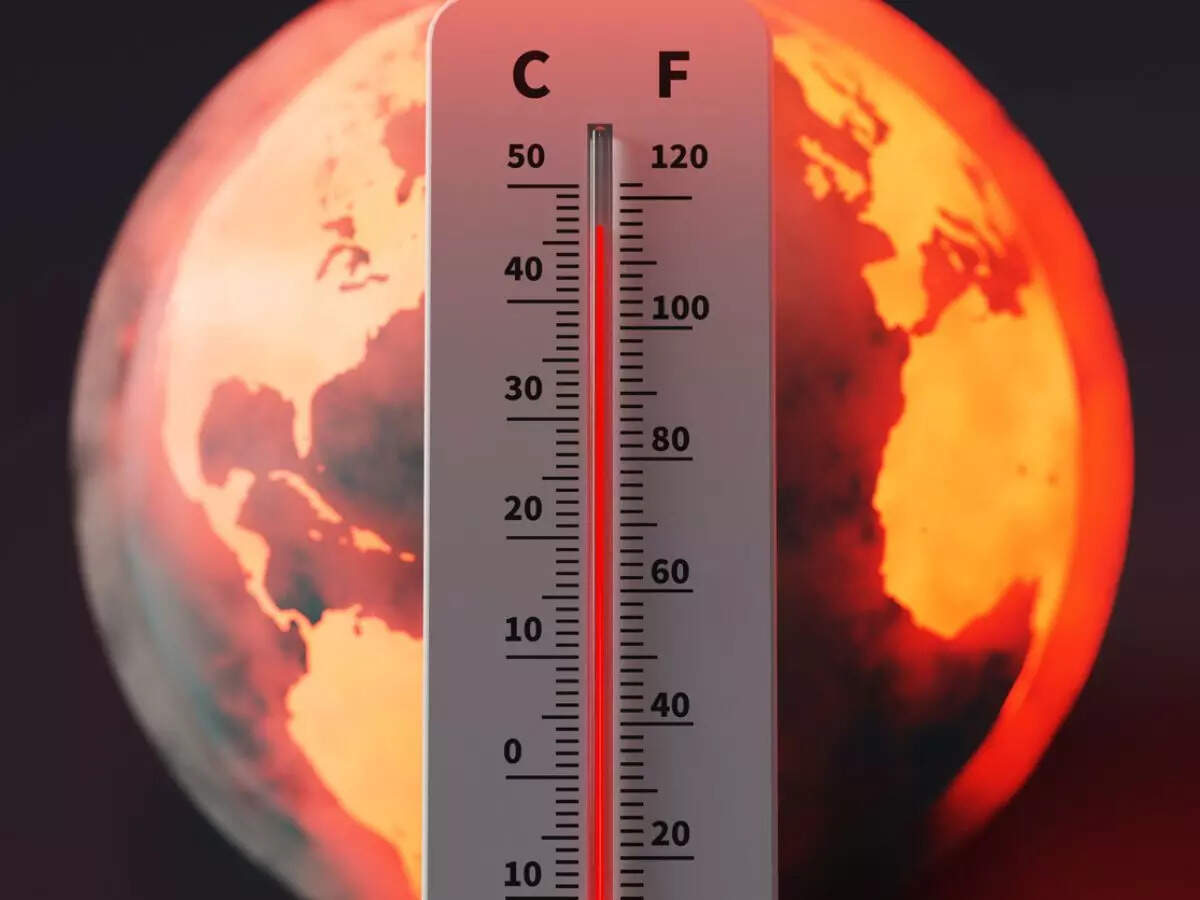
Australia’s Bureau of Meteorology has warned that an El Niño weather pattern developing in the tropical Pacific may strengthen into one of the most intense occurrences in the past seven decades, with approximately half of climate models indicating it could peak at levels among the highest recorded since 1950.aljazeera
The warning comes as the World Meteorological Organization confirmed in its June bulletin that El Niño conditions are developing, estimating an 80 percent probability that El Niño will emerge between June and August 2026, rising to roughly 90 percent through September to December. The U.S. Climate Prediction Center updated its outlook on June 11, putting the chance of a “very strong” El Niño during November 2026 through January 2027 at 63 percent.wmo
Australia’s ACCESS-S climate model projects sea surface temperatures along the equatorial Pacific could rise more than 3 degrees Celsius above average, which would surpass the previous record of 2.65 degrees Celsius set in November 1997. The WMO’s global seasonal update noted that multi-model forecasts show a “nearly unanimous trajectory” toward El Niño, with the Niño 3.4 index approaching 1.5 degrees Celsius by mid-2026 and further intensification expected.thairath
The Washington Post reported in May that the European Centre for Medium-Range Weather Forecasts indicated sea temperatures in the central equatorial Pacific could rise to 3 degrees above average by year’s end, potentially comparable to or exceeding the records set in 1877 and 2015.washingtonpost
The International Fund for Animal Welfare warned on June 15 that the incoming El Niño could prove “catastrophic” for wildlife and communities. “We’re heading into a year that could be catastrophic. The impacts on wildlife, landscapes and communities could be immense,” said IFAW senior director of policy Matt Collis, citing hotter and drier conditions expected to intensify across Asia, Australia, and Africa in the second half of 2026.ifaw
Scientists have also flagged the elevated wildfire risk. More than 150 million hectares burned globally in the first months of 2026 — over 50 percent more than the average for the period — and researchers warned in May that a strong El Niño could push fire conditions to levels “we haven’t witnessed in recent history”.dw
The intensifying El Niño is developing just as the Trump administration moves to dismantle the Ocean Observatories Initiative, a $386 million network of more than 900 deep-sea sensors in the Pacific and Atlantic. The National Science Foundation began removing instruments in June from waters off Washington, Oregon, Alaska, North Carolina, and Greenland.oregonlive
In a letter sent last week, U.S. senators cited the approaching El Niño as reason to halt the dismantlement, arguing it would undermine the nation’s ability to forecast extreme weather events. Scientists have warned the removal will “severely degrade” the accuracy of El Niño forecasts and storm predictions. Friederike Otto, climate science professor at Imperial College London, noted that while El Niño is part of a natural cycle, “its occurrence is now taking place against a backdrop of increasing warmth due to climate change”.facebook