







Newsletter Subscribe
Enter your email address below and subscribe to our newsletter

Enter your email address below and subscribe to our newsletter
All voices matter
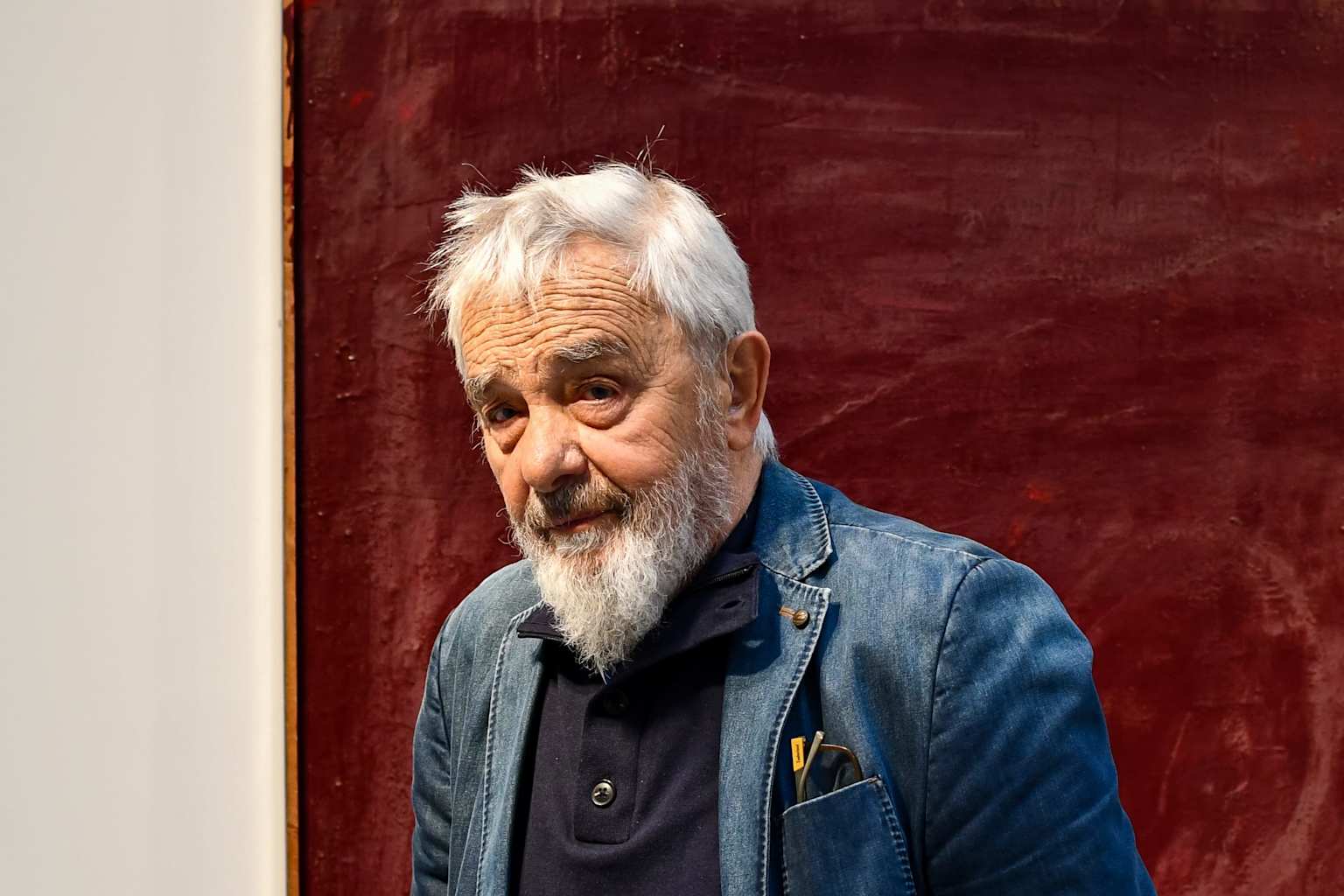
Austrian artist Arnulf Rainer, a towering figure of postwar European art and a pioneer of Art Informel, has died at the age of 96. He passed away on Thursday at his home in Upper Austria, shortly after his birthday on December 8, according to his family and the Austrian news agency APA. Austrian public broadcaster ORF also reported his death, citing relatives. Born in 1929 in Baden near Vienna, Rainer became internationally known for his radical “overpaintings,” which challenged conventions of both image and authorship.krone
Initially drawn to surrealism, Rainer began in the early 1950s to develop what would become his signature technique: painting, scribbling, and layering over existing works, photographs, and self-portraits with dense strokes of paint, charcoal, and ink. This “overpainting” transformed earlier images almost to the point of obliteration while still allowing traces to show through, creating what he described as making “something that comes from history alive for the present.”vol
These works often incorporated religious symbols, cruciform shapes, and charged imagery, provoking controversy and even, in 1961, a legal conviction in Wolfsburg for publicly overpainting an award-winning picture. Over time, however, institutions and the Church embraced his art; Rainer later completed commissioned ecclesiastical works and received honorary doctorates from Catholic theological faculties.krone
Rainer’s career spanned more than seven decades and was marked by major international exhibitions and honors. His work was shown in leading museums including the Centre Pompidou in Paris, the Solomon R. Guggenheim Museum in New York, and the Pinakothek der Moderne in Munich. He represented Austria at the Venice Biennale in 1978 and participated in documenta in Kassel multiple times.vol
At home, he became one of Austria’s most decorated artists. Rainer received the Grand Austrian State Prize in 1978, joined the Austrian Art Senate the same year, and in 2005 became the first non-Spanish recipient of the Aragon-Goya Prize for his life’s work. As recently as April 2025, he was awarded the Grand Golden Decoration of Honor for Services to the Republic of Austria. Since 2009, a dedicated Arnulf Rainer museum in Baden has traced the breadth of his output, from early surreal and Informel works to late abstract and religious series.krone
In his later years, Rainer remained both celebrated and contentious, most recently objecting to plans to exhibit a series of 77 cross works in Vienna’s St. Stephen’s Cathedral during Lent 2026, saying they had never been created for religious purposes and that he felt co‑opted by the Church. Yet institutions in Austria and abroad continue to prepare retrospectives and pairings with younger and fellow avant-garde artists, underlining his enduring influence.nfgaleria
“As an artist, I am always dissatisfied,” Rainer once said. “I always see the weak points when I look at my pictures.” The relentless self-criticism behind that remark helped shape one of the most challenging and influential bodies of postwar European art—now closed, but still very much alive on the walls of museums worldwide.vol