






Newsletter Subscribe
Enter your email address below and subscribe to our newsletter

Enter your email address below and subscribe to our newsletter
All voices matter
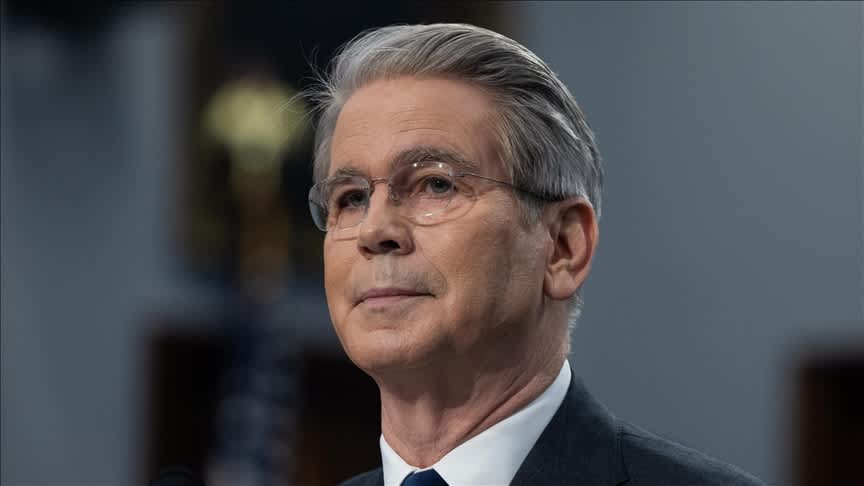
The Bank of Japan’s decision to raise interest rates to their highest level since 1995 was driven in part by pressure from US Treasury Secretary Scott Bessent, who urged Japanese officials to tighten policy sooner rather than later to avoid larger future disruptions, according to a report by Nikkei Asia published on June 17.anews
The disclosure adds a diplomatic dimension to what the BOJ had framed as a routine policy normalization step, suggesting that Washington played an active role in shaping Tokyo’s monetary trajectory amid a broader global tightening cycle fueled by war-related inflation.
During a May 11 visit to Japan, Bessent told Japanese Finance Minister Satsuki Katayama that an earlier rate hike would be preferable because delayed action could force the BOJ into sharper tightening later, potentially damaging the economy and financial markets, Nikkei Asia reported, citing multiple Japanese government officials. Bessent later met BOJ Governor Kazuo Ueda in Paris on the sidelines of an international conference and subsequently posted on social media platform X that he was confident Ueda would “successfully guide Japan’s monetary policy.”anews
In a separate Reuters interview on May 19, Bessent publicly stated he was confident Ueda would do “what he needs to do” if granted sufficient independence by Japan’s government — a clear signal of Washington’s desire for further rate increases.reuters
A senior Japanese Finance Ministry official interpreted Bessent’s messaging as a push for the BOJ to act, given what was perceived as reluctance from Prime Minister Sanae Takaichi’s office to support higher rates, according to Nikkei Asia. US research firm SGH Macro Advisors dubbed Bessent the new “shadow governor” of the BOJ, a characterization echoed by some overseas market participants.nikkei
On June 16, the BOJ raised its benchmark rate from 0.75% to 1% in a 7-1 vote, a move that had been widely anticipated by markets. Governor Ueda was absent from the meeting due to hospitalization for an infected liver cyst. The hike was the BOJ’s first since December 2025, when rates were lifted from 0.5% to 0.75%.wsj
Reuters reported that the decision placed the BOJ alongside other central banks tightening policy to combat inflation, including the European Central Bank. The energy shock from the Iran war has been the primary driver of persistent price pressures across major economies.reuters
The BOJ move came just hours before the US Federal Reserve held rates steady at 3.5–3.75% but signaled that its next move could be an increase, in what markets interpreted as a “hawkish hold.” South Korea’s Bank of Korea is now expected to raise rates next month for the first time in over three years, with Governor Shin Hyun-song stating that it is “crucial to raise interest rates timely with an emphasis on maintaining price stability.”chosun
Nikkei Asia reported that the BOJ’s decision was “largely driven by two external pressures: financial markets and Washington,” while noting that the underlying tension between a cautious Japanese government and a normalizing central bank remains unresolved.nikkei