







Newsletter Subscribe
Enter your email address below and subscribe to our newsletter

Enter your email address below and subscribe to our newsletter
All voices matter
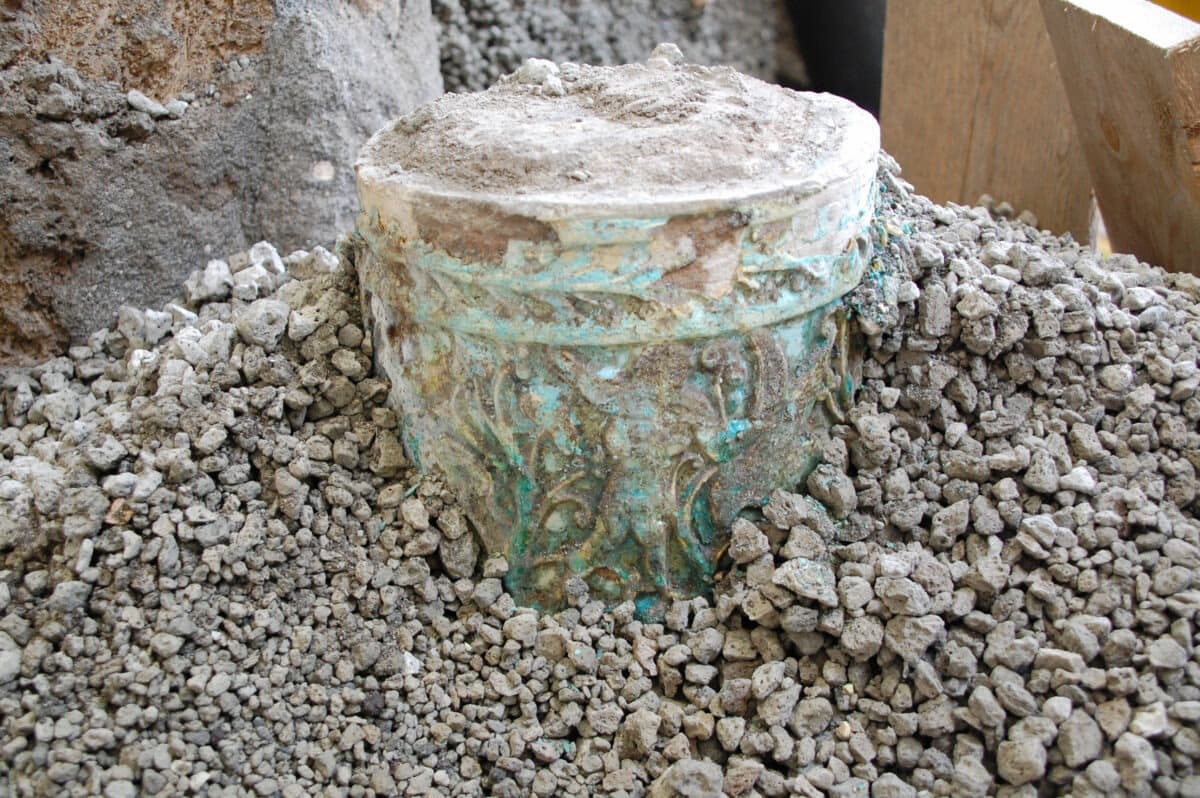
Archaeologists have uncovered a rare Egyptian faience vessel in an unlikely location: the kitchen of an ancient fast-food establishment in Pompeii, revealing the extent of cultural exchange between Egypt and Rome’s working classes in the final days before Mount Vesuvius buried the city in 79 CE.
The glazed ceramic situla, decorated with hunting scenes in Egyptian style and produced in Alexandria, was found during excavation work conducted between 2023 and 2024 at the Thermopolium del Gallo in Pompeii’s Regio V district. The vessel, made of green-yellow glass paste, had been repurposed as a food container in the street-food venue’s back room.yahoo
The discovery challenges assumptions about cultural diffusion in ancient Rome. Such faience objects typically appeared as decorative elements in elite gardens and ceremonial rooms, not as kitchen storage in modest commercial establishments. “We see here in action a certain creativity in furnishing sacred and profane spaces, that is, the domestic altar and the kitchen, with objects that testify to the permeability and mobility of tastes, styles and probably also of religious ideas in the Roman Empire,” explained Gabriel Zuchtriegel, director of the Pompeii Archaeological Park.greekreporter
The thermopolium, first excavated in 2020, served hot meals and drinks to Pompeii’s residents. Archaeological research has identified at least 80 similar establishments throughout the ancient city. Many lower and middle-class residents lacked private kitchens, relying on these venues for daily sustenance.euronews
The vessel’s presence in a working-class establishment demonstrates that connections with Eastern cultural and religious communities extended beyond Pompeii’s upper classes. Zuchtriegel noted the finding occurred “in the backroom of a popina, a street food shop in Pompeii, i.e. at a lower-middle level of local society, which nonetheless proves to be essential in the promotion of Eastern cultural and religious forms, including Egyptian cults”.euronews
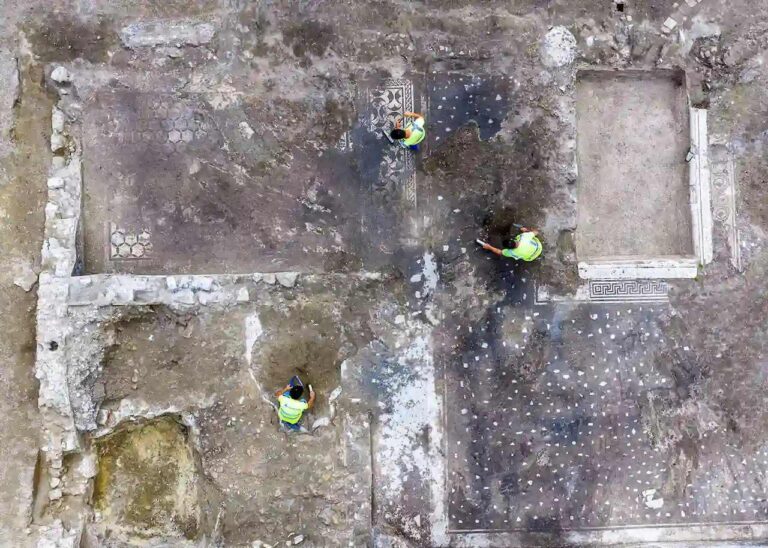
Conservation teams are conducting residue analysis to determine what the vessel once held. The project also revealed service rooms with a ground-floor kitchen and an upper-floor apartment where the shop’s managers likely lived.yahoo