





Newsletter Subscribe
Enter your email address below and subscribe to our newsletter

Enter your email address below and subscribe to our newsletter
All voices matter
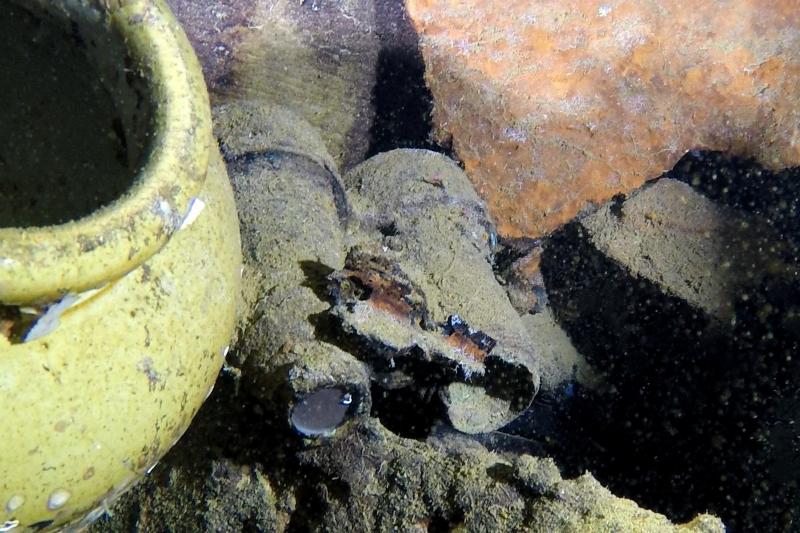
Deep-sea divers have successfully recovered the first artifacts from the HMHS Britannic, the sister ship of the Titanic, from the depths of the Aegean Sea off the Greek island of Kea. The Greek Culture Ministry announced on Monday that this marks the first time objects have been retrieved from the wreck, which has rested at a depth exceeding 120 meters for more than a century.greekreporter
The operation, conducted between May 6 and 13, 2025, was led by British historian Simon Mills, founder of the Britannic Foundation, and supervised by Greece’s Ephorate of Underwater Antiquities. An 11-member team of professional divers equipped with closed-circuit diving systems worked under challenging conditions including strong currents, deep waters, and low visibility to recover the artifacts.dawn
The retrieved objects represent a remarkable array of items that offer a tangible glimpse into life aboard one of the largest ocean liners of the early 20th century. Among the artifacts are the ship’s observation deck bell, a port-side signaling lantern, pieces of first and second-class portable equipment, decorative ceramic tiles from the Turkish bath, and a pair of binoculars. The divers also recovered porcelain items including a washbasin fitted in a special compartment and a silver-plated serving dish from the ship’s First-Class equipment.greekreporter
According to the Greek Culture Ministry, certain objects initially selected for recovery could not be retrieved due to their fragile state or location within the wreck. The successful artifacts were carefully lifted using air lift bags and immediately cleaned of marine organisms before being transported to specialized laboratories in Athens for conservation.dawn
The HMHS Britannic was one of three transatlantic passenger liners built at the Harland and Wolff shipyard in Belfast, alongside the infamous RMS Titanic. Requisitioned by the British Admiralty during World War I and converted into a hospital ship, the Britannic struck a German mine in November 1916 while sailing toward Lemnos. The vessel sank in less than an hour, and of the 1,065 people on board, 30 perished when the ship’s propellers caught two lifeboats.dawn
The wreck remained lost until 1975 when legendary explorer Jacques-Yves Cousteau discovered it after a month-long search. Simon Mills, who purchased the wreck in 1996, has spent more time exploring it than anyone else and coordinated this groundbreaking recovery mission.indepthmag
The recovered artifacts will undergo further conservation in Athens before becoming part of the permanent exhibition at Greece’s new National Museum of Underwater Antiquities, currently under construction in Piraeus. The museum, backed by €93 million from the European Union’s Recovery and Resilience Fund, is scheduled to open in 2026 and will feature more than 2,500 exhibits across 26,380 square meters. The Britannic artifacts will be displayed in the World War I section, where the wreck serves as a central exhibit showcasing Greece’s rich maritime heritage.greekreporter
Culture Minister Lina Mendoni described the museum as “a vision of decades” that will highlight Greek civilization’s enduring relationship with the sea. The project represents Greece’s most significant cultural investment in years and aims to position Piraeus as a premier international cultural destination.greekcitytimes