







Newsletter Subscribe
Enter your email address below and subscribe to our newsletter

Enter your email address below and subscribe to our newsletter
All voices matter
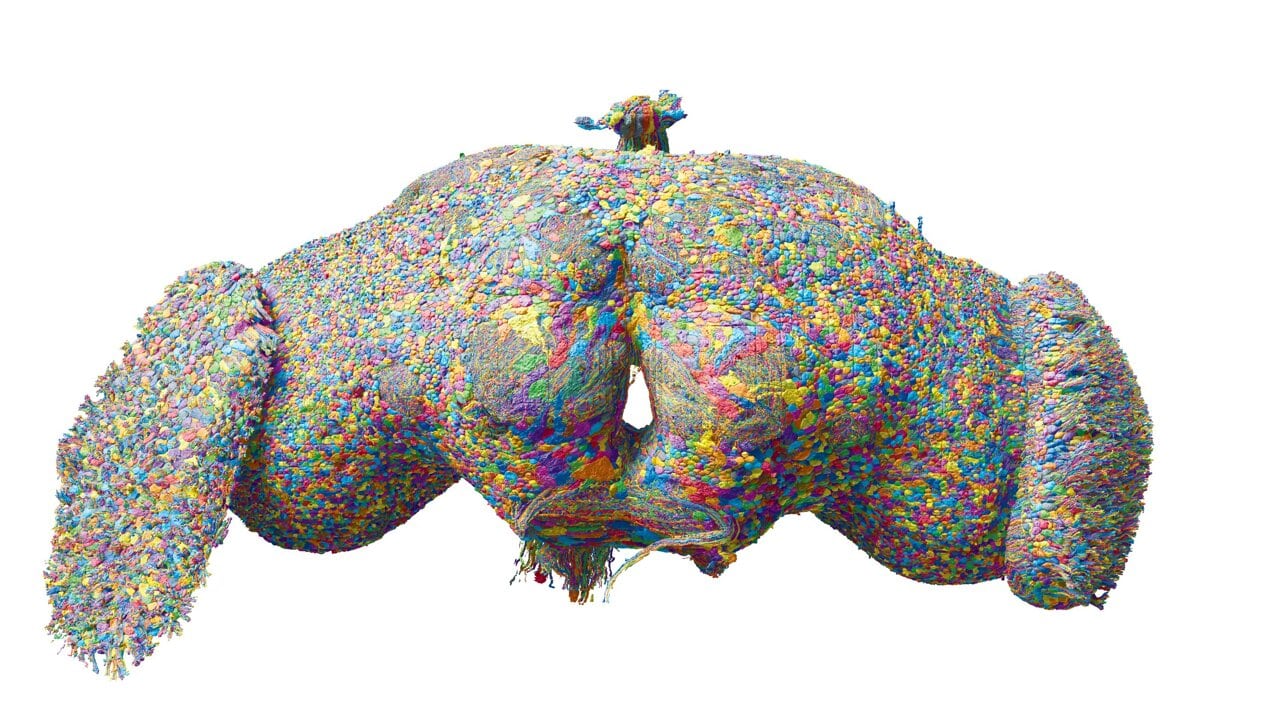
A large international team led by Harvard Medical School and Princeton University has published the first complete wiring diagram of all neuronal connections in the central nervous system of an adult fruit fly, a milestone that reveals motor control operates through distributed local circuits rather than a centralized brain command center.
The work, published June 8 in Nature under the title “Distributed control circuits across a brain-and-cord connectome,” combines a previously published brain connectome with a newly completed map of the fruit fly’s nerve cord — its spinal cord equivalent — to create a unified diagram of approximately 160,000 neurons and all their synaptic connections.eurekalert
“We can see all of the neurons and their connections as a complete unit for the first time and ask, ‘What do we learn from that?'” said co-senior author Rachel Wilson, of the Blavatnik Institute at Harvard Medical School.harvard
The project grew from the convergence of two efforts: the FlyWire Consortium’s 2024 brain connectome, led by Mala Murthy and Sebastian Seung at Princeton, and a nerve cord connectome developed in the lab of co-senior author Wei-Chung Allen Lee at Harvard Medical School. The combined dataset, known as BANC (Brain and Nerve Cord), was built by creating thousands of serial sections of a single fruit fly, imaging them with electron microscopy, and using AI to stitch millions of images into a coherent three-dimensional map.eurekalert
The study’s central finding overturns a longstanding assumption in neuroscience. Rather than a centralized controller in the brain directing an animal’s actions, motor control in the fruit fly operates primarily at the local level — for instance, a fly’s leg movement is governed mainly by neural circuits dedicated to that leg, which then coordinate with circuits for other limbs to produce complex behaviors like walking.harvard
“Our findings suggest that control for actions is highly distributed in local modules that link up and work together in different ways,” said co-first author Alexander Bates.eurekalert
The entire connectome is freely available online, and the researchers draw parallels to the Human Genome Project as an open resource with broad applications. Co-first author Helen Yang noted that even advanced AI systems cannot replicate the behavioral repertoire of a fruit fly: “There may be lessons for AI in how the nervous system is organized”.harvard
The work was supported by the U.S. BRAIN Initiative, the National Institutes of Health, and the National Science Foundation. Lee is now investigating whether similar distributed control exists in mice — a question with direct relevance to understanding mammalian nervous systems.eurekalert