Newsletter Subscribe
Enter your email address below and subscribe to our newsletter

Enter your email address below and subscribe to our newsletter
All voices matter
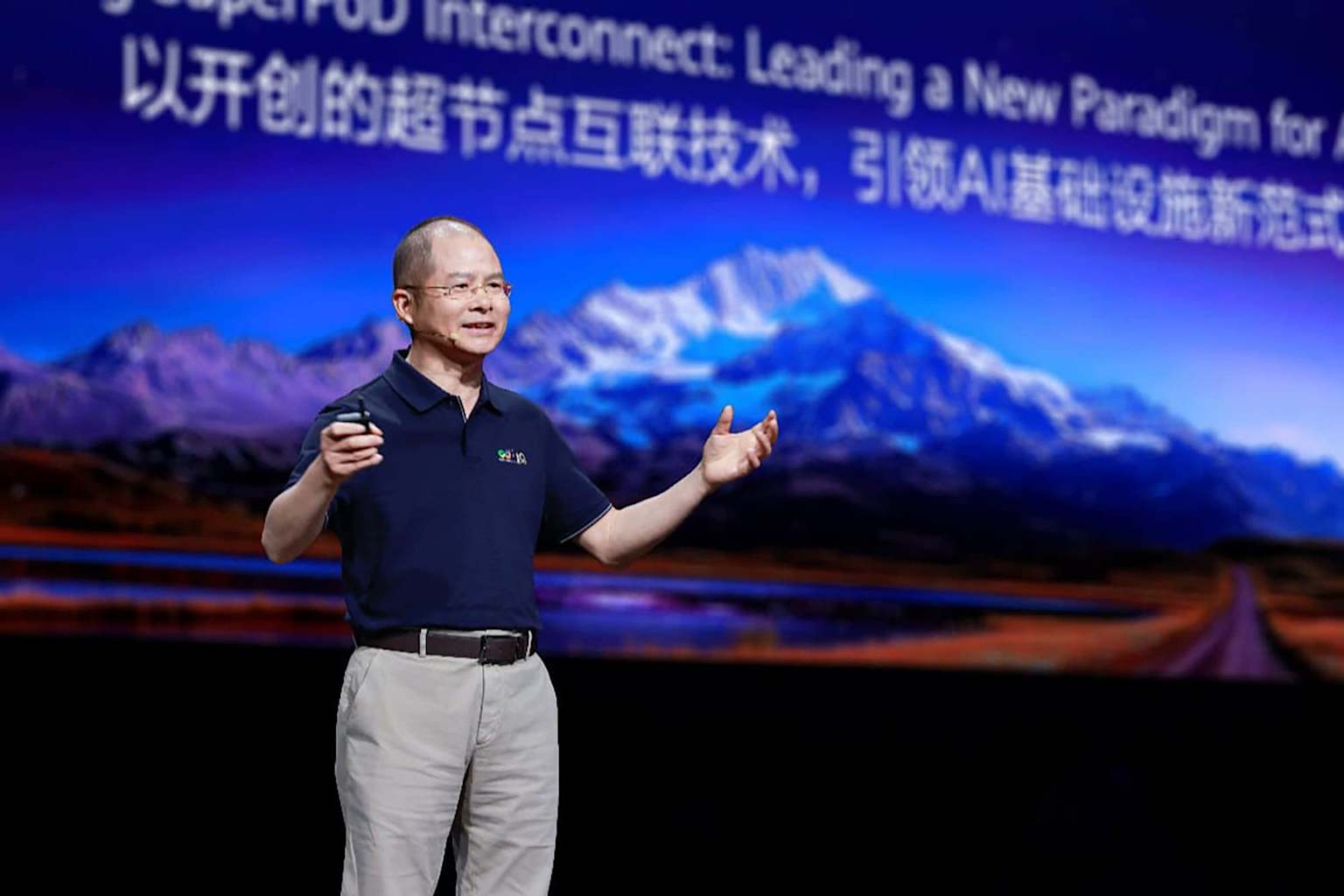
Huawei’s Rotating Chairman Xu Zhijun has publicly thanked the United States for its semiconductor export restrictions, saying Washington’s controls served as a catalyst for China’s drive toward chip self-reliance. “If the United States hadn’t forced our country, we wouldn’t have done this — we are grateful,” Xu said at a recent industry event, according to multiple reports.aiweekly
The remarks come days after Huawei unveiled an ambitious semiconductor roadmap at the IEEE International Symposium on Circuits and Systems (ISCAS 2026) in Shanghai, where the company announced plans to produce chips with transistor density equivalent to 1.4-nanometer processes by 2031 — without relying on the extreme ultraviolet (EUV) lithography machines that Western sanctions have blocked China from acquiring.reuters
Rather than pursuing conventional transistor shrinkage, Huawei introduced what it calls the Tau Scaling Law, a framework that prioritizes reducing signal travel time inside chips over making transistors physically smaller. Alongside this principle, the company unveiled a “LogicFolding” architecture designed to shorten internal wiring, cut latency, and boost transistor density without access to leading-edge lithography equipment.tomshardware
Huawei said it has quietly designed and mass-produced 381 chips using early variations of this approach over the past six years. The company’s next-generation Kirin smartphone chips, set to debut later in 2026, will be the first commercial products built on the LogicFolding architecture, targeting a transistor density of 238 million transistors per square millimeter — a figure Huawei says rivals TSMC’s 3nm output.semiwiki
Analysts noted that Huawei provided no independent benchmarks or third-party verification for its claims.youtube
The developments have raised alarms in South Korea, where analysts warn that China’s rapid semiconductor progress could threaten the competitiveness of Samsung Electronics and SK Hynix. A May report from the Hudson Institute noted that Korean firms with deep dependencies on China face mounting risk as Chinese competitors close the technology gap.hudson
The Korea Herald reported that any easing of US export controls as part of ongoing trade negotiations could deal a blow to Korea’s chip industry by granting Chinese firms greater access to advanced manufacturing tools. US Trade Representative Jamieson Greer said in mid-May that chip export controls were “not a primary subject” during recent bilateral talks in Beijing, suggesting no imminent relaxation of restrictions.reuters
Huawei’s defiant posture reflects a broader shift in China’s semiconductor strategy. The company reinvests roughly 22 percent of its revenue in research and development, and US efforts to tighten restrictions have continued in 2026, with the Commerce Department banning equipment sales to additional Chinese chipmakers as recently as April.fdd
Whether Huawei’s Tau Scaling approach can truly match the performance of conventional sub-2nm manufacturing remains unproven. But Xu’s comments underscore a reality that some US policymakers have warned about: export controls may be accelerating the very self-sufficiency they were designed to prevent.nationalreview