Newsletter Subscribe
Enter your email address below and subscribe to our newsletter
Enter your email address below and subscribe to our newsletter

All voices matter
Flash purchasing managers’ index data released Tuesday by S&P Global painted a divergent picture of the global economy in June, with the eurozone hovering near stagnation, the United Kingdom contracting for a second straight month, and Japan’s private sector accelerating.
The eurozone composite PMI rose from 48.5 in May to 49.5 in June, still below the 50 threshold separating expansion from contraction but marking a slower pace of decline for a third consecutive month. S&P Global said the reading was “consistent with broadly flat GDP” for the second quarter, noting the average PMI of 48.9 over the period indicates the bloc’s economy is “showing enough resilience to just about stay out of recession.”spglobal
The eurozone’s manufacturing PMI came in at 51.3, slightly above the 51.2 consensus but below May’s 51.6. Employment remained weak, with the flash index signaling net job losses for a sixth month running.fxstreet
In France, the composite PMI climbed to 47.6 from 44.9 in May, a notable improvement but still firmly in contraction territory. France’s manufacturing PMI rose to 50.7 from 49.7 the prior month.tradingeconomics
The UK composite PMI slipped to 49.4 in June from 49.7 in May, marking a second successive monthly decline in private-sector output. Services activity fell to 48.7 from 49.3, missing market expectations of 50.5. Manufacturing held above the expansion line at 53.1, though it eased from 53.9 and came in below the 53.6 forecast.spglobal
S&P Global noted the June reading is consistent with the economy contracting at a 0.1% quarterly rate, though the three-month average still points to flat GDP for the second quarter overall.spglobal
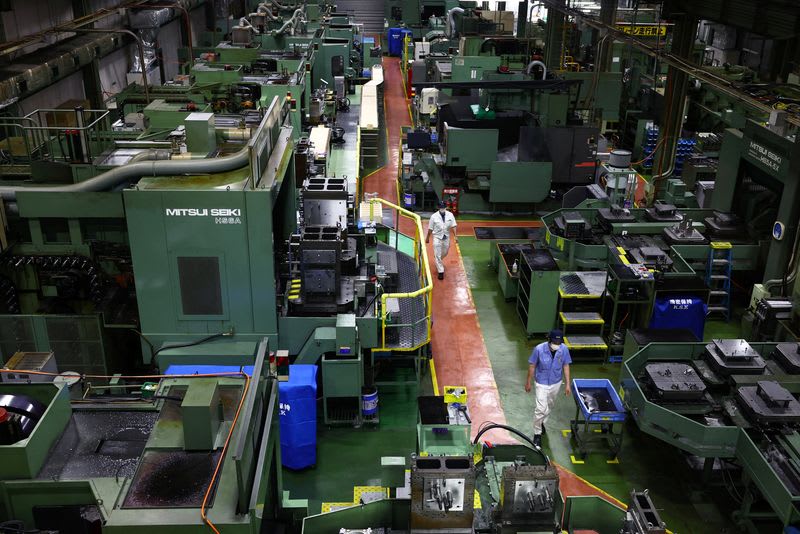
Japan stood out as a bright spot. The au Jibun Bank flash composite PMI rose to 52.5 in June from 51.1 in May, with growth driven by the strongest increase in manufacturing output since January 2022. Japan’s flash manufacturing PMI climbed to 54.9, up from 54.5 in May. New orders rose the most in four months, supported by a slight pickup in foreign demand, and backlogs of work increased at the fastest pace in four months.tradingeconomics
The contrasting readings underscore a widening gap between Asia’s largest advanced economy, where factory momentum continues to build, and Europe, where the private sector remains caught between lingering weakness in demand and cautious business sentiment.