








Newsletter Subscribe
Enter your email address below and subscribe to our newsletter

Enter your email address below and subscribe to our newsletter
All voices matter
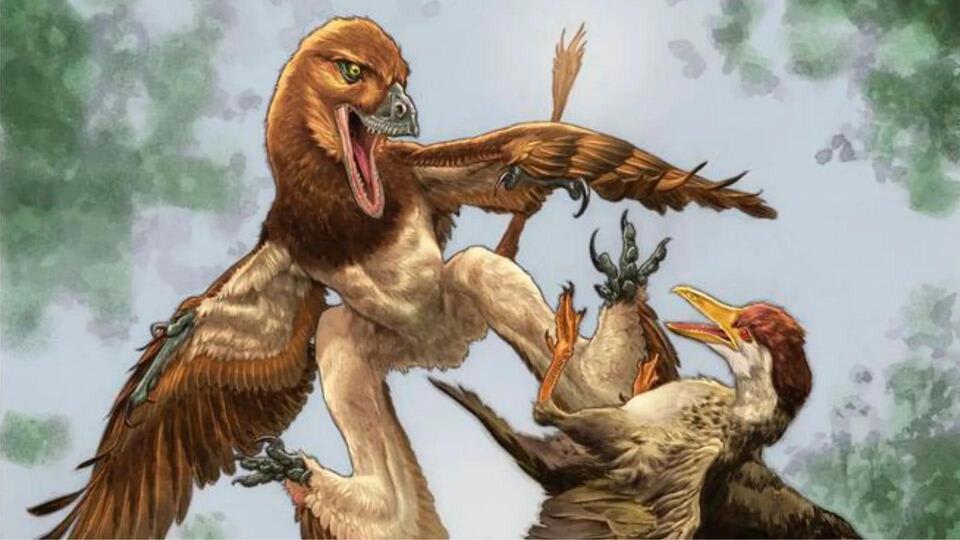
Scientists have announced the discovery of a new species of feathered dinosaur found in northwestern China that likely glided between trees and hunted early birds roughly 120 million years ago.
The new species, named Jian changmaensis, was described in a paper published on June 3 in the Annals of Carnegie Museum. A member of the microraptorine group within the dromaeosaur family — the same lineage as Velociraptor — Jian is distinguished by its unique arm and shoulder bones, which suggest it bore long feathers on both its forelimbs and hind limbs, giving it a four-winged appearance.eurekalert
“It’s the only dinosaur found at this site that wasn’t a bird, it was a carnivore, and it was much bigger than everything else that we’ve found there,” said Jingmai O’Connor, associate curator of fossil reptiles at the Field Museum in Chicago and senior author of the paper.eurekalert
Based on a four-inch upper arm bone, researchers estimate the creature had a wingspan of about four feet — comparable to a modern barn owl — making it one of the largest microraptors ever documented. While it could not achieve true powered flight, scientists believe it glided from tree to tree in a manner similar to a flying squirrel.interestingengineering
The fossil was recovered from the Xiagou Formation in the Changma Basin of Gansu province, a site that has yielded more than 100 skeletons of Early Cretaceous birds. Jian changmaensis is the first non-avian dinosaur ever identified at this location, which makes its presence there particularly noteworthy.sci
The name “Jian” derives from a winged creature in Chinese mythology, while “changmaensis” refers to the Changma Basin where the fossil was found. The research was led by Ling-Qi Zhou and colleagues, with Matthew Lamanna of the Carnegie Museum of Natural History in Pittsburgh serving as co-lead.eurekalert
The discovery provides evidence that gliding dromaeosaurids lived across a far wider geographic range than previously known, as most microraptors have been found in northeastern China. Researchers believe Jian was the apex predator at the site, preying on early birds such as Gansus yumenensis that shared its habitat.mezha
A replica of the fossil will go on display during the Carnegie Museum’s Dino Fest on June 13.post-gazette