







Newsletter Subscribe
Enter your email address below and subscribe to our newsletter

Enter your email address below and subscribe to our newsletter
All voices matter
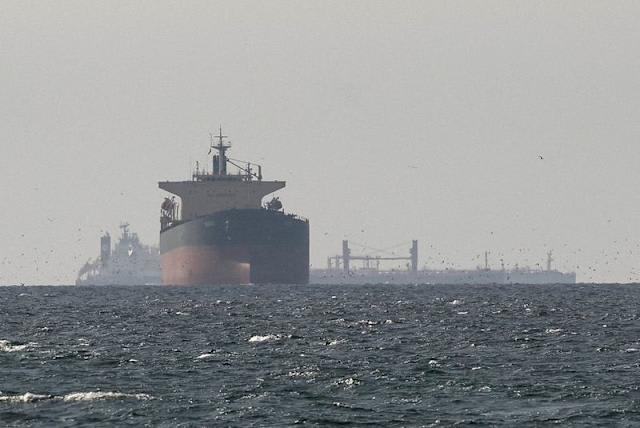
Crude oil prices swung sharply on Wednesday as renewed military exchanges between the United States and Iran reignited supply fears, though prices quickly retreated toward the prior session’s close after an initial spike. Brent crude rose early in the session before settling up just 0.27% at around $91.70 a barrel, while U.S. West Texas Intermediate edged up 0.26% to $88.43 a barrel, according to Reuters.theglobeandmail
The volatility came after the U.S. military launched strikes on Iranian air defense systems, ground control stations, and radar sites in retaliation for Iran shooting down a U.S. helicopter near the Strait of Hormuz. Iran’s Islamic Revolutionary Guard Corps said it retaliated with drone attacks on 21 U.S. targets, including F-35 hangars in Jordan.youtube
Data from the American Petroleum Institute released Tuesday showed U.S. crude inventories fell by 9.12 million barrels in the week ended June 5, marking an eighth consecutive weekly decline. The U.S. Energy Information Administration separately confirmed a draw of 7.227 million barrels, exceeding forecasts of a 3 million barrel decline. The EIA warned that OECD oil reserves are headed toward their lowest levels since 2003.reuters
Despite the tightening inventories and military escalation, analysts noted that the market was not pricing in a worst-case supply disruption. “Obviously the market now awaits what U.S. President Trump will do next,” UBS analyst Giovanni Staunovo said. PVM analyst Tamas Varga noted that while global stock draws are underpinning prices, lower Chinese crude oil imports and limited shipping through the Strait of Hormuz are keeping a ceiling on gains.rte
The escalation weighed on sentiment across asset classes. Gold fell sharply on Wednesday, with spot prices dropping to $4,146.43 per ounce as of 9 a.m. ET, according to CNBC, while gold futures fell further to $4,183.80. The decline came despite gold’s traditional role as a safe-haven asset, with traders apparently liquidating positions ahead of an upcoming CPI report.yahoo
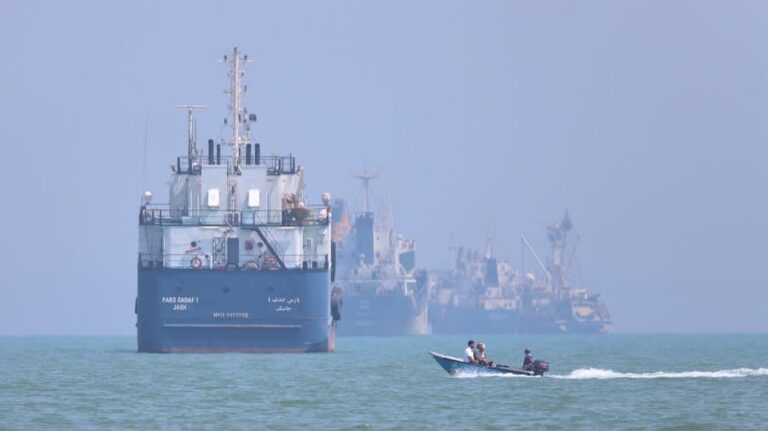
In Asia, South Korea’s Kospi plunged 4.52%, driven by a combination of the tech sell-off and Middle East tensions. Japan’s Nikkei 225 also fell sharply, while Hong Kong’s Hang Seng declined 0.6% to 24,407.96. European markets largely shrugged off the volatility, with the pan-European Stoxx 600 edging higher. Iran’s “ghost fleet” of oil tankers has continued to operate across key maritime routes, with at least 69 vessels identified as still loading and transporting oil despite U.S. sanctions and an active naval blockade, helping prevent a more severe supply shock.bnnbloomberg