







Newsletter Subscribe
Enter your email address below and subscribe to our newsletter

Enter your email address below and subscribe to our newsletter
All voices matter
Victims of Mount Vesuvius’ catastrophic eruption in 79 CE wore thick woolen tunics and cloaks when they perished, according to new research that has reignited debate over whether the disaster occurred during a scorching August day or during cooler autumn weather.
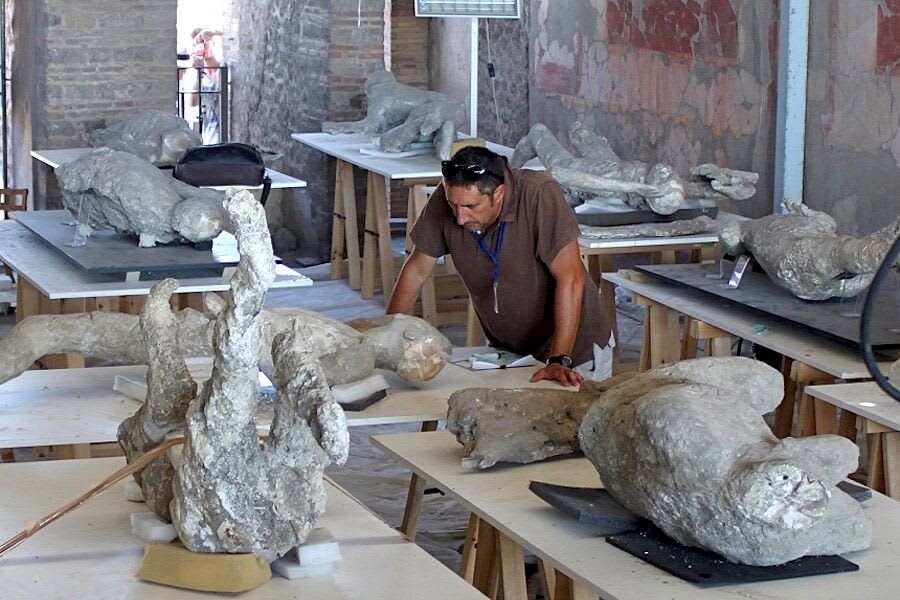
Llorenç Alapont, an archaeologist at the University of Valencia, presented findings in late November at an archaeological conference near Pompeii showing that at least four of 14 plaster casts examined featured victims dressed in heavy wool garments. The fabric impressions preserved in the plaster revealed a coarse, dense weave that Alapont described as “clearly heavy wool”.yahoo
“From studying the casts, we can learn how people dressed on a specific day in history,” Alapont said in a statement from the University of Valencia. “Most of the victims wore two garments: a tunic and a cloak, both made of wool”.uv
The findings have sparked conflicting interpretations among scholars. Pedar Foss, a historian and archaeologist at DePauw University who was not involved with the research, argues the clothing proves little about the weather. “They were wearing wool because that’s what people wore at that time,” Foss told Live Science. “About 90% of all clothing anywhere was wool”.yahoo
Sheep’s wool was durable, warm even when wet, and relatively inexpensive in Roman times, while linen was fragile and only elites wore silk and cotton. Foss said the research establishes what Pompeii residents wore when killed but “doesn’t make an argument either way” about temperature.livescience
However, Alapont suggested the heavy garments point to two possibilities: unseasonably cold weather for late August, or the need for protection from volcanic gases, heat, or falling ash during the roughly 18-hour eruption. “The clothing worn by the victims suggests not only the possibility of a colder-than-usual climate, but also a day with a harmful environment from which they needed to protect themselves,” he said.uv
The widely accepted eruption date of August 24, 79 CE, comes from letters written by Pliny the Younger to historian Tacitus about 30 years after witnessing the disaster as a teenager. Allison Emmerson, a historian and archaeologist at Tulane University, explained that “the manuscript tradition is quite secure—the only date provided by the text is August 24,” though “whether that reflects the date of the actual event, however, is still subject to controversy”.yahoo
Archaeological evidence has long suggested a later date. In 2018, excavators discovered a charcoal inscription dated to October 17, leading some scholars to propose the eruption occurred around October 24. Other evidence includes calcified branches with autumn berries, heating braziers found in houses, and sealed wine jars suggesting the grape harvest had concluded.bbc
The research analyzed casts from the Porta Nola Necropolis, discovered in 1975. Alapont noted that victims both indoors and outdoors wore identical clothing, suggesting uniform conditions across the city on the day of the eruption.uv