





Newsletter Subscribe
Enter your email address below and subscribe to our newsletter

Enter your email address below and subscribe to our newsletter
All voices matter
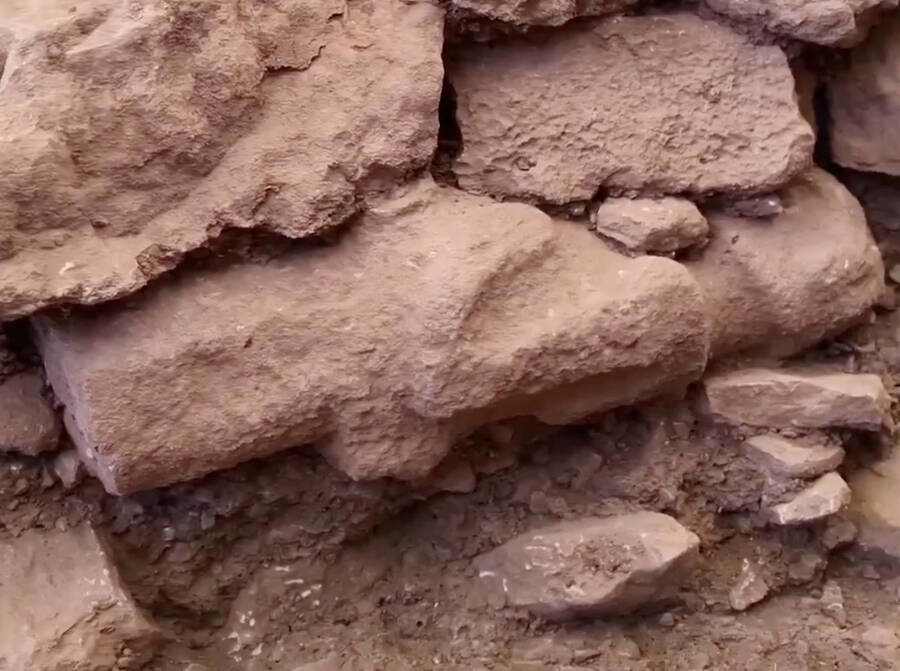
Archaeologists have uncovered a rare 12,000-year-old human statue embedded horizontally within a wall at Göbekli Tepe, the world’s oldest known temple complex in southeastern Turkey. The discovery, announced on September 19 by Turkish Culture and Tourism Minister Mehmet Nuri Ersoy during a ceremony with Japan’s Princess Akiko of Mikasa, is believed to have been deliberately placed as a votive offering, providing unprecedented insights into Neolithic ritual practices.
The statue was found between Structures B and D at the UNESCO World Heritage site, mounted horizontally into the wall of a chamber. According to excavation director Professor Necmi Karul, the figure has an intact head and torso but is missing its feet, though researchers are uncertain whether this was due to damage or symbolic intent.newarab
Human representations are exceptionally rare at Göbekli Tepe, which is renowned primarily for its massive T-shaped limestone pillars decorated with animal carvings including foxes, snakes, wild boars, and vultures. Dating to approximately 9600-8000 BCE, the site predates Stonehenge by 6,000 years and the Egyptian pyramids by 7,000 years.newarab
“While similar examples were previously found at Karahantepe, this discovery from Göbekli Tepe marks a milestone in our understanding of the Neolithic worldview,” Ersoy said during the announcement. The minister emphasized that the find “will shed light on the rituals and belief systems of the Neolithic Age”.anatolianarchaeology
The statue’s placement within the wall structure suggests it was not merely decorative but served a specific ritual purpose. Researchers believe the deliberate horizontal positioning indicates the figure was intended as a votive offering, though Professor Karul cautioned that detailed analysis will be needed to confirm early interpretations.arkeonews
The discovery comes amid extensive restoration work at Göbekli Tepe’s largest structure, Building C, where archaeologists have reinforced walls and repositioned massive standing stones using traditional materials, including mortar mixed with goat hair to replicate prehistoric building techniques. The statue has been carefully secured and placed under immediate conservation, with detailed images to be released once cleaning and preservation are completed.anatolianarchaeology
As part of the broader Taş Tepeler Project, 36 international institutions and more than 220 experts and students are conducting archaeological excavations at 10 sites across the region. Geomagnetic surveys scheduled for next month will help determine future excavation strategies at the site.aa
The find strengthens arguments that Göbekli Tepe functioned as more than a utilitarian structure, serving as a center for organized religious activity that may have preceded and stimulated the development of agriculture and permanent settlements. A new visitor center, parking facilities, and walkways are scheduled to open by the end of 2025 to accommodate growing tourism while protecting the fragile archaeological site.newarab